
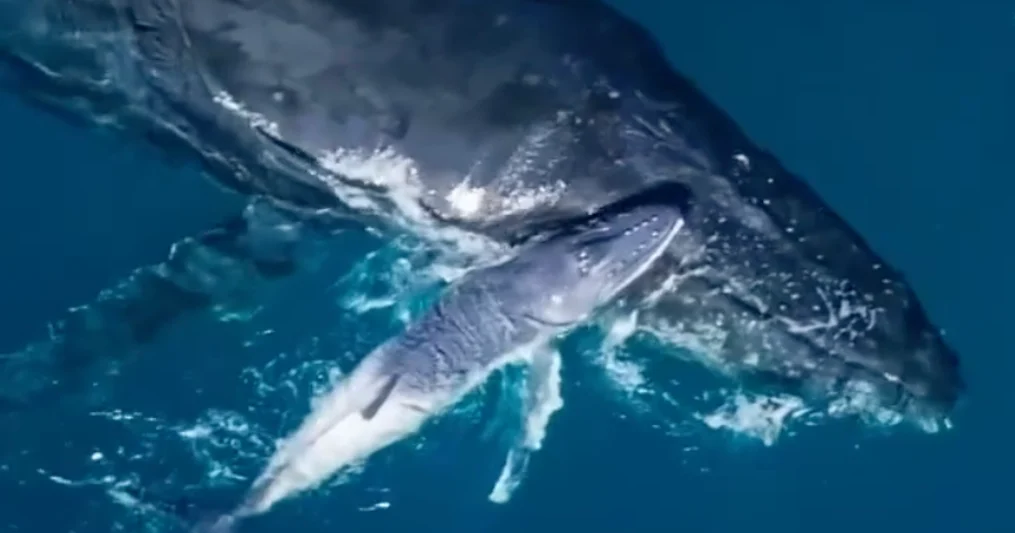
For the first time, the birth of a humpback whale was recorded using drone technology off the coast of New South Wales, Australia, providing a unique glimpse into a rarely observed natural event. The video, documented by wildlife photographer Alexander Forrest in collaboration with the nonprofit organisation ORRCA, captures the newborn calf’s emergence and first breath in a moment hailed as extraordinary by marine researchers.
What Happened
On July 28, 2026, Alexander Forrest was filming humpback whales during their northbound migration when he noticed an adult female whale moving unusually slowly near the surface of the ocean. Seizing the moment, Forrest recorded as the whale rose, not to breathe, but to give birth. The footage shows the water around the mother filling with blood before the calf appears and surfaces to take its inaugural breath. Members of ORRCA—the Organisation for the Rescue and Research of Cetaceans in Australia—were present and continued to monitor the mother and calf for several hours, gathering critical data on the early life of the newborn.
Key Facts
The video is considered only the fourth complete recording of a humpback whale birth worldwide and is the first ever captured by drone. ORRCA highlighted that such detailed observations have the potential to expand scientific understanding of humpback reproduction and maternal behaviors. According to NOAA, humpback whales were listed as endangered in the 1970s due to commercial whaling, with a moratorium implemented in 1985. Today, four out of fourteen population segments remain endangered, and one is listed as threatened under U.S. law.
What This Means
This footage provides unprecedented access to the early moments of a humpback whale calf’s life, information that is essential to improving conservation strategies for this species. Observing birth and maternal care behaviors in situ allows scientists to better comprehend how calves survive and develop in the wild, which can inform protections for their habitats and migration routes. For coastal communities and conservationists, such insights reinforce the value of preserving marine ecosystems in the face of ongoing environmental threats. Additionally, the use of drones as a non-intrusive observation method marks a significant advancement in wildlife research technology.
Background
Humpback whales faced severe population declines due to commercial whaling through the mid-20th century. The establishment of a global whaling moratorium in 1985 has helped some populations recover, yet threats such as habitat loss, climate change, and ship strikes persist. ORRCA’s mission includes rescue operations and scientific research to better protect cetaceans around Australian waters. This drone footage aligns with growing efforts worldwide to monitor wildlife with minimal disturbance.
What Comes Next
ORRCA plans to analyze the continued observations made after the birth to better understand the behaviors of both mother and calf during this vulnerable period. The organization hopes this encounter will contribute to international research and inform conservation policies aimed at safeguarding humpback whale populations globally.
Sources
This article is based on reporting and publicly available information from the following sources:
Read more Science Discoveries stories on Goka World News.