
A team of researchers at MIT, headed by Ju Li, Carl Richard Soderberg Professor of Power Engineering, has made a breakthrough in developing a more efficient and stable electrolyte for sodium-metal batteries. These batteries are seen as a promising alternative to lithium-ion due to sodium’s abundance and lower cost, but their practical adoption has been hindered by challenges in stability and charge speed. The group’s discovery of a smaller solvent molecule significantly improves ion transport while maintaining electrolyte stability, advancing the prospects for faster, low-cost energy storage solutions.
What Happened
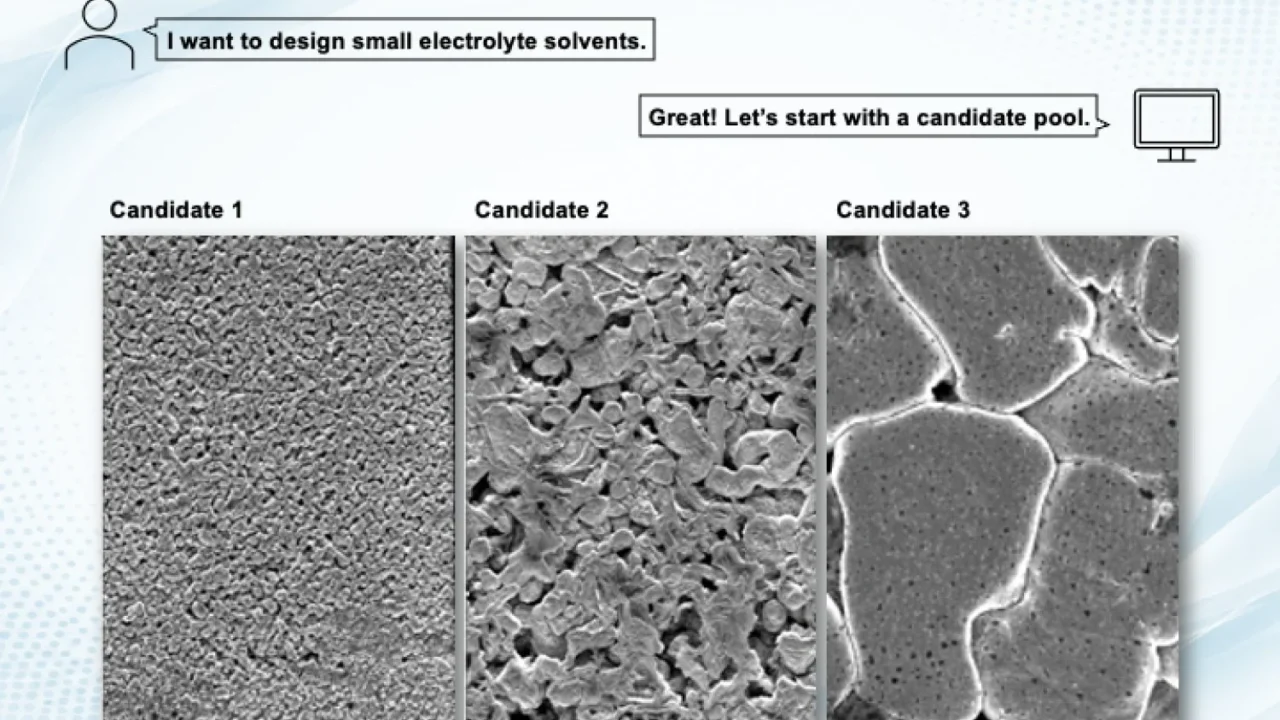
On the week of publication, an MIT-led research team published a paper in the journal Joule detailing the identification of a novel solvent molecule that enhances the performance of sodium-metal battery electrolytes. The research builds on a 2021 finding by the same group that discovered the sulfonamide solvent DMTMSA, notable for its stability in lithium batteries. By using AI-guided molecular design, the team screened 100,000 candidate molecules to find a smaller solvent labeled DMFSA, which achieved improved ion conduction without sacrificing chemical stability. This experimental work involved 27 top candidates tested head-to-head under controlled conditions.
Key Facts
MIT’s team is led by Ju Li from the departments of Nuclear Science and Engineering and Materials Science and Engineering. The new solvent, DMFSA, is derived from a class of sulfonamide molecules similar to DMTMSA, originally discovered to stabilize lithium batteries. Sodium, the battery’s main metal, is about 1,000 times more abundant and roughly one-hundredth as costly as lithium. The research utilized an AI-driven algorithm developed by MIT PhD student Chia-Wei Hsu to efficiently narrow down viable solvent candidates. The work was funded partly by the National Research Foundation of Korea and the U.S. National Science Foundation and involved MIT.nano Characterization Facilities for testing.
What This Means
This advancement directly addresses a fundamental limitation of sodium-metal batteries: the trade-off between fast ion transport and electrolyte stability. By finding a smaller but stable solvent molecule, MIT’s team paves the way for sodium batteries capable of rapid charging and discharging cycles with longer lifespans. This has meaningful implications for energy storage, particularly for electric vehicles and grid infrastructure where cost and resource availability are critical.
Because sodium is far more abundant and cheaper than lithium, these batteries could reduce reliance on critical minerals vulnerable to geopolitical supply risks, enhancing energy security. Additionally, faster charge times increase the practicality of these batteries in real-world applications, such as vehicle fast charging and large-scale energy storage for renewables. The development suggests the potential for broader adoption of more sustainable, affordable battery technologies beyond lithium-ion.
Background
Lithium-ion batteries dominate the electric vehicle and energy storage sectors but depend on minerals like lithium, cobalt, and nickel that face supply chain and environmental concerns. Sodium-metal batteries have attracted interest due to sodium’s abundance and cost-efficiency, yet their high reactivity has made long-term cycling and fast charging challenging. The MIT group’s 2021 discovery of a stable sulfonamide solvent (DMTMSA) in lithium batteries provided a foundation to explore similar molecules improving sodium battery electrolytes.
What Remains Unclear
While the DMFSA solvent shows promise in lab conditions, the study does not confirm full commercial readiness or large-scale manufacturing viability. The team has begun searching for even better solvents starting from DMFSA, and further research is required to validate operational longevity and performance under varied real-world conditions. The timeline for translating these findings into market-ready batteries remains unspecified.
What Comes Next
The researchers are continuing their AI-guided solvent search to identify improved candidates building on DMFSA’s framework. Further experimental validation is planned to optimize electrolyte formulations aimed at maximizing stability, charge rate, and cycle life. Future work will likely explore integrating these electrolytes into prototype sodium-metal batteries to assess practical usability and scalability.
Sources
This article is based on reporting and publicly available information from the following sources:
Read more Science & Technology stories on Goka World News.