
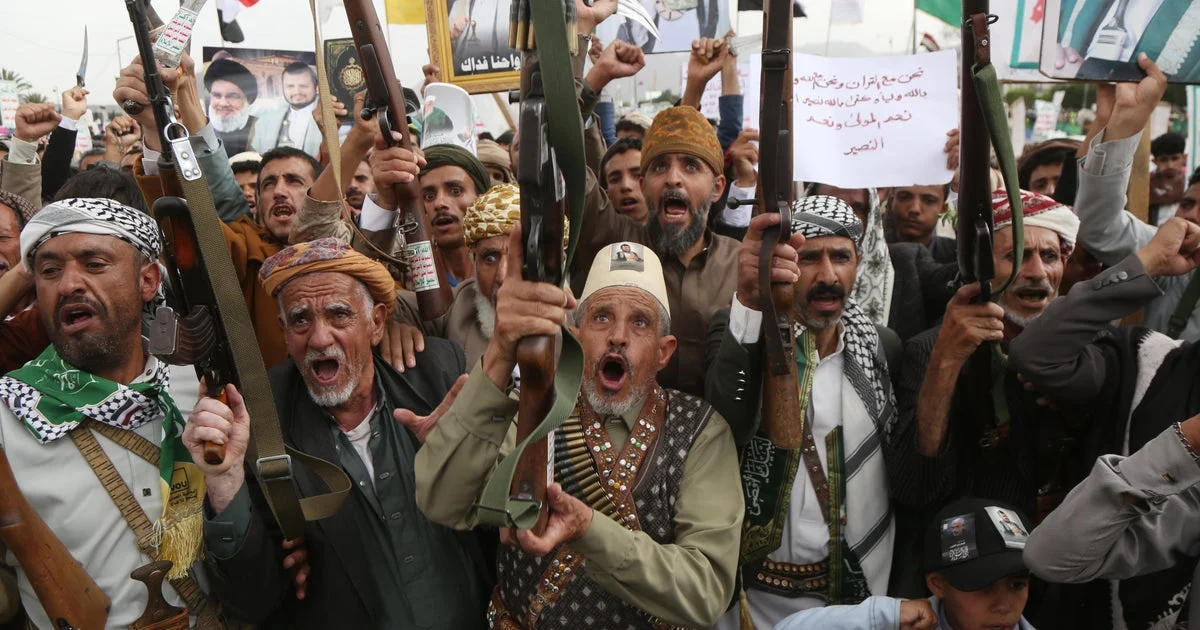
Yemen’s Iran-aligned Houthi rebels launched renewed missile and drone attacks targeting Saudi-supported government forces in the eastern city of Marib, marking a sharp escalation in the Yemeni conflict with regional implications amid growing security cooperation among Saudi Arabia, Turkey, and Pakistan.
What Happened
On Friday, Yemeni state media confirmed that the Houthi movement carried out fresh missile and drone strikes against Saudi-backed government troops in Marib, a strategic eastern city where intense fighting has been ongoing. This came a day after a series of Houthi assaults inflicted dozens of casualties on government forces. Videos circulated on social media showed smoke rising over the city after the attacks. Yemeni armed forces reported shooting down several Houthi drones over Marib.
Houthi military spokesman Yahya Saree announced on Thursday that the rebels had launched a “large-scale and special military operation” targeting Saudi military buildups within Marib and Hadramawt provinces. The operation reportedly destroyed military camps, weapons depots, and equipment in the Al-Wadiah area. However, official Saudi-backed Yemeni sources confirmed the death of 17 soldiers and officers, while the AFP news agency estimated at least 58 casualties among government-aligned troops.
The violence spilled over into southern Saudi Arabia, where Houthi missile and drone attacks wounded 11 civilians in the Najran region according to the Saudi-led coalition. The injured included seven Saudis, including a child, as well as Yemeni, Egyptian, and Pakistani nationals. Coalition spokesman Turki al-Maliki condemned the attacks as violations of international humanitarian law for targeting civilians and civilian infrastructure.
Key Facts
The attacks represent the deadliest single strike against Saudi-backed Yemeni forces since 2022. Yemeni government sources cite 17 fatalities among soldiers and officers in the strikes, while AFP reports 58 deaths. The Saudi-led coalition confirmed 11 civilian injuries in Najran, with victims suffering from burns, including women and children. The joint defense agreement signed by Saudi Arabia, Turkey, and Pakistan on the same day pledges collective deterrence and mutual defense against aggression.
What This Means
The intensified Houthi offensive underscores the fragile security situation in Yemen’s Marib region, an area pivotal to the ongoing civil war. The attacks raise concerns over the expanding role of Iranian-backed forces in Yemen’s conflict, complicating efforts to stabilize the area. Moreover, the cross-border impacts of the strikes into southern Saudi Arabia highlight the broader regional dangers as Iran-aligned militias extend their reach beyond Yemen’s borders.
The concurrent defense pact between Saudi Arabia, Turkey, and Pakistan signals a collective regional response to the increasing instability and perceived threats from groups like the Houthis. This alliance aims to bolster deterrence capabilities against cross-border aggression, reflecting heightened geopolitical tensions in the Middle East. For civilians in Yemen and southern Saudi Arabia alike, the violence directly threatens safety and exacerbates the humanitarian crisis, where access to essential services remains precarious.
Background
The Yemeni conflict involves multiple factions, with the Houthi movement receiving support from Iran. The Houthis have been engaged in a prolonged civil war against the Saudi-backed internationally recognized government. Marib has been a strategic battleground due to its oil resources and position as the last northern stronghold of the Yemeni government. The Yemen war is increasingly entwined with wider regional disputes between Saudi Arabia and Iran, prompting new alliances and defense collaborations among Muslim-majority countries concerned about Iranian influence.
What Remains Unclear
The Houthis have not issued an official statement on the latest attacks, and casualty figures vary between sources. The precise military strength and buildup alleged by the Houthis in Marib and Hadramawt remain unverified. Details on specific terms or operational scope of the new Saudi-Turkey-Pakistan defense agreement beyond general deterrence have not been fully disclosed.
What Comes Next
Yemen’s defense ministry has pledged to respond to the Houthi attacks “at the appropriate place and time,” indicating potential further military escalation. The new Saudi-Turkey-Pakistan security pact may lead to joint military exercises or coordinated defense measures shortly. Meanwhile, diplomatic efforts to manage tensions, including ongoing U.S. considerations regarding Iran and regional security, remain in flux.
Sources
This article is based on reporting and publicly available information from the following source:
Read more World News stories on Goka World News.