
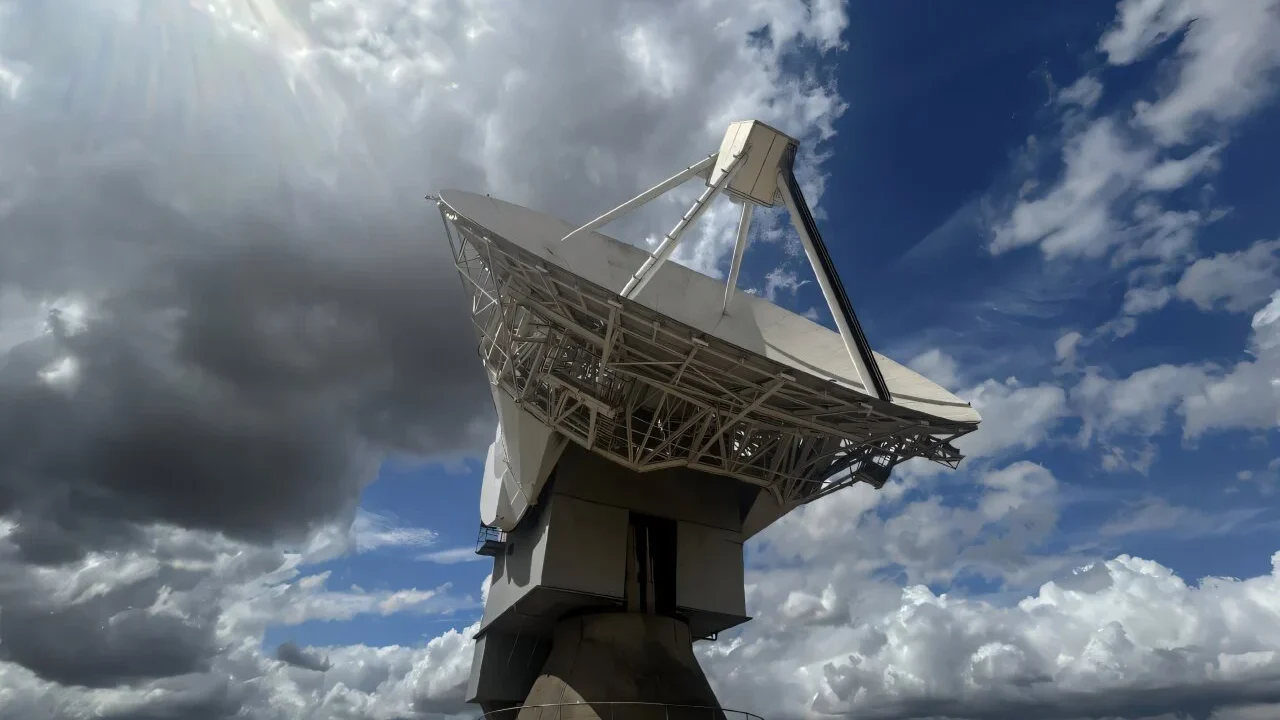
The Chilbolton Observatory in southern England is intensifying efforts to track the escalating volume of space debris orbiting Earth. Operated by the UK’s national space laboratory, RAL Space, the facility’s radar system supports Britain’s national space monitoring and collision avoidance efforts amid growing concerns around satellite safety and planetary defense.
What Happened
As of 2026, Chilbolton Observatory continuously monitors thousands of objects in Earth’s orbit, including active satellites, defunct rocket bodies, and fragments resulting from past collisions and explosions. Staff feed critical data to the UK’s National Space Operations Centre (NSpOC), which manages collision warnings and debris tracking. This intensifying surveillance comes as the number of orbiting satellites approaches 14,000, with projections of up to 1.7 million planned launches in coming years, including over one million expected from SpaceX alone starting in 2028.
Experts from the UK Space Agency visit Chilbolton to oversee capabilities essential for tracking licensed satellites and debris. On a notable occasion, the observatory tracked the impact of a SpaceX rocket stage crashing into the Moon, underscoring the dynamic and hazardous orbital environment. Additionally, the observatory supports planetary defense activities, monitoring near-Earth asteroids in partnership with international bodies such as NASA’s International Asteroid Warning Network.
Key Facts
The European Space Agency reports more than 46,000 debris objects weighing some 17,000 tonnes currently orbit Earth. The UK’s NSpOC issues approximately 3,000 monthly collision alerts to satellite operators. The UK government has committed £85 million ($114 million) to support NSpOC’s expanding monitoring and tracking operations. Chilbolton’s radar can differentiate objects ranging from operational satellites to fast-multiplying fragments of debris resulting from orbital events.
Chilbolton Observatory’s radar is complemented by optical sensors for asteroid monitoring. The UK supports the European Space Agency’s upcoming 2029 mission to study the 375-meter-wide asteroid Apophis, which will fly close to Earth, adding a planetary defense dimension to Chilbolton’s space surveillance remit.
What This Means
The growing density of space debris significantly raises the risk of collisions that can disable or destroy operational satellites, which play an increasingly vital role in telecommunications, navigation, and economic infrastructure. The data provided by Chilbolton Observatory and NSpOC enables timely alerts and evasive maneuvers, reducing the likelihood of catastrophic orbital collisions. With satellite technology underpinning roughly 20% of the UK economy, such monitoring is critical for national security and commercial interests.
Furthermore, the observatory’s integration into global asteroid warning networks reflects the intertwined nature of space security—combining debris tracking with planetary defense measures. Understanding debris trajectories also helps mitigate potential hazards from re-entering objects that could survive atmospheric burn-up and reach populated areas. This layered surveillance exemplifies the growing complexity of space traffic management in a congested orbital environment with diverse international actors.
Background
Space debris has been accumulating since the dawn of the space age, with many objects becoming uncontrollable hazards. The so-called Kessler syndrome, a scenario where cascading collisions produce exponentially more debris, threatens to impede future space operations. The UK’s investment in observatory upgrades and space operation centers follows global calls for improved coordination and technology to manage space traffic density responsibly.
Past incidents, including rocket stage reentries over populated regions, have heightened awareness about the dangers posed by uncontrolled debris. The UK’s collaborative approach with European and international partners aligns with efforts to pool radar, optical, and computational resources to bolster situational awareness.
What Remains Unclear
The scalability of current radar and tracking technologies to cope with the exponential increase in small debris—many too small to track reliably—remains uncertain. Additionally, the effectiveness of future debris mitigation policies and international compliance with space traffic management protocols is yet to be fully tested as satellite constellations continue to expand rapidly.
What Comes Next
The UK’s continued funding for the NSpOC will enhance operational capabilities, including increased automation of collision predictions and expanded monitoring of foreign satellites and potential threats. The 2029 ESA mission to study asteroid Apophis will provide critical data supporting global planetary defense strategies, an area of growing importance alongside debris tracking.
Sources
This article is based on reporting and publicly available information from the following source:
Read more Space & NASA stories on Goka World News.