
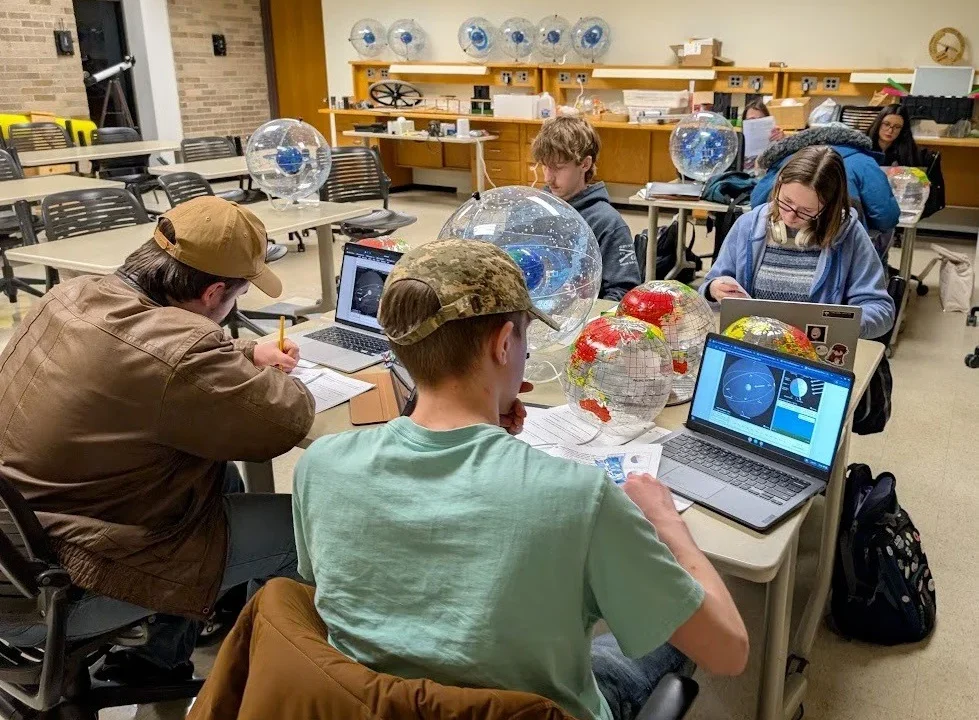
A collaborative effort supported by NASA’s Science Activation (SciAct) program has modernized an introductory astronomy textbook by adding active learning components drawn from NASA’s extensive educational resources. This initiative aims to transform traditional astronomy instruction at community colleges by incorporating interactive modules that complement the core content of the widely used OpenStax Astronomy 101 textbook.
What Happened
In June 2026, three SciAct-supported teams—the NASA Community College Network (NCCN) led by the SETI Institute, Infiniscope directed by Arizona State University, and NASA Treks—convened for a virtual workshop to begin the process of enhancing astronomy teaching materials. Five experienced community college instructors each took one of the first five chapters of the OpenStax textbook and infused it with active learning modules utilizing NASA’s educational assets. These modules include resources from programs such as NASA Treks, Universe of Learning, and Cosmic Data Stories. After two weeks of collaborative development, the teams presented their initial results in July 2026, with plans to field-test the revised courseware in community college classrooms during the Fall 2026 semester.
Key Facts
The enhanced courseware preserves the clear explanatory narrative of the original OpenStax textbook while integrating interactive content to foster engagement and conceptual understanding. The team involved five community college instructors: Carver Bierson (Scottsdale Community College, Arizona), Dan Chase (Modesto Community College, California), Dennis Just (Pima Community College, Arizona), Steve Tuckey (Jackson College, Michigan), and Sally Watt (Glendale Community College, Arizona). This project is funded through cooperative agreements as part of NASA’s Science Activation portfolio, which supports authentic science experiences by connecting learners with NASA scientists and resources.
What This Means
This initiative signals a significant shift in how astronomy education is delivered at the community college level, blending traditional textbook content with dynamic, NASA-originated educational tools. By actively engaging students through interactive lessons and visualization resources, educators can better align teaching strategies with evolving student learning preferences and improve comprehension of complex astronomical concepts. Such enhancements could lead to higher retention rates in STEM courses and inspire greater interest in space science careers among a more diverse student population. More broadly, the project demonstrates how NASA’s public science resources can be effectively leveraged beyond formal research to enrich education nationwide.
Background
The OpenStax Astronomy 101 textbook is a widely used, openly licensed resource designed to provide a comprehensive introduction to astronomy. However, traditional textbooks often lack the interactive and multimedia elements that contemporary students find engaging. NASA’s Science Activation Program supports partnerships with educators and community organizations to develop and disseminate authentic NASA science experiences and resources aimed at bridging this gap.
What Comes Next
Following the planned field tests in community college classrooms in Fall 2026, the teams intend to systematically rework the entire OpenStax textbook using the active learning model established in this pilot. This expansion aims to cover all chapters and fundamentally reshape introductory astronomy education. Continuous feedback from instructors and students during classroom implementation will inform further refinements. The effort also highlights new pathways for distributing NASA’s SciAct educational materials more broadly.
Sources
This article is based on reporting and publicly available information from the following sources:
Read more Space & NASA stories on Goka World News.