
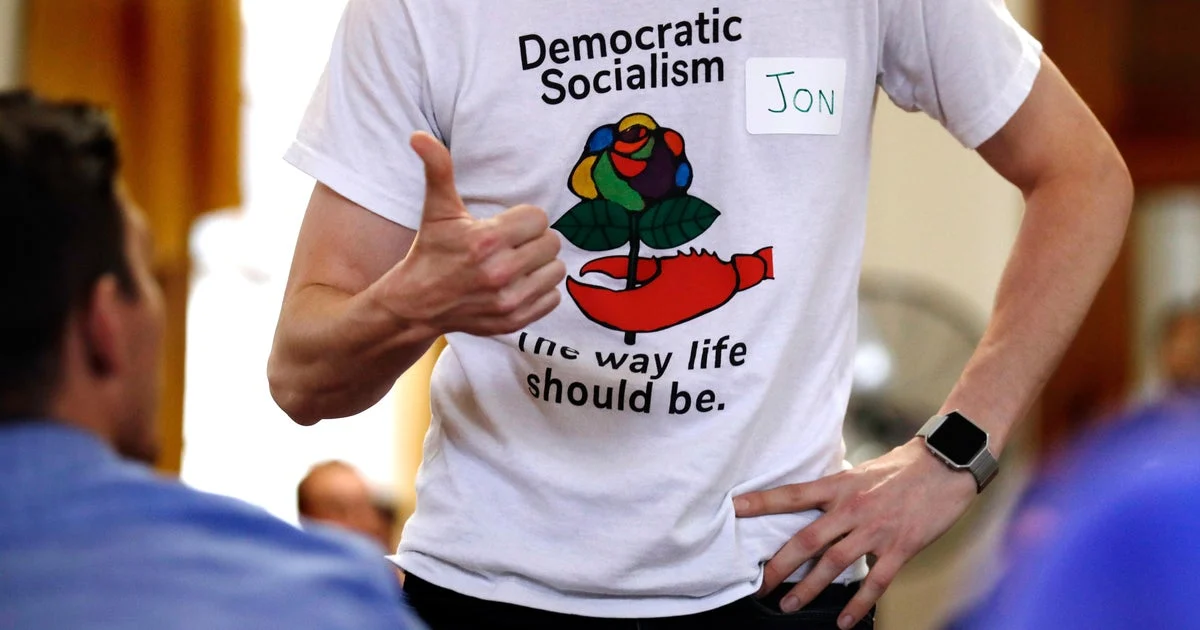
A CBS News poll conducted in August 2026 highlights how Americans broadly favor capitalism and the free market but increasingly perceive the current U.S. economic system as unfair and challenging, particularly for younger generations. The poll reveals a clear divide within the Democratic Party, where socialism holds more appeal than capitalism among rank-and-file members, reflecting ongoing tensions over the party’s economic direction amid a difficult financial landscape.
What Happened
The CBS News/YouGov survey interviewed a nationally representative sample of 2,287 U.S. adults between August 12 and August 14, 2026, with a margin of error of ±2.6 points. It found that most Americans view the free market positively, while socialism carries a net-negative perception overall. Despite this, Democrats tend to have a more favorable opinion of socialism than capitalism, with younger and college-educated Democrats showing the strongest support. The poll also explored public interpretations of socialism, finding Republicans and independents associate it primarily with government control, while Democrats link it more to equality, fairness, and public services.
Key Facts
Most Americans agree a free market system is beneficial, with capitalism rated more positively than socialism. However, many see the current economic situation as harder than in past generations, especially regarding buying homes, raising families, and overall financial security. Democrats are more likely than other groups to perceive a widening income gap and to view socialism favorably, particularly among younger Democrats and those with college degrees. About half of Democrats describe the party as not progressive enough, and many want it to adopt bolder economic policies, even if incremental changes might be more achievable.
What This Means
The poll reveals a complex interplay between economic dissatisfaction and political allegiance affecting the Democratic Party’s internal dynamics and public image. While the broader American public favors capitalism, frustrations over economic opportunities and fairness create fertile ground for socialist ideas within the party’s base. For Democrats, this represents a challenge: balancing calls for significant policy change with the practicalities of governance and appealing to a diverse constituency. The generational and educational divides underscore shifting priorities that could influence not only primary contests but also the party’s strategy going forward.
Beyond party politics, the widespread perception of economic insecurity illustrates broader societal concerns about stagnant wages, housing affordability, and the cost of raising a family. These factors drive public openness to governmental interventions, even as capitalism remains the preferred system. The findings suggest that political messaging and policy proposals that address economic fairness and opportunity might resonate widely, shaping electoral outcomes and public debates in the near term.
Background
These findings build on years of negative ratings for the U.S. economy amid rising income inequality. Democrats have faced internal debates over how progressive their platform should be, particularly on economic issues. This poll comes amid a primary season characterized by challenges to established incumbents from younger and more progressive candidates, reflecting a generational shift within the party. Meanwhile, the Republican Party is viewed by many voters as extreme and ineffective, complicating the political landscape.
What Comes Next
The survey period precedes the 2026 midterm elections, where economic concerns are expected to remain central in voter decision-making. The Democratic Party’s approach to addressing these concerns, especially clarifying its stance on socialism versus capitalism and delivering tangible economic policies, will be critical to its ability to unify the party and appeal to a broad electorate. Future polling and election results will help illuminate how these attitudes evolve.
Sources
This article is based on reporting and publicly available information from the following source:
Read more Politics stories on Goka World News.