
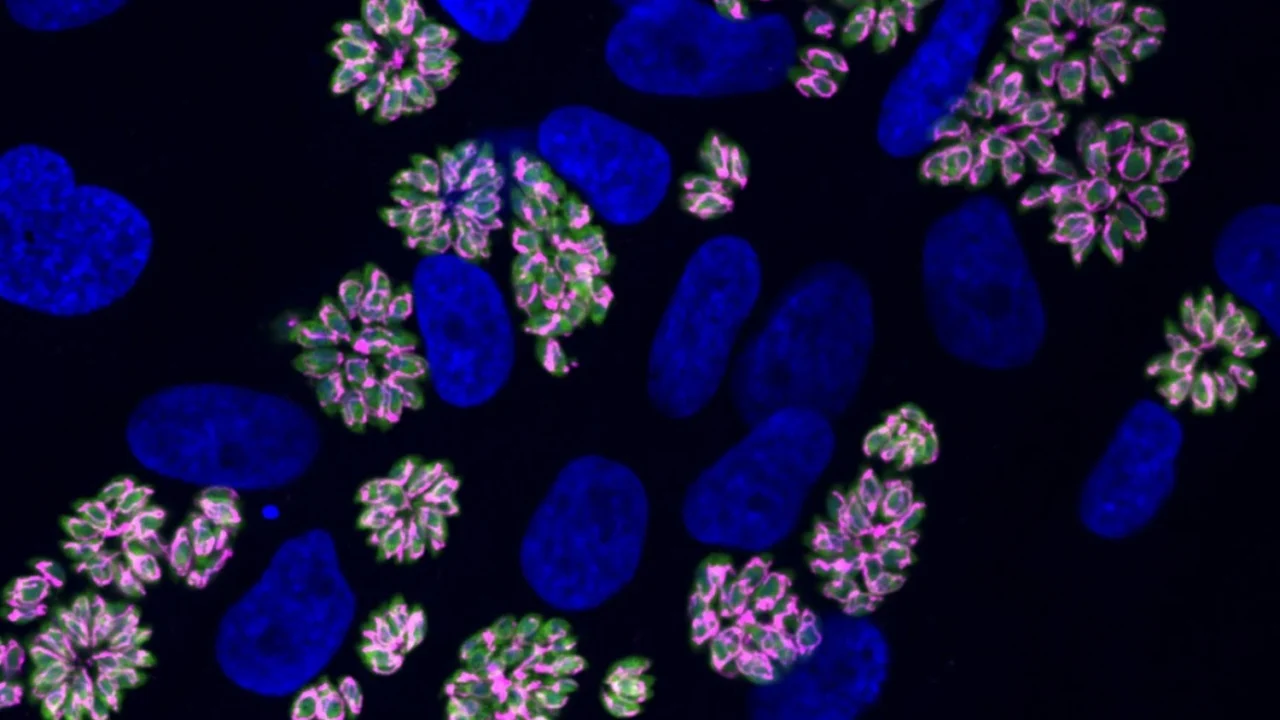
Scientists at MIT have identified a parasite-specific protein that allows Toxoplasma gondii, a widespread infectious parasite, to adapt its metabolism to crowded conditions inside host cells. Published on August 11 in the journal Cell, the study reveals how this protein, named TgPRO, helps Toxoplasma manage oxidative stress and maintain energy production when packed densely inside tissue cysts.
What Happened
The research, led by Associate Professor Sebastian Lourido and co-first authors Christopher Giuliano and Chinmay Kalluraya, involved genome-wide CRISPR screening to identify genes essential for Toxoplasma survival at both low and high densities. The screen highlighted TgPRO as critical to parasite fitness specifically under crowded conditions, such as those inside chronic brain and muscle cysts. Parasites lacking TgPRO accumulated damaging reactive oxygen species and exhibited disrupted mitochondrial function, impairing their growth when densely packed.
Further analysis showed that TgPRO is an RNA-binding protein that stabilizes messages controlling nutrient processing, mitochondrial activity, and iron-sulfur cluster assembly. Experimental interventions supplying extra iron or adjusting mitochondrial chemistry partially rescued parasite growth without TgPRO, linking the protein’s function to iron-dependent energy metabolism. Laboratory trials also demonstrated that lowering oxygen levels, closer to those found in animal tissues, could reduce oxidative stress and improve growth of TgPRO-deficient parasites.
The team extended their findings to in vivo models: mice infected with TgPRO-deficient Toxoplasma developed smaller brain cysts, suggesting the protein’s role in supporting parasite persistence during chronic infection.
Key Facts
The study appeared in the open-access journal Cell on August 11, 2023. It was conducted at the Whitehead Institute for Biomedical Research and MIT, involving dozens of gene targets tested via CRISPR. The parasite samples were assessed under controlled laboratory crowding, with comparative tests at varying oxygen levels. Iron supplementation and biochemical assays helped link TgPRO function to mitochondrial iron metabolism. Mouse infection models provided validation of the protein’s role in chronic-stage cyst growth.
What This Means
This discovery sheds light on how a globally prevalent parasite survives the challenging environment of crowded tissue cysts where nutrient scarcity and waste accumulation would otherwise inhibit growth. By regulating genes crucial for energy metabolism and oxidative stress defense, TgPRO enables Toxoplasma to maintain mitochondrial health and nutrient use efficiency. This adaptation is vital for chronic infection stages, particularly in brain tissue, which has high clinical relevance due to neurological complications in weakened immune systems or fetuses.
Identifying TgPRO also opens potential avenues for therapeutic intervention. If drugs can target the pathways controlled by this protein, they may sensitize the parasite to oxidative damage and make treatments more effective, especially since chronic Toxoplasma infections are notoriously difficult to eradicate. Moreover, recognizing the role of oxygen tension in parasite metabolism emphasizes the importance of modeling physiological conditions in laboratory studies to better understand in-host biology.
More broadly, the finding illustrates convergent evolution, showing that unlike mammals, fungi, and bacteria, Toxoplasma has evolved a unique molecular mechanism to regulate metabolic gene expression under stress, underscoring fundamental biological requirements for cellular adaptation to metabolic challenges.
Background
Toxoplasma gondii is an apicomplexan parasite infecting hundreds of millions worldwide, often without symptoms but capable of severe disease in immunocompromised individuals and during fetal development. It forms latent cysts in brain and muscle tissues, where hundreds of parasites live densely packed, creating a microenvironment prone to oxidative stress and nutrient limitation. Prior to this research, the mechanisms enabling parasite survival in these conditions remained poorly understood.
What Remains Unclear
While TgPRO has been identified as a key regulator, the precise molecular targets and broader network of genes it influences require further elucidation. The evolutionary origins and full spectrum of its regulatory role across different parasite life stages have yet to be clarified. Additionally, whether inhibiting TgPRO-related pathways in vivo can be translated into effective treatments remains untested.
What Comes Next
The researchers plan to continue characterizing TgPRO’s RNA targets and its mechanisms of gene regulation in Toxoplasma. They also intend to explore the therapeutic potential of disrupting this pathway to increase parasite vulnerability to oxidative stress-inducing drugs. Understanding how oxygen levels modulate parasite metabolism will guide improvements in experimental models for future studies.
Sources
This article is based on reporting and publicly available information from the following sources:
Read more Science Discoveries stories on Goka World News.