
President Donald Trump has issued an executive order to reduce childhood vaccinations, citing concerns about autism that remain scientifically unproven, while the nation’s top health official, Robert F. Kennedy Jr., continues a funded but secretive research effort that has yet to produce definitive findings. This move has sparked confusion and concern among leading medical experts and health policy analysts.
What Happened
On August 10, 2025, President Trump signed an executive order directing the Department of Health and Human Services (HHS) to limit childhood vaccine recommendations. Although the order does not explicitly mention autism, the president publicly reiterated longstanding but discredited claims that vaccines contribute to the rising number of autism diagnoses. The directive came amid growing political debates ahead of the midterm elections and just after confirmation of key health agency leaders, including new CDC director Erica Schwartz.
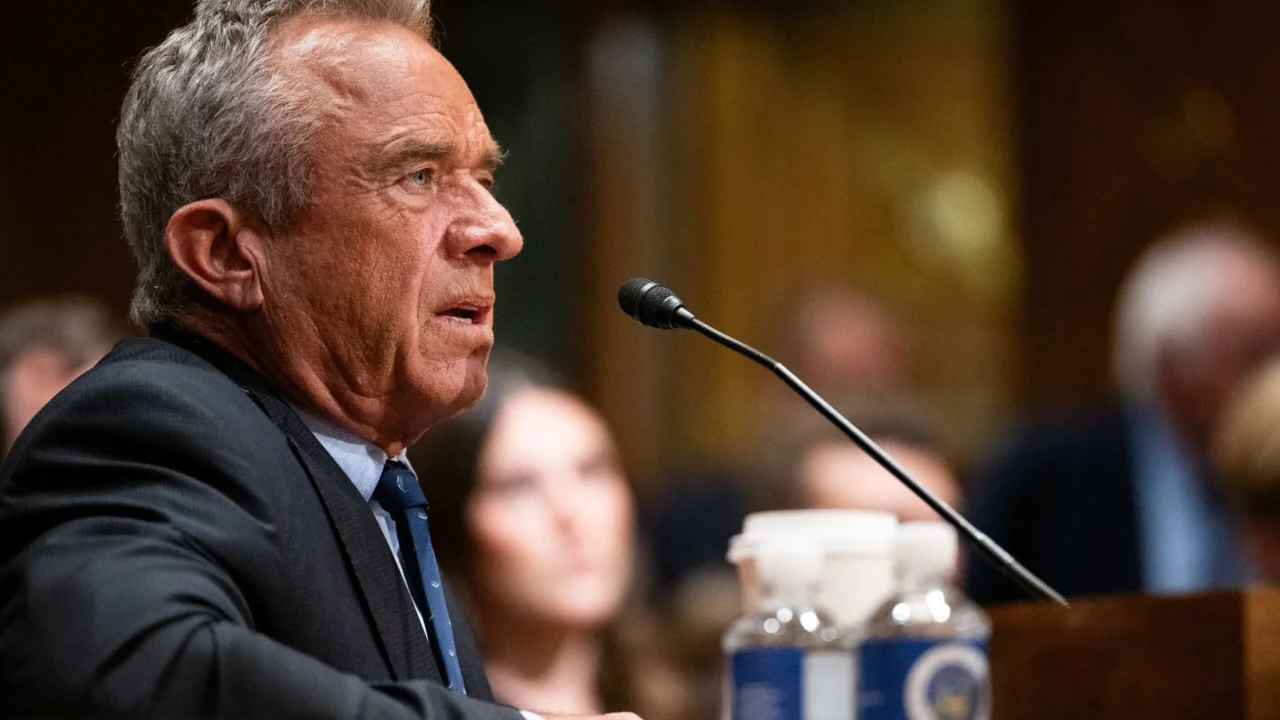
Meanwhile, Kennedy, appointed as health secretary, has overseen a multi-million-dollar research project aimed at identifying causes of autism, a strategy criticized for its secrecy and lack of transparency. Despite more than a year of effort and repeated promises by Kennedy to deliver answers, no conclusive evidence linking vaccines to autism has surfaced. Public health officials and autism researchers have largely been excluded from the process.
Key Facts
Autism diagnoses in the United States have increased approximately fivefold over recent decades, a trend widely attributed by experts to expanded screening, broader diagnostic criteria, and shifting parental demographics such as older parental age. Genetic factors are recognized as primary contributors, with environmental influences under investigation.
Against this background, Kennedy’s research efforts have remained opaque, led by allies skeptical of vaccines and excluding input from mainstream autism advocacy groups and career scientists. The Interagency Autism Coordinating Committee was reconstituted with members including vaccine critics and others controversial for autism treatments, meeting only once this term.
Academic studies published in high-profile journals such as JAMA and JAMA Pediatrics have debunked assertions linking acetaminophen use during pregnancy, circumcision, or the hepatitis B vaccine with autism. Despite this, the administration has cut funding for established environmental autism research and directed $50 million in new grants focused on autism, with most projects years from completion.
What This Means
This decision to reduce childhood vaccinations risks undermining public trust in established immunization programs that have long prevented outbreaks of serious infectious diseases. It also diverts attention and funding from evidence-based autism research that examines genetic and environmental determinants of the condition. For families and healthcare providers, the enduring false association between vaccines and autism may increase vaccine hesitancy, complicating efforts to maintain herd immunity and protect vulnerable populations.
Politically, the timing highlights the tension between the administration’s desire to address autism concerns politically and the scientific community’s consensus rejecting vaccine causation. Kennedy’s isolated and secretive approach has alienated key stakeholders, thereby limiting progress in understanding autism and potentially delaying interventions that might improve the quality of life for autistic individuals and their families.
Background
Decades of research by the Centers for Disease Control and Prevention, World Health Organization, and multiple independent groups have found no credible evidence that vaccines cause autism. The rise in autism prevalence is widely regarded by scientists as a result of increased awareness, diagnostic changes, and demographic factors rather than vaccine exposure.
Nevertheless, skepticism and misinformation about vaccines persist in some political and social circles. Kennedy, sharing a history of vaccine criticism, has positioned autism as a “preventable disease,” a view contrasted sharply by mainstream medical experts. His efforts to reshape federal autism research priorities have been marked by controversy and stalled outcomes.
Analysis
Experts such as psychologist Helen Tager-Flusberg, director of the Coalition of Autism Scientists, criticize Kennedy’s research as the most secretive and opaque autism project in recent memory, likening it to a military-style operation lacking transparency. Officials familiar with the project describe a lack of engagement with the broader scientific and advocacy communities.
NIH Director Jay Bhattacharya acknowledged publicly on CBS that the cause of the rise in autism remains unknown, underscoring the scientific uncertainty and the premature nature of claims linking vaccines to the disorder. The administration’s contradictory stance, combined with politically motivated timelines, challenges thorough scientific inquiry.
What Remains Unclear
Despite substantial spending and high-profile attention on the issue, no new conclusions have emerged to clarify the causes behind autism prevalence increases. The exact direction and leadership of Kennedy’s research effort remain undisclosed. It is unknown whether reduced vaccination recommendations will align with international standards or how they will impact public health outcomes in the U.S.
What Comes Next
The HHS has pledged to examine all biologically plausible hypotheses surrounding autism but has not provided a timetable for definitive findings or changes to vaccine policy. Researchers funded by recent grants are expected to report results in several years. Meanwhile, the political and public discourse around vaccines and autism will likely continue to influence public health messaging and policy decisions.
Sources
This article is based on reporting and publicly available information from the following sources:
Read more Health & Public Health stories on Goka World News.