
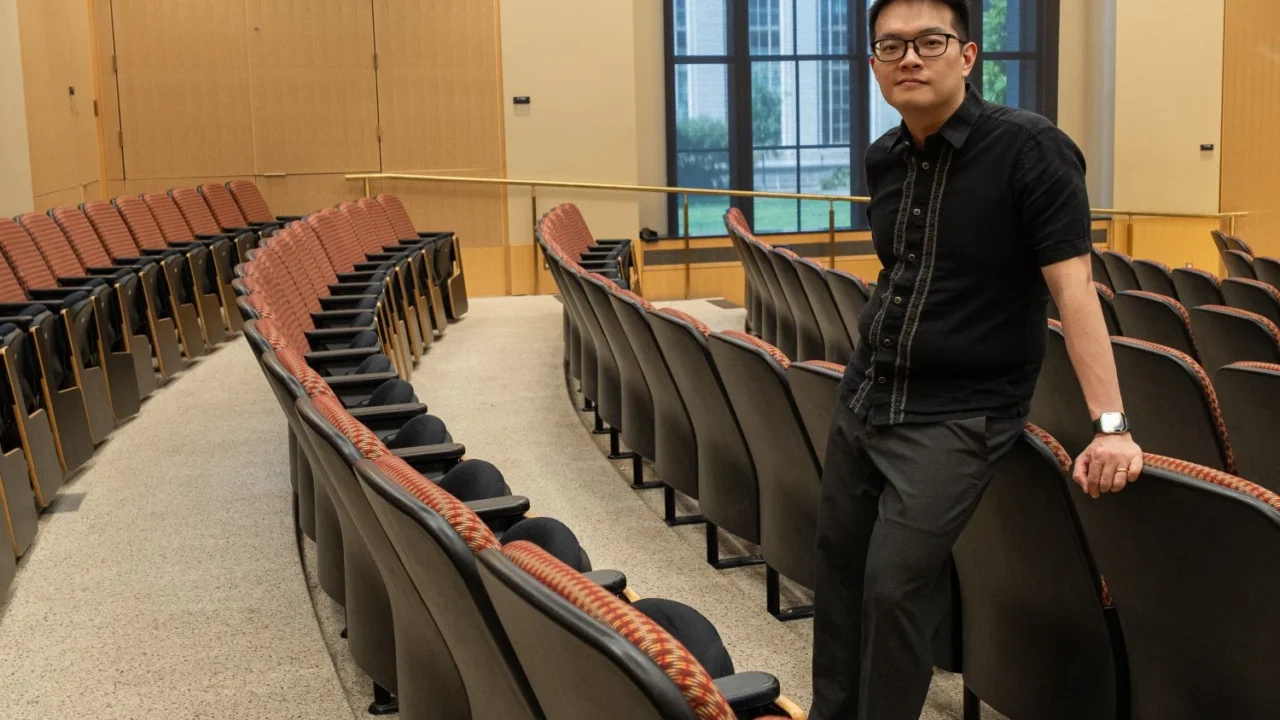
Lyonel Tanganco, a graduate student at MIT’s Master in Data, Economics, and Design of Policy (DEDP) program, is advancing research that bridges economic growth with improved living conditions in middle-income countries. His work, highlighted by collaboration with the Abdul Latif Jameel Poverty Action Lab (J-PAL), focuses on developing data-driven policy tools to improve public health and nutrition, with research-based interventions in nations such as the Philippines and Indonesia.
What Happened
Through his studies at MIT, Tanganco has engaged in designing and evaluating programs aimed at translating economic advances into measurable social improvements. His research involves randomized impact evaluations of tax-related interventions in Indonesia, conducted alongside local governments, under the guidance of economist Benjamin Olken. Previously, Tanganco contributed to the Philippines’ government initiatives where he helped design a conditional cash transfer program addressing child malnutrition; this program now assists over 190,000 Filipino households and has increased health-seeking behavior among children eightfold. His work also includes enhancing tax policies to expand healthcare budgets and reforms intended to promote fairness in income taxation.
Key Facts
Tanganco is enrolled in the MIT DEDP program, jointly run by the Department of Economics and J-PAL, an organization dedicated to poverty reduction through evidence-based policy. His research incorporates randomized controlled trials to evaluate interventions in Indonesia’s tax system. This builds on his earlier government experience in the Philippines, where public health funding increased sixfold thanks to new excise taxes on cigarettes, vaping, and alcohol. The conditional cash transfer program under his design incentivizes monthly child health checkups among impoverished families with payments averaging $12 monthly. The studies he is involved in address social challenges including malnutrition—affecting one in four Filipino children—and climate impacts that disrupt education and growth.
What This Means
Tanganco’s research is significant because it develops practical pathways for middle-income countries to convert economic gains into tangible improvements in human welfare, a challenge often overlooked in aggregate growth statistics. By applying rigorous evidence-based methods, such as randomized evaluations and policy collaborations, his work illuminates scalable strategies for improving child health, nutrition, and public service delivery. These interventions not only enhance immediate well-being but also address longer-term societal inequalities by targeting the most vulnerable populations. This approach signals a needed shift from focusing solely on economic indicators to encompassing multidimensional development outcomes, vital for policy makers, donors, and practitioners aiming to make investments that yield measurable, sustained human progress.
Background
The MIT DEDP program integrates economics and design emphasizing data-driven policy solutions, reinforced by J-PAL’s commitment to randomized controlled trials. Tanganco’s previous work in the Philippines also responds to research linking early childhood malnutrition to diminished cognitive development and lifelong disadvantages, emphasizing the importance of early intervention. Additionally, climate challenges affecting educational continuity and economic activities in the region are increasingly acknowledged as critical factors hampering development trajectories.
What Remains Unclear
The long-term impacts and optimal scaling mechanisms for such programs require further investigation. For instance, while the conditional cash transfer program showed promising results in increasing health visits, the broader effects on child development outcomes and social mobility over time await comprehensive assessment. In Indonesia, the effectiveness and adaptability of tax interventions to different local contexts are still under evaluation, including how political and social factors may shape implementation.
What Comes Next
Tanganco plans to continue collaborating with local governments to refine tax administration strategies and conduct further randomized evaluations in Indonesia. These projects aim to produce actionable recommendations for effective revenue generation that fund social services. He encourages multidisciplinary partnerships between economists, healthcare practitioners, and community leaders to enhance policy relevance and impact. Additionally, the knowledge produced will potentially inform new interventions addressing nutrition and climate resilience in middle-income countries.
Sources
This article is based on reporting and publicly available information from the following sources:
Read more Science Discoveries stories on Goka World News.