
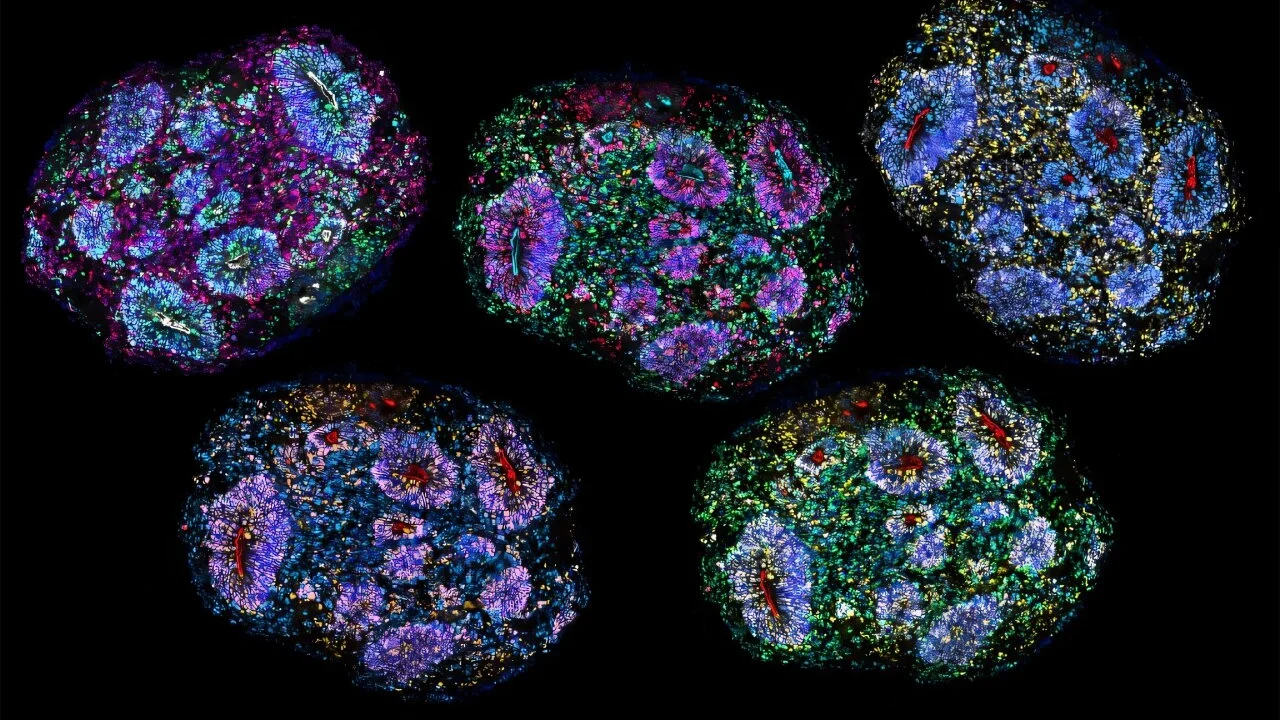
For the first time, scientists have successfully grown human brain organoids in the laboratory for an unprecedented seven years, demonstrating that these tiny clumps of brain cells continue to age and develop outside the body. This milestone, achieved by a U.S.-based research team led by Harvard professor Paola Arlotta, suggests that the organoids “record the passage of time,” providing a new model for studying long-term brain development and neurological disorders.
What Happened
The research team cultivated human brain organoids—microscopic clusters of brain cells derived from stem cells—for approximately seven years, far surpassing the previous longevity record of under two years. Throughout this period, the organoids exhibited progressive maturation similar to that found in natural human brains, despite never existing within an embryo or having sensory inputs. The study was published in the journal Nature in 2026.
Using three distinct genetic “clocks” designed to estimate biological cellular age, the researchers confirmed that the organoids’ cells aged and developed comparably to in vivo brain cells. In an innovative experiment, cells aged for one year were mixed with cells only two weeks old, forming a chimera. The older cells accelerated their development, “jumping ahead” to produce neurons typical of four-month growth stages, effectively “warping time” in brain cell development.
Key Facts
The organoids, about the size of peppercorns, were grown continuously for seven years under lab conditions. The aging process was tracked by recently developed molecular aging indicators, or genetic clocks, that matched timing patterns of natural brain cells. The study was conducted under the supervision of Paola Arlotta at Harvard University and published in a peer-reviewed article with DOI 10.1038/s41586-026-10877-x.
The organoids were intentionally destroyed after the study’s conclusion. Unlike human brains, they do not have bodies to sustain them, nor do they possess sensory inputs or the capacity for consciousness. They serve primarily as biological models—or “avatars”—to study cellular development and diseases such as autism and schizophrenia.
What This Means
This development marks a significant advance in neuroscience research by extending the timeframe over which human brain development can be modeled in vitro. Traditional brain organoids typically survive for only a few months, which limits their use in studying late-stage developmental processes or the progression of neurological disorders that emerge over years or decades.
By demonstrating sustained aging and cellular memory of development stages, these organoids offer new opportunities to investigate long-term brain maturation and disease progression at a cellular level. This can improve understanding of complex conditions that develop during adolescence or adulthood, such as schizophrenia and autism spectrum disorders, without relying on animal models.
Moreover, the ability to “warp time” in development—as shown by the chimera experiment—points to future potential methods for accelerating the growth and differentiation of specific brain cell types, which could streamline research and drug testing.
Background
Brain organoids have been cultivated for several years as models for early human brain development, but prior efforts seldom extended beyond a few months. This limitation stems from technical challenges related to sustaining growth and vascularization in vitro. The current study substantially lengthens the period over which organoids can be maintained, providing a closer approximation of natural brain aging trajectories.
What Remains Unclear
While these organoids demonstrate extended maturation, their complexity remains far below that of an actual human brain. They lack sensory input, full cellular diversity, and body integration, meaning they cannot replicate consciousness or higher brain functions. It is uncertain how long such organoids could potentially survive if maintained longer, and what molecular or environmental limits might constrain their lifespan or development pace.
What Comes Next
Future research will explore how these long-lived organoids can be used to model specific neurological disorders and test pharmaceuticals over extended periods. The team also intends to investigate methods to accelerate brain cell maturation safely, as hinted by the chimera experiments. These advancements were detailed in the 2026 Nature publication, with continued progress anticipated in subsequent years.
Sources
This article is based on reporting and publicly available information from the following sources:
Read more Science Discoveries stories on Goka World News.