
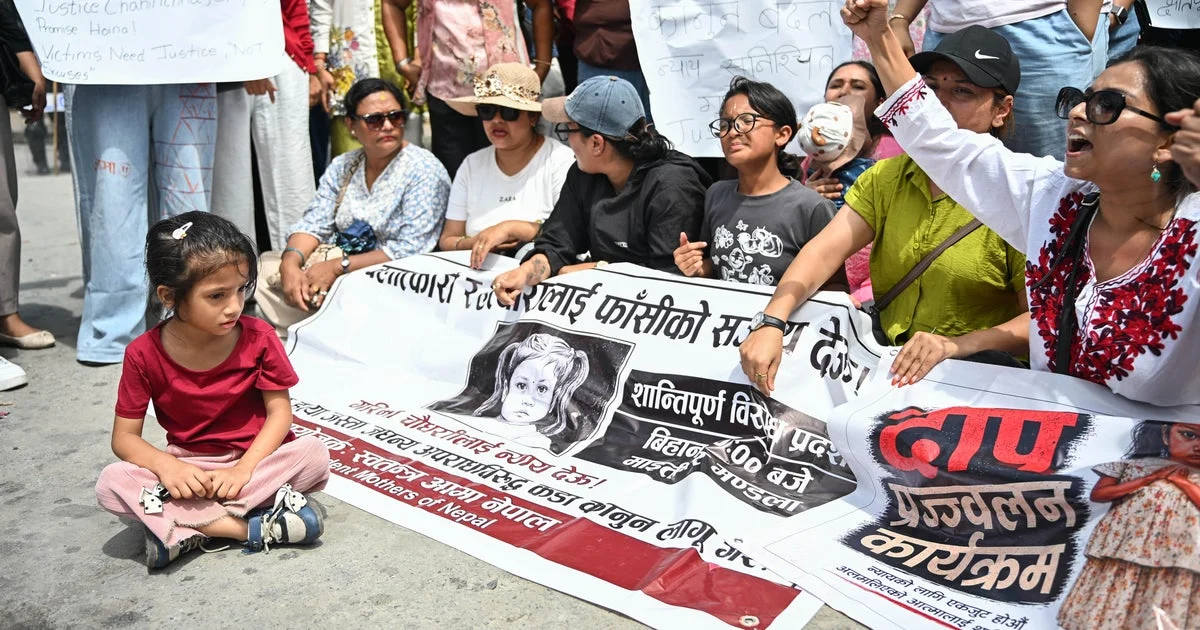
The brutal rape and murder of a three-year-old girl in Nepal has ignited widespread public outrage, leading to several days of protests across the nation. Demonstrators and political figures are urging the government to strengthen laws against sexual violence, including calls to reintroduce the death penalty despite constitutional bans.
What Happened
On August 16, 2026, a three-year-old girl went missing from her home in Bara district, situated about 80 miles south of Nepal’s capital, Kathmandu. Three days later, her body was discovered in an abandoned house. Police registered a case of rape and murder and arrested nine suspects, including a bus driver and a 16-year-old boy who allegedly lured the child into the attack with chocolate.
Following the incident, protests erupted in Kathmandu and other parts of the country, where young people and activists blocked highways and voiced their anger over perceived police inertia and government inaction. Many protesters criticised the response delay, accusing authorities of failing to promptly investigate the disappearance and subsequent crime.
Prime Minister Balen Shah, who rose to power after youth-led protests in 2025, faces intense scrutiny for his handling of the case and broader security issues. His decision to travel to a mountain region during escalating protests further fueled public criticism.
The victim’s father told The Kathmandu Post that initial police efforts were unresponsive, forcing the family to conduct their own search efforts before the authorities took more significant action.
Key Facts
The Nepal Police have recorded approximately 2,500 rape cases annually, with around 250 involving victims under the age of 10, according to official data. The current legal framework imposes a minimum seven-year prison sentence for adult rape convictions. In cases where the victim is under ten years old, sentences range from 16 to 20 years but can extend to life imprisonment based on case circumstances. When both rape and murder occur, life imprisonment is imposed.
Nepal’s constitution presently prohibits the death penalty, preventing its application even in severe cases like this. Despite this, opposition lawmakers such as Prakash Pathak and Ashika Tamang of the prime minister’s Rastriya Swatantra Party (RSP) have publicly advocated the reintroduction of capital punishment or extreme corporal penalties.
Government ministers, including the Minister for Law, Justice and Parliamentary Affairs Sobita Gautam and Home Minister Sudan Gurung, have rejected the death penalty due to constitutional constraints but have committed to reviewing existing laws. They have also promised to create a memorial honoring the young victim.
What This Means
The case has spotlighted systemic challenges in Nepal’s judicial and law enforcement systems concerning sexual violence and child protection. Public trust in police responsiveness, particularly in cases involving vulnerable victims, appears severely eroded, fueling widespread protest and political demands for reform. The incident has reignited debates about the balance between constitutional protections and community calls for harsher punishments to deter such crimes.
For ordinary Nepalese citizens, this tragedy represents not only a failure in justice but also fear for the safety of children and women. The demands for stronger laws, including a reconsideration of the death penalty, mark a significant societal shift that could pressure lawmakers to reconsider the country’s legal framework for sexual offenses. This could have lasting impacts on Nepal’s legislative approach to crime and policing culture.
Furthermore, the criticism of Prime Minister Shah highlights the fragility of recent political reforms and the high expectations placed on youth-led leadership to deliver effective governance and public safety improvements in Nepal.
Background
Prime Minister Balen Shah assumed office following a wave of youth-led protests in 2025 that resulted in the ouster of former leader KP Sharma Oli. His administration raised hopes for modernization and reform, particularly in policing and law enforcement, areas historically seen as weak or corrupt. However, delays in addressing high-profile cases like this have brought renewed skepticism about the government’s ability to enact meaningful change.
What Comes Next
Government officials have pledged to review the country’s rape and sexual violence laws in response to mounting public pressure. Proposed reforms may include tougher sentencing guidelines, but any move toward reinstating the death penalty would require a constitutional amendment. The government also plans to establish a memorial to honor the victim.
Meanwhile, protests have temporarily subsided but could resurge should authorities fail to pursue justice swiftly and transparently.
Sources
This article is based on reporting and publicly available information from the following source:
Read more World News stories on Goka World News.