
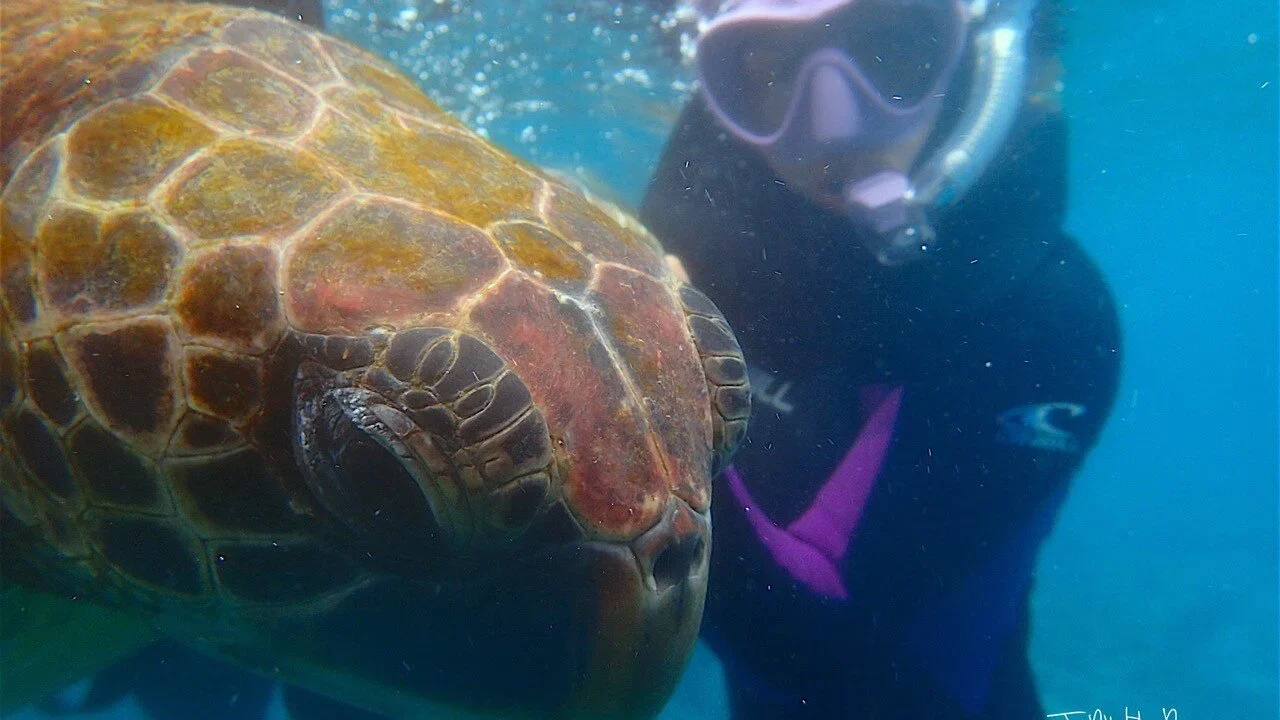
Yellow-morph green sea turtles in the Galápagos Islands display an unexpectedly limited range of movement, according to a new tracking study led by researchers from Alma College and Universidad San Francisco de Quito. Despite common perceptions of sea turtles as wide-ranging travelers, this population tends to remain within the Galápagos Marine Reserve rather than migrating offshore.
What Happened
In 2015, researchers tagged nine adult yellow-morph green sea turtles—seven males and two females—across four islands in the Galápagos. Using satellite transmitters that communicated with the Argos low-orbit network, the team monitored the turtles’ locations for up to 418 days. The turtles were tracked as they stayed predominantly in shallow coastal waters around the islands, with occasional forays up to 25 kilometers offshore.
Individual movement patterns varied: five turtles remained close to a single island, while others traveled between islands, including routes from Isabela to San Cristóbal and from Isabela to Española. Seasonal inter-island travel was recorded primarily in cooler months from April to October. The typical home range size for a turtle averaged 1,498 square kilometers, but varied widely among individuals.
Key Facts
The yellow-morph green sea turtles differ genetically from the black morphs that live in the eastern Pacific. Both morphs coexist only in the Galápagos, sharing similar diets of seagrass and algae, but yellow morphs tend to grow faster in youth. The study tracked movements within the 198,000 square kilometer Galápagos Marine Reserve, using satellite tags that transmitted location data for over a year on average.
Despite expectations that yellow-morph green sea turtles would migrate to distant western Pacific beaches to reproduce, none of the tracked individuals left the marine reserve during the multi-year study. Unlike black morph females that nest in the Galápagos, yellow-morph females appear likely to return to natal beaches in the western Pacific to breed, though this remains unconfirmed for the tagged turtles.
What This Means
This research challenges prevailing assumptions about green sea turtle migration, revealing that some yellow-morph individuals are more localized than previously thought. For conservationists, the finding underscores the need to protect not only the islands’ coastal habitats but also the marine corridors connecting them. Since many turtles rely on foraging grounds across multiple islands, habitat quality must be maintained throughout the entire reserve.
The apparent residency within the marine reserve means that local environmental changes, such as habitat degradation or pollution, could have outsized impacts on these turtles. Moreover, the results indicate that conservation efforts targeting migratory routes might need complementing with focused protection in localized areas used by resident turtles. Understanding these distinct movement patterns also provides insight into the physiological or ecological differences between yellow and black morphs.
Background
Green sea turtles (Chelonia mydas), one of seven extant sea turtle species, are primarily herbivorous as adults. The Galápagos Islands represent a unique ecological zone where yellow-morph and black-morph green turtles coexist. While previous studies have documented broad migratory patterns for sea turtles, few have investigated the spatial use and habitat fidelity of yellow-morph turtles specifically in this region.
What Remains Unclear
The study authors caution that the three-year tracking window captures only a snapshot of yellow-morph turtle behavior, meaning longer-term or less frequent long-distance migrations may have gone undetected. Additionally, the ultimate nesting sites of tracked female turtles remain unknown, though the researchers hypothesize movement to western Pacific beaches.
What Comes Next
The findings, published in Frontiers in Amphibian and Reptile Science in August 2026, encourage further research covering longer periods and larger sample sizes to better define migration patterns. Investigations into physiological and ecological differences between yellow and black morphs could also elucidate why these turtles adopt differing movement strategies.
Sources
This article is based on reporting and publicly available information from the following source:
Read more Science Discoveries stories on Goka World News.