
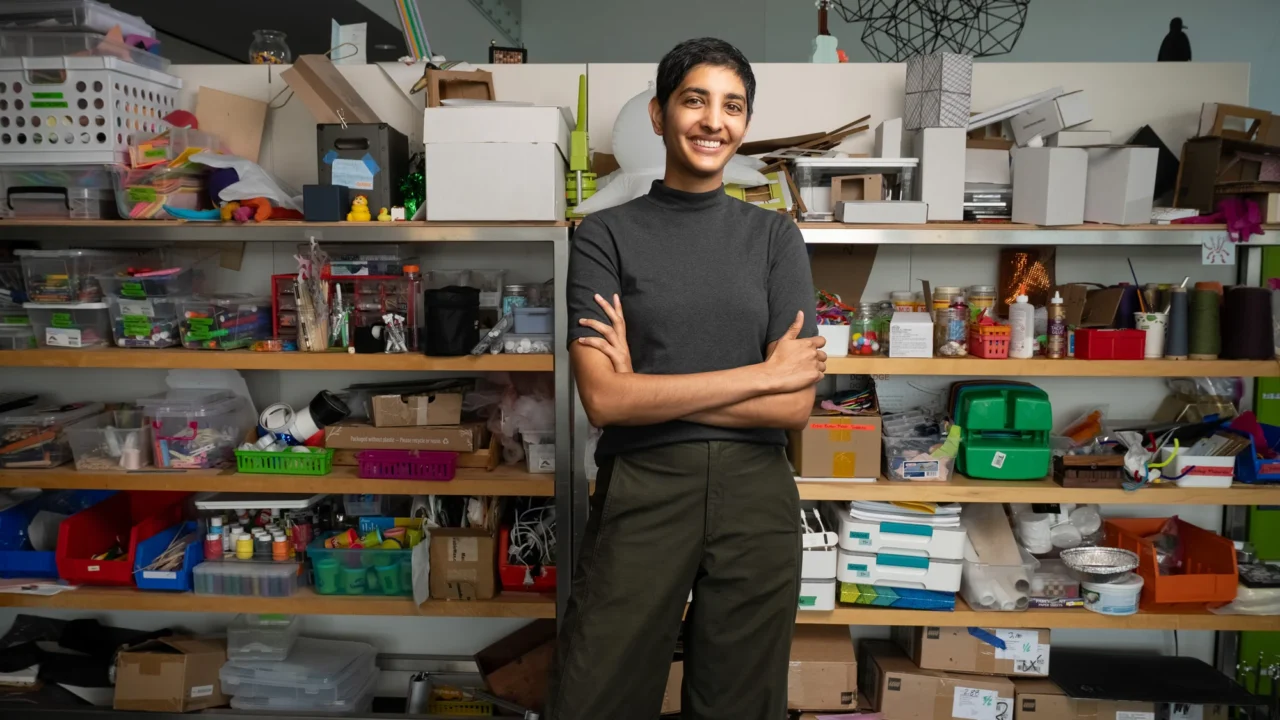
Ila Kumar, a doctoral researcher at the Massachusetts Institute of Technology (MIT), is reshaping how technology is designed by embedding community participation at its core. Her approach centers on co-developing digital tools with youth who have experienced childhood trauma, particularly those involved in the child welfare system, to better support healing, emotional expression, and independence.
What Happened
Since arriving at MIT in 2021, initially for a master’s degree, Kumar decided to pursue a PhD focused on community-engaged technology innovation within the Lifelong Kindergarten research group. Her work involves close partnerships with young people affected by trauma, care providers, and organizations such as Stepping Forward LA and the Justice Resource Institute. These collaborations have led to projects that replace conventional text-based communication with visual tools to aid emotional expression and mobile apps empowering youth to actively participate in their treatment planning. Kumar’s research methodology emphasizes co-design with community members rather than top-down technology development, and she has led training for caregivers on how to engage with young people’s use of emerging technologies like artificial intelligence (AI).
Key Facts
Kumar’s official affiliation is with MIT’s Lifelong Kindergarten group, where she is entering the sixth year of her PhD research. Her projects include:
- A visual collage-based app developed with Stepping Forward LA to assist trauma-affected youth in emotional expression.
- A collaborative mobile app project with the Justice Resource Institute designed to integrate youth input into their therapy and goal setting.
- A 10-month leadership circle co-facilitated with Foster America, which united foster care alumni and technology experts to identify digital innovation opportunities.
- Workshops aimed at preparing care providers to discuss AI use by youth, addressing early adoption of AI for critical decision-making.
Alongside her academic work, Kumar volunteers as a court-appointed special advocate supporting a young person in the child welfare system.
What This Means
Kumar’s approach challenges traditional technology development norms by demonstrating that meaningful innovation requires inclusive participation from the people most affected. This is particularly crucial in sensitive areas like mental health and child welfare, where standard digital tools often fail to address complex emotional and social needs.
Her work illustrates how community-led design can produce technology that is accessible, culturally sensitive, and sustainable. By involving youth and care providers in the development process, the tools are more likely to be adopted and effective in real-world settings, bridging gaps between digital innovation and social services. Furthermore, her focus on youth interactions with AI spotlights emerging challenges in technology governance and ethics, underscoring the importance of transparency and guidance in technology use among vulnerable populations.
For policymakers, clinicians, and technology developers, Kumar’s research presents a blueprint for integrating lived experience into design. For communities, it signals potential for technologies that genuinely reflect their needs and empower users rather than alienate them.
Background
Raised in Philadelphia and an alumna of the University of Pennsylvania, Kumar’s previous work at the intersection of technology and psychology prompted doubts about the lasting impact of “tech for good” projects absent community input. This realization led her to pursue her doctoral studies at MIT, focusing explicitly on holistic, community-based innovation strategies. Her philosophy is that technology should not be an external imposition but a co-created resource sustained by the communities it serves.
What Comes Next
Kumar is preparing to enter the final phase of her PhD research, which includes ongoing app development and evaluation in collaboration with youth and care organizations. Her community of practice initiative connecting researchers at MIT and Harvard reflects her commitment to broadening adoption of community-engaged methods in technology research. Future milestones include formal assessments of implemented tools and expanded training programs addressing AI’s role in vulnerable youth populations.
Sources
This article is based on reporting and publicly available information from the following sources:
Read more Science & Technology stories on Goka World News.