
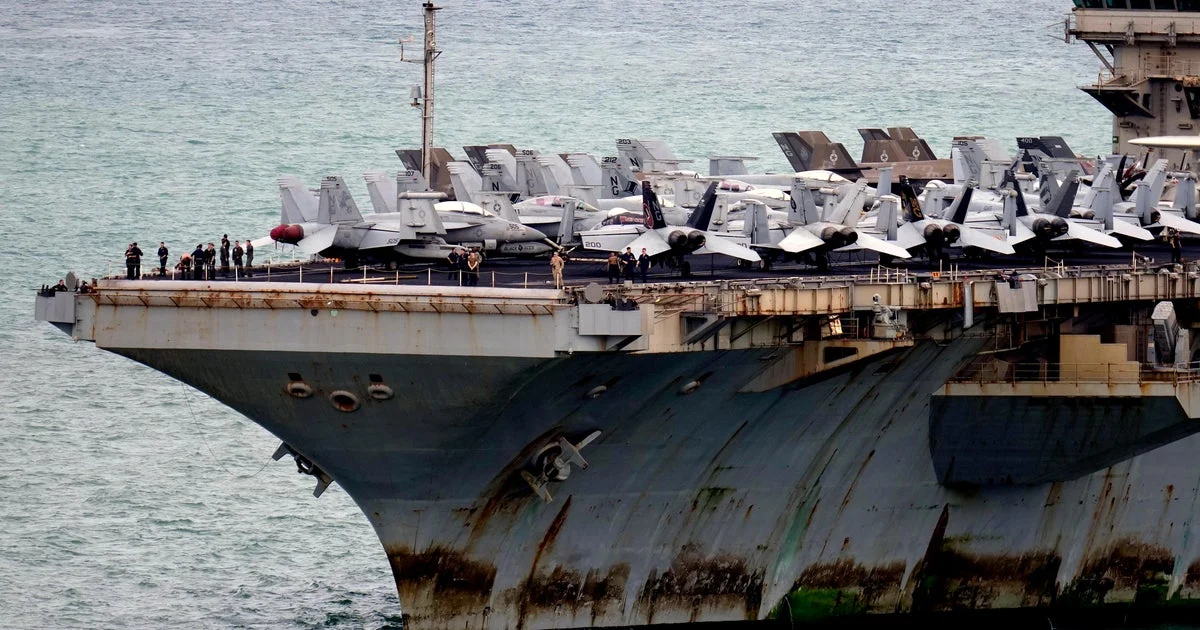
The USS Abraham Lincoln aircraft carrier arrived at Laem Chabang port in eastern Thailand on September 2, signaling the end of a grueling deployment that kept the vessel and its roughly 5,000 crew members at sea for more than nine months. The deployment, primarily focused on supporting ongoing U.S. military operations against Iran, resulted in a record-setting continuous time underway without docking.
What Happened
After departing in 2025, the USS Abraham Lincoln maintained an extended deployment in the Middle East, remaining at sea for a consecutive 286 days — over nine months — before reaching Thailand’s Laem Chabang port on September 2. The arrival was accompanied by the guided-missile destroyer USS Frank E. Petersen Jr., which sailed past the area, with the Petersen docking nearby at the port of Sriracha. Additionally, the USS Robert Smalls cruiser was positioned in Map Ta Phut, Rayong province.
Captain Dan Keeler, the Lincoln’s commanding officer, characterized the ship’s worn condition as typical for a lengthy deployment but declined to comment further when asked about the vessel’s appearance or President Trump’s remarks suggesting the deployment was “not nearly long enough.” A U.S. Embassy statement emphasized the visit as a demonstration of the United States’ commitment to allies and partners in Thailand.
Key Facts
The USS Abraham Lincoln carried approximately 5,000 service members during the deployment, which set a Navy record for continuous time at sea without a port call. Concerns arose during the mission regarding crew mental health and shortages of supplies, including food and hygiene products.
The ship’s unusually long deployment concluded when the USS George Washington, normally Asia-based, relieved the Lincoln in the Middle East in August 2026.
The port call in Thailand serves as a rest and recovery opportunity for sailors, with many expected to visit the nearby beach town of Pattaya. Thai local officials have prepared for the visit by increasing security measures and highlighted potential economic benefits from the sailors’ presence.
What This Means
This historic deployment highlights the increasing operational tempo and demands placed on the U.S. Navy amid complex geopolitical tensions in the Middle East, particularly related to Iran. Extended deployments like the Lincoln’s, while demonstrating U.S. military resolve and alliance commitments, also place significant strain on service members and naval resources. The concerns raised over morale and supply shortages underscore challenges in sustaining prolonged maritime missions without sufficient breaks or logistical support.
The stop in Thailand marks a critical moment for the crew’s mental and physical recovery, as well as an opportunity for U.S. diplomatic engagement in Southeast Asia. It also reflects the Navy’s balancing act between maintaining a forward presence in strategic regions and managing the welfare of its personnel.
From a strategic perspective, the deployment and subsequent relief by USS George Washington illustrate the Navy’s ongoing efforts to juggle commitments across different theaters while adapting to new operational demands and political pressures, as reflected in President Trump’s comments and the military’s official responses.
Background
The USS Abraham Lincoln’s 2025–2026 deployment was unprecedented in length, diverging from typical deployment durations ranging from six to eight months. Political and military leadership have placed increased emphasis on maintaining a visible and continuous naval presence in the Middle East in light of escalating tensions with Iran.
The Lincoln’s mission included carrier strike group operations that support U.S. objectives, exert pressure on adversaries, and reassure regional partners. However, extended time at sea has historically raised concerns about crew fatigue, morale, and vessel maintenance challenges.
Who Is Affected
The primary affected group is the approximately 5,000 service members aboard the USS Abraham Lincoln, many of whom faced prolonged separation from family and challenging living conditions heightened by the ship’s long deployment and reported supply shortages. Families of crew members expressed concern, with some choosing to travel to Thailand for reunions.
Additionally, Thailand’s local communities and businesses, particularly around Pattaya, stand to experience economic and cultural impacts due to the influx of U.S. military personnel during the port visit.
What Comes Next
The USS Abraham Lincoln is expected to complete its rest and recovery period in Thailand before returning to its U.S. base. The USS George Washington will maintain U.S. naval presence in the Middle East going forward. Thai authorities will continue implementing heightened security measures during the visit to ensure safety and smooth operations for the visiting sailors.
Sources
This article is based on reporting and publicly available information from the following sources:
Read more World News stories on Goka World News.