
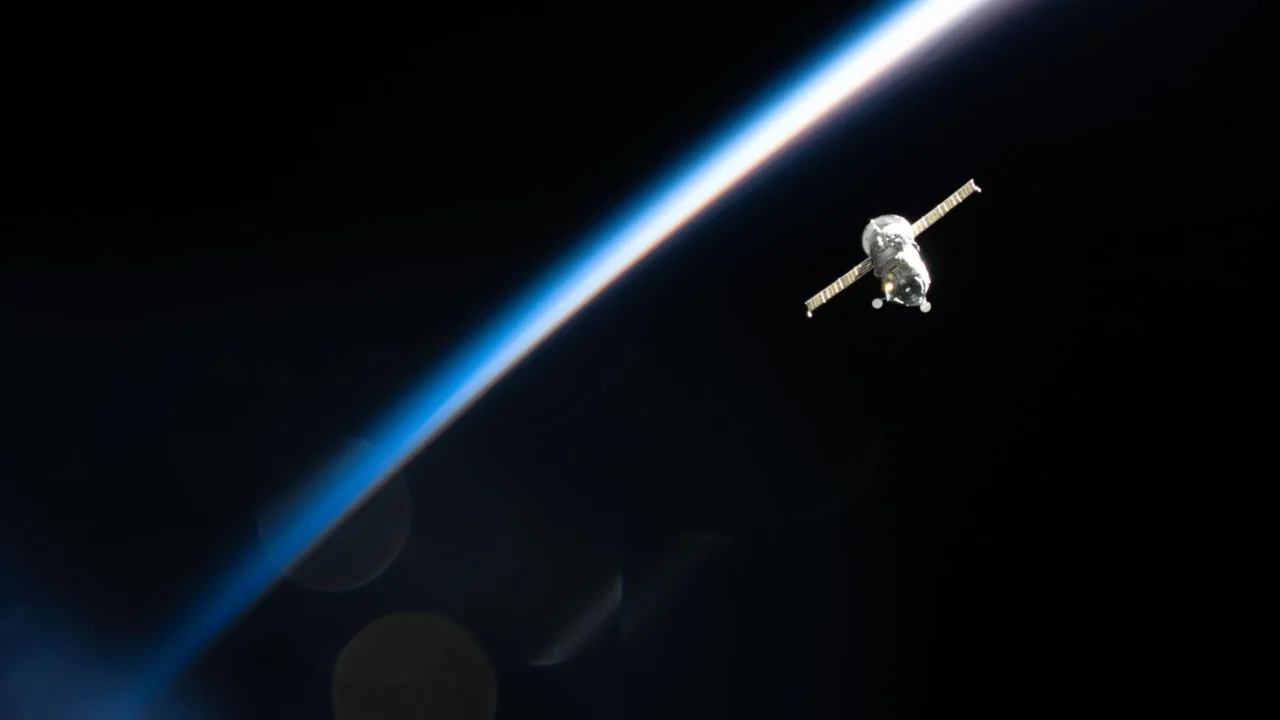
NASA will provide live coverage of the launch and docking of the Russian Progress 96 cargo spacecraft, which is scheduled to deliver essential supplies to the International Space Station (ISS) in mid-September. The Progress 96 mission carries approximately three tons of food, fuel, and equipment to support the orbiting laboratory’s crew and ongoing research.
What Happened
The uncrewed Progress 96 spacecraft is set to launch at 12:15 p.m. EDT (9:15 p.m. local time) on Wednesday, September 9, from the Baikonur Cosmodrome in Kazakhstan. It will lift off aboard a Soyuz rocket operated by Roscosmos, the Russian space agency. NASA’s live broadcast of the launch will begin at 12 p.m. EDT and can be accessed through multiple online platforms.
After approximately two days in transit, Progress 96 will autonomously dock with the Poisk module’s space-facing port on the ISS at 2:37 p.m. EDT on Friday, September 11. NASA’s coverage of the arrival is scheduled to begin at 1:45 p.m. EDT.
The spacecraft will remain docked to the ISS for about five months. Following its mission completion, it will undock and safely burn up upon re-entry into Earth’s atmosphere over the Pacific Ocean.
Prior to Progress 96’s arrival, its predecessor, Progress 94, will undock around 11:18 a.m. EDT on Monday, September 7, before a planned destructive re-entry. NASA will not broadcast the Progress 94 departure.
Key Facts
The Progress 96 spacecraft carries roughly three tons of provisions vital for the ISS crew, including food, fuel, and other supplies. The launch vehicle is a Soyuz rocket deployed from the Baikonur Cosmodrome, a historic spaceport in Kazakhstan.
Docking will occur at the Poisk module’s port, a key Russian segment airlock and docking location on the ISS used for cargo and crew transfers. The spacecraft’s automated rendezvous and docking system enables precise approach without crew intervention.
NASA’s live streams for launch and docking are available via NASA’s official site. The Progress 96 mission extends the continuous human presence on the ISS, which has surpassed 25 years.
What This Means
The Progress 96 mission exemplifies the ongoing international cooperation that sustains the ISS, a vital platform for scientific research and technology development in microgravity. The steady resupply missions ensure the crew has necessary resources to live and work in orbit, enabling experiments that cannot be conducted on Earth.
This mission supports NASA’s broader goals of understanding long-duration human spaceflight challenges, which are critical for upcoming Artemis lunar missions and future crewed voyages to Mars. Successful cargo deliveries like Progress 96 help maintain the ISS as a proving ground for these ambitions.
For the public, live coverage of launches and dockings offers a real-time glimpse into space operations, fostering engagement with space exploration and encouraging interest in STEM fields across all ages.
Background
Progress spacecraft have been a cornerstone of Russian resupply efforts to the ISS since the station’s inception. The Poisk module, where Progress 96 will dock, serves both research and logistical roles. The ISS program itself has facilitated continuous human spaceflight since 2000, allowing international crews to carry out diverse scientific investigations.
Roscosmos and NASA cooperation extends decades, with Progress missions routinely launching from Baikonur to replenish the orbital outpost. These missions underscore the interdependence of space agencies in maintaining crewed stations and advancing space science.
What Comes Next
Following the docking of Progress 96, teams on the ISS will unload and integrate the delivered supplies over the months. The spacecraft is expected to remain docked for about five months before undocking and burning up in the atmosphere, making way for subsequent resupply flights.
NASA will continue providing live coverage for upcoming key spaceflight events via its official channels, offering ongoing access to milestones in human space exploration.
Sources
This article is based on reporting and publicly available information from the following sources:
Read more Space & NASA stories on Goka World News.