
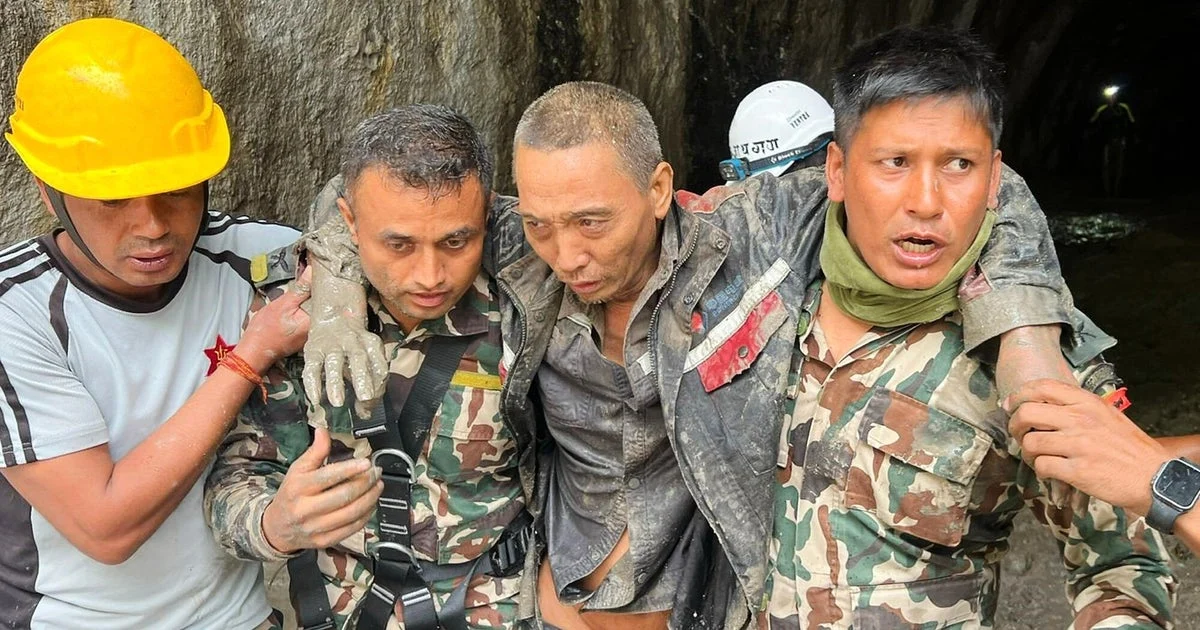
Rescue teams in Nepal successfully saved two individuals alive ten days after catastrophic floods ravaged the country, highlighting ongoing efforts to locate survivors amid widespread destruction. These operations, involving Nepalese forces and international specialists, underscore the continuing humanitarian crisis following the disaster.
What Happened
On Saturday, September 5, 2026, Nepalese authorities and international rescue teams pulled a man alive from a tunnel in the Trishuli 3A hydropower project, located in Nepal’s Rasuwa district. This man is the third worker rescued from the hydropower tunnel since the floods struck on August 26. Additionally, a woman was found alive in flood-damaged rubble in the town of Nuwakot and was promptly airlifted to Kathmandu for medical care. Rescuers continue to comb through hydropower projects and surrounding flood-affected areas with hopes of finding more survivors.
Key Facts
The floods, believed to be caused by a glacier collapse, devastated large parts of Nepal starting August 26, 2026. Official figures from Nepal’s disaster management agency estimate at least 1,300 people have died and over 5,000 remain missing. About 900 workers were present at 12 hydropower projects targeted by the rescue efforts; nearly 500 are reportedly trapped in tunnels and collapsed structures. The recent tunnel rescue involved coordinated work between Nepalese army personnel and South Korean disaster experts. Images from the rescue showed the man being evacuated by helicopter as an army medic monitored his condition.
The woman rescued in Nuwakot was found buried under mud, given water, wrapped in a blanket, and promptly evacuated by helicopter. The Nepalese army released images of the swift response and care given at the site.
What This Means
These rescues, though rare and occurring a full ten days after the flooding began, illustrate the persistence and international collaboration in the ongoing relief operations. The ability to extract survivors from tunnels and rubble highlights the resilience of individuals trapped amid one of Nepal’s worst natural disasters in recent history. For families awaiting news, each rescue offers a glimmer of hope despite the scale of devastation.
Regionally, the disaster and consequent rescue efforts draw attention to the vulnerability of Himalayan communities to glacier-related flooding, underscoring the urgent need for enhanced disaster preparedness and infrastructure safety protocols. The involvement of international experts reflects a growing global awareness and willingness to respond to climate-triggered emergencies impacting developing nations.
Background
The August 26 floods originated after a glacier collapse in Nepal’s mountainous region triggered massive flooding and landslides, affecting multiple districts including Nuwakot and Rasuwa. The disaster struck critical infrastructure including the Trishuli hydropower projects, where hundreds of workers became trapped underground. The government, alongside foreign specialists from India, China, South Korea, and the United States, launched concerted rescue operations focused on these hydropower facilities and flooded settlements.
What Remains Unclear
The exact number of individuals still missing or trapped remains unconfirmed. While several hundred workers are believed to be inside damaged tunnels and structures, ongoing assessments and searches have yet to clarify the full extent of casualties or survivors. The current health status of the recently rescued individuals is also pending further updates from medical teams.
What Comes Next
Rescue teams continue to work in the affected regions, using specialized equipment and expertise to access unstable tunnels and debris fields. Further evacuations and survivor recoveries are anticipated as conditions allow. Officials have emphasized their commitment to sustained search efforts despite the challenges posed by terrain and weather.
Sources
This article is based on reporting and publicly available information from the following source:
Read more World News stories on Goka World News.