
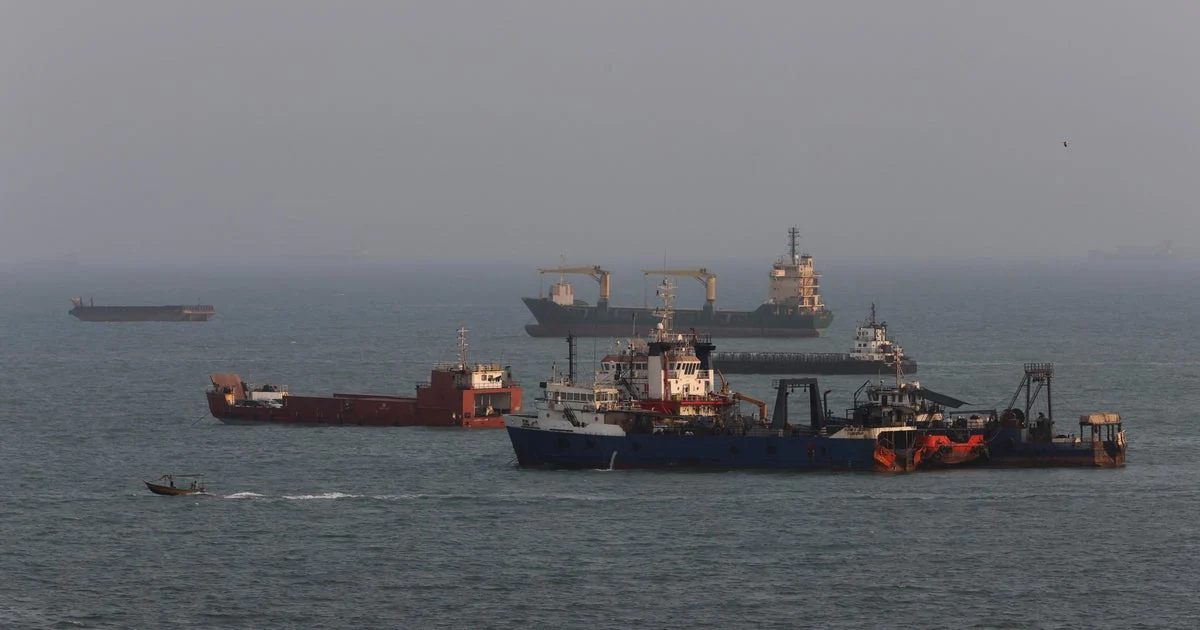
The United States military permanently disabled three Iranian oil tankers in the Persian Gulf and Gulf of Oman on September 5, 2026, in retaliation for ballistic missile attacks by Iran’s Revolutionary Guard targeting U.S. naval vessels. No American personnel were injured in the exchange, U.S. Central Command confirmed.
What Happened
On Saturday, the Iranian Revolutionary Guard fired ballistic missiles at a U.S. aircraft carrier and a guided-missile destroyer operating in the Persian Gulf region. According to U.S. Central Command (CENTCOM), the missile strikes missed their targets and caused no casualties or damage to the American warships. In response, the U.S. launched strikes against three Iranian oil tankers. The M/T Downy, located off Kharg Island, and the M/T Stark 1, near Jask, were both permanently disabled, while the M/T Kylo was completely destroyed in the Gulf of Oman after the crew was evacuated.
Admiral Brad Cooper, CENTCOM commander, issued a statement emphasizing the message to Iran’s Islamic Revolutionary Guard Corps (IRGC): attacking U.S. ships would be met with an even greater economic toll by targeting Iran’s oil fleet. He reaffirmed the U.S. commitment to defending its forces and warned of further destruction if necessary.
Key Facts
The strike was carried out in the Persian Gulf and Gulf of Oman. The vessels targeted were Iranian oil tankers involved in the country’s oil export network. The M/T Downy and M/T Stark 1 were disabled without destruction, while the M/T Kylo was destroyed after the crew abandoned ship as directed by U.S. Central Command.
U.S. military sources confirmed no damage to American ships or injuries during the Iranian missile attacks. Video footage documenting the strikes on the Iranian tankers was released by CENTCOM via social media.
What This Means
This series of strikes represents a significant escalation in the ongoing military exchanges between the U.S. and Iran within the strategically vital Persian Gulf region, where much of the world’s oil supply transits. By targeting Iranian oil tankers, the U.S. is directly hitting Iran’s economic lifeline, sending a clear message that aggression against American forces will result in tangible and substantial consequences.
The decision to disable rather than destroy some of the tankers suggests a calibrated approach intended to inflict economic damage without provoking full-scale escalation. For American military personnel and regional stakeholders, this demonstration of retaliatory capability may deter further Iranian missile strikes in the near term. For global markets and consumers, however, such actions risk destabilizing oil supplies and could contribute to increased fuel prices, especially amid heightened tensions.
In the broader context, the engagement underscores persistent volatility in U.S.-Iran relations despite diplomatic and UN efforts addressing Iran’s nuclear activities. Ongoing military confrontations like these increase the risk of wider conflict in the Gulf, raising stakes for U.S. foreign policy and energy security.
What Comes Next
At present, U.S. Central Command has not announced additional planned operations, but Admiral Cooper’s statement conveys a readiness for further action if Iranian forces continue hostile attacks against American assets.
Diplomatic and military observers will closely monitor developments around Kharg Island and the Gulf of Oman, as well as any Iranian responses. The incident may also influence upcoming discussions at international forums addressing Iran’s nuclear and military activities.
Sources
This article is based on reporting and publicly available information from the following sources:
Read more US News stories on Goka World News.