
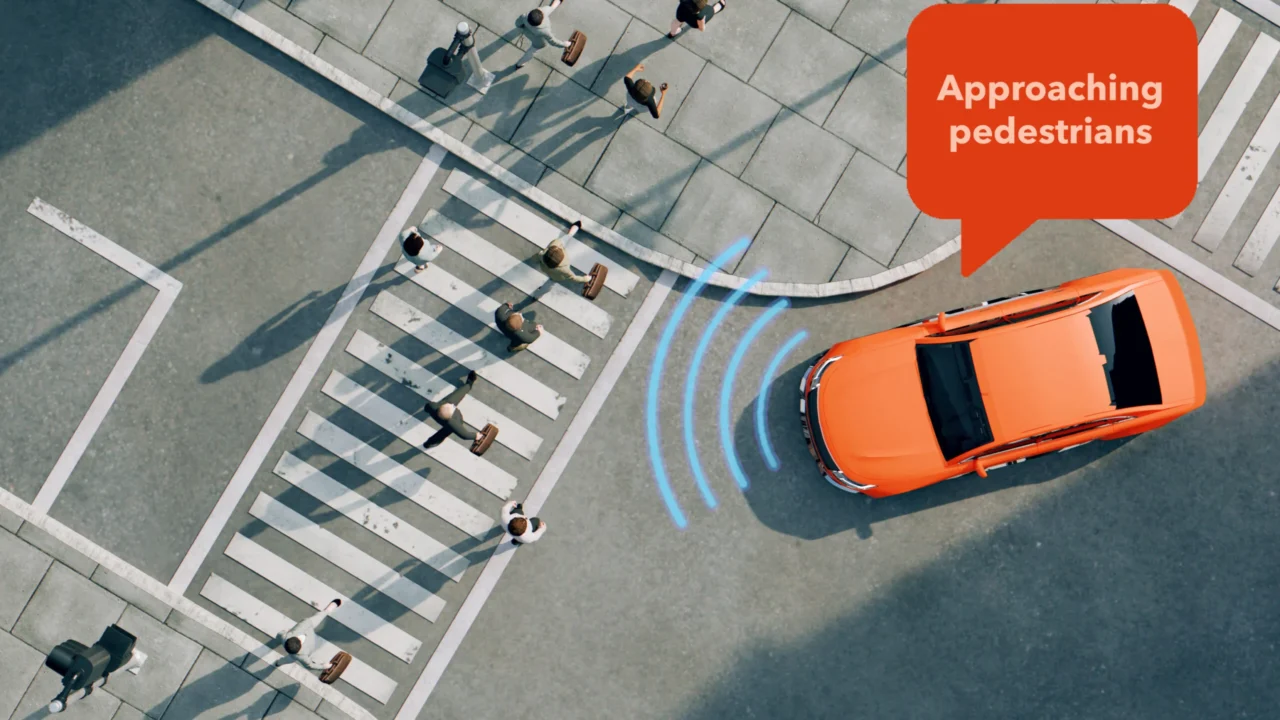
Motional, an autonomous vehicle technology company, in collaboration with researchers from the Massachusetts Institute of Technology (MIT), has developed a novel AI system, Concept-Wrapper Network (CW-Net), designed to explain the decision-making process of self-driving cars. Introduced in a study published in Nature, CW-Net translates the complex reasoning of deep learning planners into understandable concepts, enabling humans to better predict when autonomous vehicles might act unexpectedly.
What Happened
Researchers from MIT and Motional created CW-Net, an add-on AI module for machine learning-based planners used in autonomous vehicles. Unlike traditional black-box models, CW-Net outputs interpretable explanations such as “approaching stopped vehicle” or “close to cyclist” alongside the planned trajectory. The system was tested in real road scenarios on a Motional robotaxi within a private track, showing increased accuracy for safety drivers in predicting vehicle behavior during complex or unexpected events. Larger simulation studies involving nonexpert users in scenarios recorded in Las Vegas corroborated these findings.
Key Facts
Motional, known for its autonomous vehicle technology, partnered with MIT’s Computer Science and Artificial Intelligence Laboratory (CSAIL) to develop CW-Net. The system is trained on a dataset containing 130 million labeled examples of driving scenes, enabling it to recognize multiple high-level concepts in real time. CW-Net integrates directly into existing deep learning planners without impairing vehicle performance. Among the key contributors are Julie Shah, MIT professor and director of the Interactive Robotics Group, and Motional’s research staff including Momchil Tomov and CEO Laura Major.
What This Means
The introduction of CW-Net marks an important step toward increasing the transparency and safety of autonomous vehicles. By providing understandable explanations for the vehicle’s actions, CW-Net empowers safety drivers and engineers to anticipate problematic behaviors, such as inappropriate emergency braking or failure to detect cyclists, thereby enabling timely interventions. This added layer of interpretability helps build trust in autonomous systems, a critical factor for broader adoption and regulatory acceptance. Furthermore, CW-Net’s feedback mechanism can guide iterative improvements in vehicle AI models, potentially reducing accident risks caused by opaque decision-making processes.
Background
Autonomous vehicles typically rely on complex deep learning planners that interpret sensor data to decide on navigation and control. However, these “black-box” models generally do not reveal their internal reasoning, leaving engineers and users unable to fully understand or predict unexpected behaviors like phantom braking. Prior to CW-Net, efforts to interpret such models were either imprecise or compromised vehicle functionality. Motional, working with leading AI research at MIT, aimed to bridge this gap by creating a causally faithful method that maintains driving effectiveness while adding explainability.
What Remains Unclear
While CW-Net shows promising results on private tracks and simulation studies, broader deployment on public roads and integration with diverse autonomous systems remain untested. The scope of concepts CW-Net can currently interpret and the potential need for regulatory validation are areas yet to be explored. Additionally, the impact of CW-Net explanations on real-time decision-making by nonprofessional users in live traffic conditions has yet to be fully measured.
What Comes Next
The research team has discussed plans to enhance CW-Net to cover a wider array of concepts and to experiment with additional training methods to boost both interpretability and performance. Future work may extend the system’s applicability beyond self-driving cars to other high-stakes AI domains. Motional and MIT have not announced specific commercial rollouts but ongoing testing is expected to inform further integration into operational autonomous vehicles.
Sources
This article is based on reporting and publicly available information from the following sources:
Read more Artificial Intelligence stories on Goka World News.