
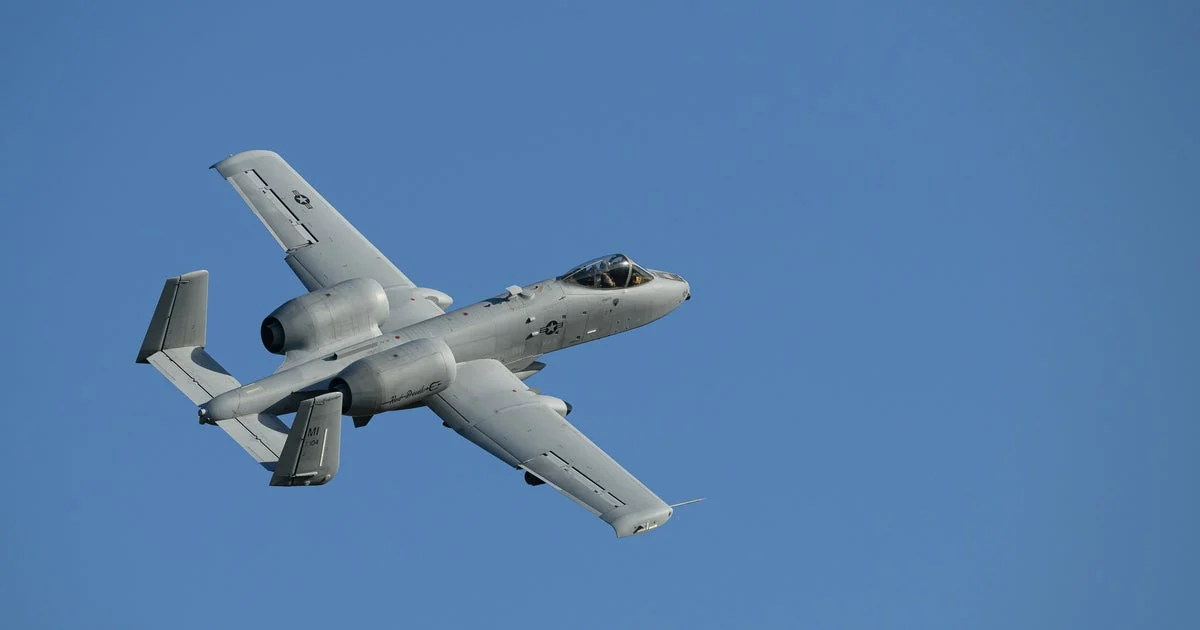
Iranian missile strikes targeted the Muwaffaq Salti Air Base in Jordan overnight Tuesday into Wednesday, damaging multiple U.S. military aircraft amid rising tensions between Tehran and Washington. The attack follows recent U.S. retaliatory strikes on Iranian vessels in the Persian Gulf, marking a significant escalation with implications for regional security.
What Happened
On the night of September 9–10, 2026, Iran launched missile attacks on the Muwaffaq Salti Air Base located in Jordan, where U.S. military forces maintain a presence. Sources with direct knowledge of the incident told CBS News that among the damaged aircraft was one A-10 Thunderbolt II, strikingly losing a wing, as well as roughly eight F-15 fighter jets which sustained lighter damage but were quickly repaired and returned to service. The strikes prompted U.S. forces at the base to fire more than 30 Patriot missiles in defense against the Iranian assault.
The attack came shortly after the U.S. conducted strikes on five Iranian tankers as retaliation for Iranian targeting of a U.S. Navy warship. In response, Iran’s Islamic Revolutionary Guard Corps claimed responsibility for attacks on eight tankers, two warships, and the Jordan air base.
Despite the aircraft damage, there were no reported U.S. casualties from the missile strikes on Jordan.
Key Facts
- One A-10 Thunderbolt II aircraft was heavily damaged, losing a wing.
- Approximately eight F-15 fighter jets sustained light damage but remained operational.
- U.S. forces launched over 30 Patriot missiles defending the base in Jordan.
- The attacks followed U.S. airstrikes on five Iranian tankers in reprisal for Iranian aggression against a U.S. Navy warship.
- Iran’s Islamic Revolutionary Guard Corps claimed responsibility for strikes against eight tankers, two warships, and the Jordan-based U.S. military facility.
- No U.S. military casualties have been reported from the raids.
What This Means
The Iranian strikes on a U.S. base in Jordan represent a dangerous broadening of the conflict between the two nations, extending the battlefield to a key regional ally’s territory. Damage to American military aircraft not only reduces immediate operational capabilities but also highlights Iran’s growing missile reach and willingness to confront U.S. forces beyond waters near Iran.
The attacks underscore the ongoing risks to stability in the Middle East, particularly for countries like Jordan that host foreign military assets. This escalation could further strain U.S.-Iran relations and complicate efforts to contain wider regional clashes or move toward diplomatic resolutions. For civilians and military personnel in the region, the strike signals continued volatility and the real threat of spillover conflict.
Background
These events follow a recent cycle of tit-for-tat actions between the U.S. and Iran, beginning with Iranian aggression toward a U.S. Navy warship. Retaliatory U.S. strikes targeted Iranian oil tankers, fueling Tehran’s response to strike at U.S. military infrastructure, including the Jordan air base. President Donald Trump linked the conflict’s trajectory to the upcoming U.S. midterm elections, suggesting Iran’s desperation to influence these political outcomes.
What Comes Next
U.S. military officials are likely to assess the extent of aircraft damage and stockpile statuses, especially concerning Patriot missile supplies, which sources say are rapidly dwindling. Further defensive preparations at forward bases in the region may be prioritized amid the ongoing threat of Iranian missile strikes. Diplomatic efforts, if any, remain uncertain as senior U.S. officials have stated no immediate intent to negotiate with Iran before the U.S. elections.
Sources
This article is based on reporting and publicly available information from the following source:
Read more US News stories on Goka World News.