
President Donald Trump’s recent promise to distribute $5,000 to every American adult if Republicans retain control of both chambers in the November midterm elections faces serious hurdles, including constitutional constraints and congressional approval. The plan’s logistics and financing remain unclear, raising doubts about whether the payments will ever materialize.
What Happened
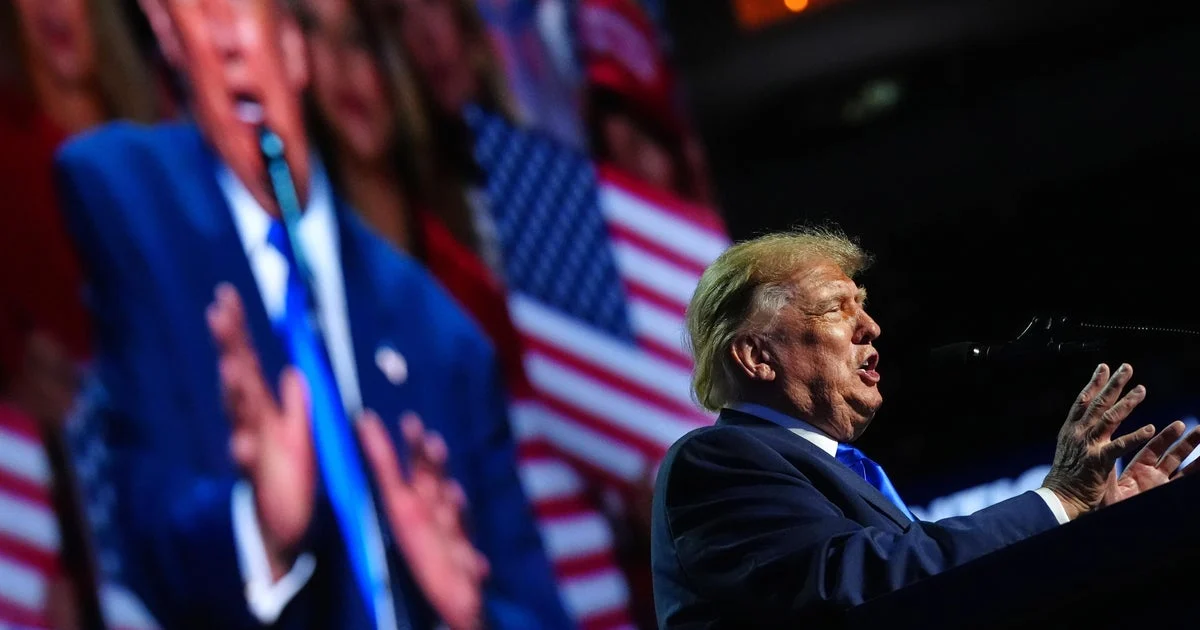
At the Republican National Committee’s midterm convention in Washington, D.C., President Trump announced his intention to provide every adult American citizen with a $5,000 “dividend,” attributing the pledge to the country’s “tremendous economic success” under his leadership. This promise follows earlier commitments by Trump that largely failed to produce tangible cash payments, aside from the establishment of accounts for babies born during his administration.
The U.S. Census Bureau estimates approximately 245 million citizens over the age of 18, meaning a $5,000 payment per person would exceed $1.2 trillion in total cost. The White House had not disclosed specifics on how or when these payments would be made, nor whether they would be issued as checks or via another mechanism.
Crucially, Trump has claimed that the payments would not require congressional approval—a stance contradicted by constitutional experts and lawmakers. Despite Republicans controlling both the House and Senate, Congress has not been presented with any legislative proposal to authorize such spending, which under the U.S. Constitution is solely within its purview.
Key Facts
The United States Constitution prohibits the executive branch from spending treasury funds without explicit congressional appropriation. Legal experts, including University of California Law professor Zachary Price, assert that no current appropriation exists for such payments and that the president cannot unilaterally disburse funds on this scale.
Republican congressional leaders have shown little appetite for new spending that would exacerbate the national debt, which topped $40 trillion last month. House Speaker Mike Johnson has pledged spending cuts in a potential GOP-led Congress after the midterms, casting further doubt on approval of Trump’s proposal.
Polling indicates Republicans may struggle to maintain control of both chambers, especially the House, where a few lost seats could shift the majority to Democrats, who are unlikely to approve the payments.
Previously, Trump floated ideas such as “DOGE dividends” involving cryptocurrency funds and tariff refunds, but none of these proposals materialized into direct cash payments to citizens. Tariff-generated revenue, cited by Vice President JD Vance as a potential funding source, currently falls far short of the $1.2 trillion needed. The Bipartisan Policy Center reports that gross tariff and excise tax revenues amounted to about $210 billion in 2026, mostly offset by refunds to companies following court rulings.
What This Means
This promise of a universal $5,000 payment to all adult Americans highlights the gap between political messaging and fiscal realities. Even with Republican control of Congress, the constitutional requirement for legislative approval and tight budgetary constraints make such a sweeping payout improbable.
For ordinary Americans, this means that relying on such a large one-time cash infusion could lead to misplaced expectations, especially given the government’s current fiscal situation and mixed signals from political leaders. From a governance perspective, it underscores the limits of executive power in appropriating funds and the critical role Congress plays in federal spending.
Moreover, the proposal’s dependence on tariff revenues—which fluctuate and are subject to legal challenges—illustrates the difficulties of funding large-scale programs from unstable or politically contentious sources.
What Remains Unclear
It remains unconfirmed how exactly the Trump administration would implement the payments or structure the funding if the plan advances. Details about the timeline, specific delivery methods, or legislative strategy have not been disclosed. The administration’s position that congressional approval is unnecessary lacks constitutional backing, and no concrete legislative actions or bills have been introduced to date.
What Comes Next
Congressional leaders have not indicated plans to consider this proposal formally. The midterm elections will determine Republican control in both chambers, directly affecting the possibility of such legislation proceeding. Meanwhile, the White House has not provided additional specifics or legal frameworks to support the president’s pledge.
Sources
This article is based on reporting and publicly available information from the following sources:
Read more Politics stories on Goka World News.