
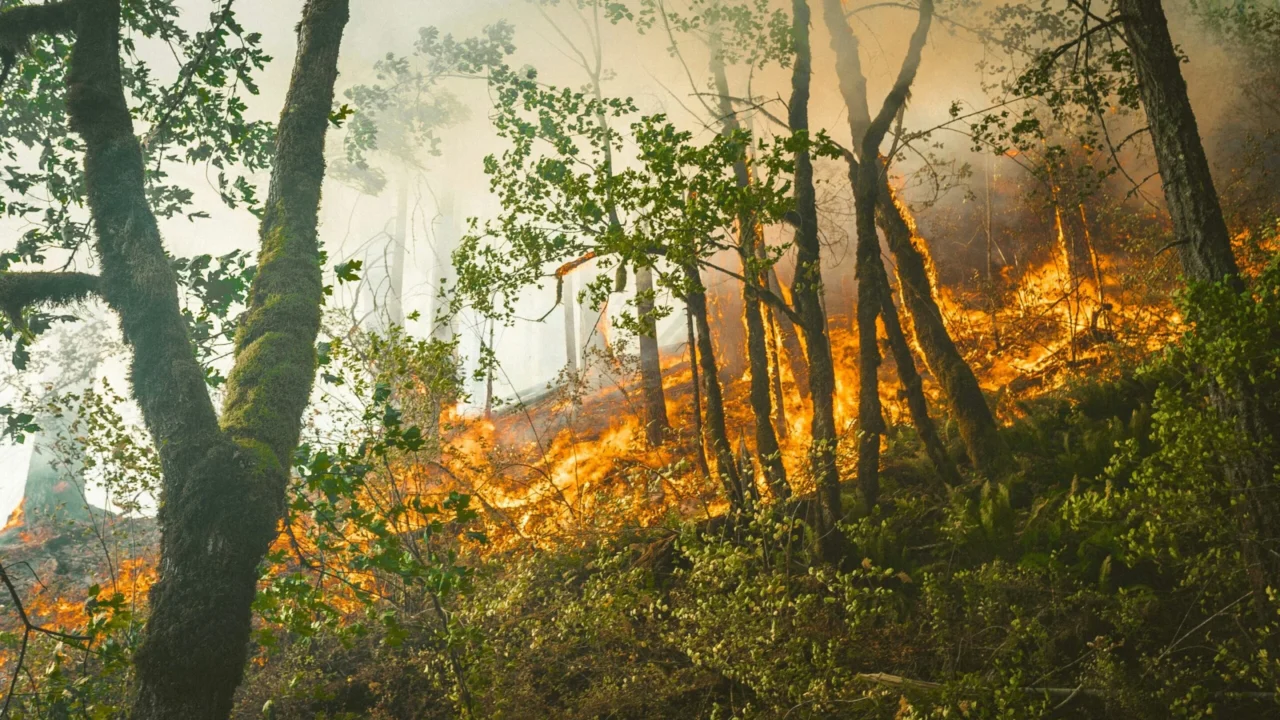
A new study conducted by researchers at ETH Zurich and the University of Bern provides evidence that smoke from wildfires significantly reduces bird diversity in affected areas across the United States. Published in the Journal of Environmental Economics and Management, the research highlights consequences of wildfire smoke that extend beyond immediate fire damage, revealing measurable ecological impacts during the following breeding season.
What Happened
Environmental economist Sarah Meier of ETH Zurich, together with Eric Strobl from the University of Bern, analyzed data from the North American Breeding Bird Survey, which has been monitoring bird populations across North America since 1966. Their study covered approximately 2,800 survey routes in the U.S. over a 15-year period from 2008 to 2022. Each route spans about 40 kilometers with fixed points where trained volunteers conduct annual bird counts. This bird population data was combined with high-resolution measurements of particulate matter pollution from wildfires to assess smoke exposure effects.
The researchers examined three dimensions of avian diversity: species richness, evenness in species distribution, and evolutionary diversity. Their analysis revealed that areas exposed to higher wildfire smoke the previous year had lower bird diversity in the subsequent breeding season. For example, when smoke levels rose substantially above average, the number of species counted dropped by around 3%, equivalent to losing one or two species per typical route with about 55 species.
This negative effect on diversity was observed broadly across the U.S. and persisted even in places where no direct habitat destruction from fire occurred. The team also controlled for confounding variables such as weather, land use, and counting methods, isolating the impact of smoke itself.
Key Facts
The study utilized data from nearly 2,800 North American Breeding Bird Survey routes across the U.S. between 2008 and 2022. Each route covers approximately 40 kilometers with about 50 fixed stops for bird monitoring. Wildfire smoke exposure was measured via detailed particulate matter (PM) pollution data linked spatially and temporally to the routes.
Increased smoke exposure led to a measurable drop of roughly 3% in species richness the following breeding season. This corresponds to a loss of about one to two bird species on a route averaging 55 species. The study also observed declines in species evenness and evolutionary diversity metrics, indicating changes in community structure beyond simple species count.
The analysis accounted for other factors like drought, habitat destruction within 5 kilometers, and possible bird migration to avoid smoke, confirming smoke’s distinct ecological impact.
What This Means
The findings reveal wildfire smoke’s significant but often overlooked effects on biodiversity, highlighting ecological consequences extending beyond visible fire damage. Birds play crucial roles in ecosystems such as seed dispersal, pollination, and pest control. A reduction in bird diversity—even if only a few species—can disrupt these functions, triggering broader ecological imbalances that may affect plant communities and other animals.
This study emphasizes the complexity of wildfire impacts, going beyond property loss and burned land to incorporate subtle but persistent environmental effects. For policymakers and natural resource managers, it underscores the need to consider smoke pollution in wildfire damage assessments and conservation planning.
From an economic perspective, declines in bird populations can indirectly affect sectors like agriculture and forestry, which depend on birds for natural pest control and ecosystem services. Quantifying such indirect economic impacts remains challenging, but this work lays the foundation for linking biodiversity changes to broader societal costs.
Background
Previous research has indicated that wildfire smoke can physiologically impair birds, causing respiratory harm and weight loss, and may alter their behavior during sensitive periods such as breeding. However, the geographic scale and long-term population-level effects were less understood before this study.
The North American Breeding Bird Survey has long provided comprehensive datasets crucial for monitoring large-scale avian population trends, making it a valuable resource for environmental impact analyses like this one.
What Remains Unclear
While the study firmly links smoke exposure to reduced bird diversity, it does not resolve the exact biological mechanisms affecting individual species or populations. The survival, reproduction, or migration changes underlying the observed diversity decline require further ecological investigation. Additionally, the cumulative or synergistic effects of recurring wildfire smoke events on bird populations have yet to be explored.
Sources
This article is based on reporting and publicly available information from the following source:
Read more Science Discoveries stories on Goka World News.