
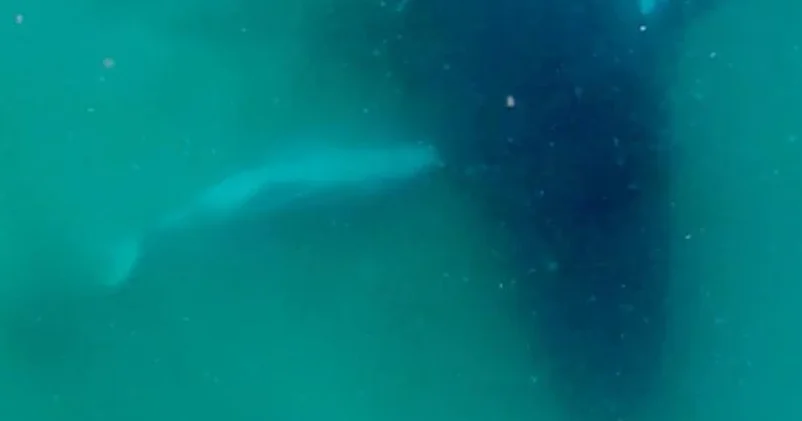
A female humpback whale was filmed exhibiting behavior interpreted as grieving her stillborn calf off Australia’s Gold Coast, according to new research published by Griffith University’s Whales and Climate Research Program. The footage reveals an extended period of contact between the mother and the dead calf, offering valuable insight into the emotional complexity of these marine mammals.
What Happened
Last year, while conducting field observations near Australia’s Gold Coast, researchers captured rare footage of a female humpback whale (Megaptera novaeangliae) remaining close to her motionless, stillborn calf. Accompanied by another whale, the mother maintained eye contact and physically touched the calf using her head and fin. The whale’s sustained attention reportedly lasted for several hours and potentially days.
Andrew Mulville of the Sea World Foundation, who witnessed the incident, commented on the unexpected behavior, noting it differed markedly from typical resting activities observed in whales. The mother whale, unlike some observed cases in other marine mammals, did not attempt to lift the calf to the surface, indicating she may have recognized the calf’s death soon after birth.
Key Facts
The study—published on September 16, 2026, in the journal Discover Animals—represents the first detailed documentation of post-mortem attendance of a stillborn calf by a humpback whale. Multiple other deceased whale calves were reported in the surrounding area at the time, highlighting a wider ecological context.
Olaf Meynecke from Griffith University’s Whales and Climate Research Program characterized the behavior as a potential form of grief-related response, reflecting the strong maternal bond in humpback whales, which are known as socially complex mammals.
What This Means
This observation enriches understanding of the emotional lives of marine mammals, underscoring how humpback whales may experience grief similarly to other socially complex species. Such behaviors shed light on the deep connections between mother whales and their calves and emphasize the sophisticated social dynamics beneath the ocean’s surface.
The implications extend beyond marine biology. Recognizing grief and other complex emotions in animals contributes to discussions about marine wildlife welfare and protection policies. This knowledge could inform conservation strategies by fostering greater empathy and driving efforts to safeguard critical habitats and breeding grounds affected by environmental change.
Moreover, the rarity of such documentation highlights the challenges of studying marine life behavior in their natural habitats, indicating a need for continued observation and technological advances like drone footage to capture these poignant moments.
Background
Similar grieving behaviors have been observed in other large mammals, including orcas, elephants, and primates. For example, a notable orca carried her deceased calf for over two weeks in 2018, with follow-up observations capturing her carrying another newborn shortly after.
Given the difficulty of observing such behaviors in the ocean, this footage provides a unique window into grief-related practices that have, until recently, been almost impossible to verify. It also follows recent breakthroughs, such as the first-ever drone footage capturing a humpback whale birth in Australian waters.
What Comes Next
Researchers aim to expand studies of marine mammal social behavior and emotional responses to better understand how species cope with loss and environmental stresses. Additional observations are needed to determine whether such behaviors are widespread or unique to specific populations.
These findings will also contribute to ongoing broader efforts at marine conservation, including tracking migration patterns and breeding success, as seen with recent studies documenting record distances swum by humpback whales between breeding grounds.
Sources
This article is based on reporting and publicly available information from the following source:
Read more Science Discoveries stories on Goka World News.