
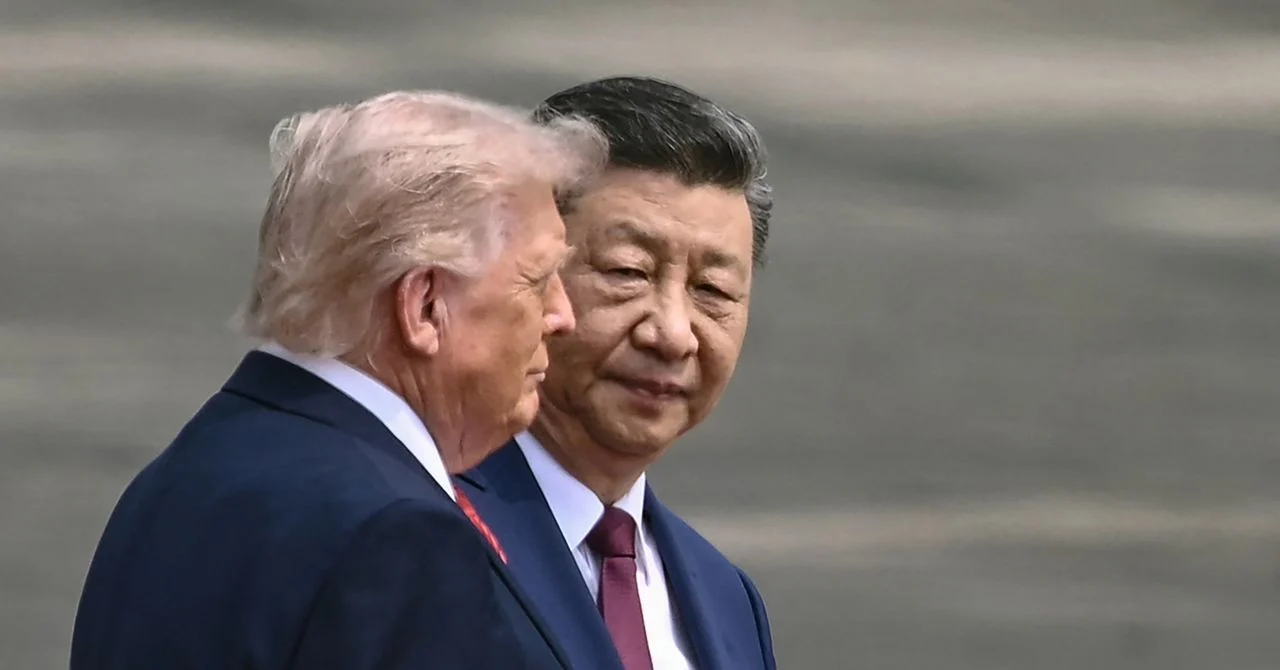
The upcoming summit between former President Donald Trump and Chinese President Xi Jinping at the White House aims to address pivotal issues affecting major technology industries, including tariffs, rare earth mineral exports, and artificial intelligence (AI) competition. The meeting is scheduled for September 23, 2026, underscoring pressing trade and technology concerns between the world’s two largest economies.
What Happened
Donald Trump is set to welcome Xi Jinping personally at Joint Base Andrews on September 23, an uncommon diplomatic move signaling the significance of this summit. Ahead of the meeting, a US delegation led by Treasury Secretary Scott Bessent and Trade Representative Jamieson Greer is engaging with China’s Vice Premier He Lifeng to finalize the agenda. Key topics include the pending expiration of a trade truce from a prior summit in Busan, the future of tariffs, supply chain stability, AI safety, and export controls on computer chips and rare earth minerals crucial to technology manufacturing.
The current trade truce expires on November 10, and both sides face decisions on its potential extension, possible purchase targets for American agricultural goods, energy, and aircraft, and discussions about a $30 billion package of goods exempt from more sensitive trade disputes. Notably, the Busan agreement had lifted export restrictions on Chinese rare earth minerals, materials vital for sectors like automotive, defense, and AI hardware, a lever Beijing is wielding in these negotiations.
Key Facts
The negotiations feature high-level officials: US Treasury Secretary Scott Bessent and Trade Representative Jamieson Greer, and China’s Vice Premier He Lifeng. The trade truce from Busan included tariff relief and lifting limits on the export of rare earths and minerals, which are essential components in AI systems and technology hardware. The discussions will also cover the possibility of setting targets on purchases for approximately 10 categories of “non-sensitive” goods valued around $30 billion. AI safety discussions are prominent, as the US and China debate easing restrictions on technology exports and addressing calls to regulate AI development for safety.
What This Means
This summit has significant implications for major technology companies reliant on complex global supply chains and critical materials. Rare earth minerals from China are fundamental to manufacturing semiconductors, AI hardware, and defense technologies, so the outcome could impact production costs and innovation capabilities worldwide. Extending the trade truce could stabilize supply chains and ease tariff burdens, benefiting companies including American agricultural exporters and aerospace manufacturers like Boeing.
Furthermore, discussions on AI safety and export controls highlight a growing tension between technological competition and regulation. While China seeks relaxation of US restrictions on technology transfers, some American firms worry that slowing AI development might cede competitive advantage to China. The resolution of these debates will shape how technology companies navigate innovation and compliance in a contested geopolitical environment.
Background
Last year’s summit in Busan produced a superficial détente with tariff freezes and trade concessions, including China’s lifting of rare earth export limits. However, progress was limited, with few concessions made at the negotiating table. The trade truce’s November 10 expiration renews urgency for both governments to find a sustainable path forward amid ongoing trade conflicts.
Political factors complicate the talks, with China’s opposition to US arms sales to Taiwan threatening to derail the summit, and ongoing Middle East conflicts adding global uncertainty. Both countries have strategic interests in Africa and Latin America, making these negotiations a multifaceted diplomatic challenge.
What Remains Unclear
Details about whether the trade truce will be extended and the scope of the $30 billion non-sensitive goods package remain unsettled. The extent to which AI export controls and safety regulations will be relaxed or tightened is also uncertain, particularly because of internal US debates on regulating artificial intelligence development. Additionally, any concessions related to geopolitical tensions such as Taiwan and Iran are yet to be determined.
What Comes Next
The summit itself on September 23 will serve as a critical moment for signaling agreement or further divergence between the US and China. Following the meeting, both governments must decide before November 10 whether to formally extend the trade truce and implement negotiated terms.
Sources
This article is based on reporting and publicly available information from the following source:
Read more AI Regulation stories on Goka World News.