
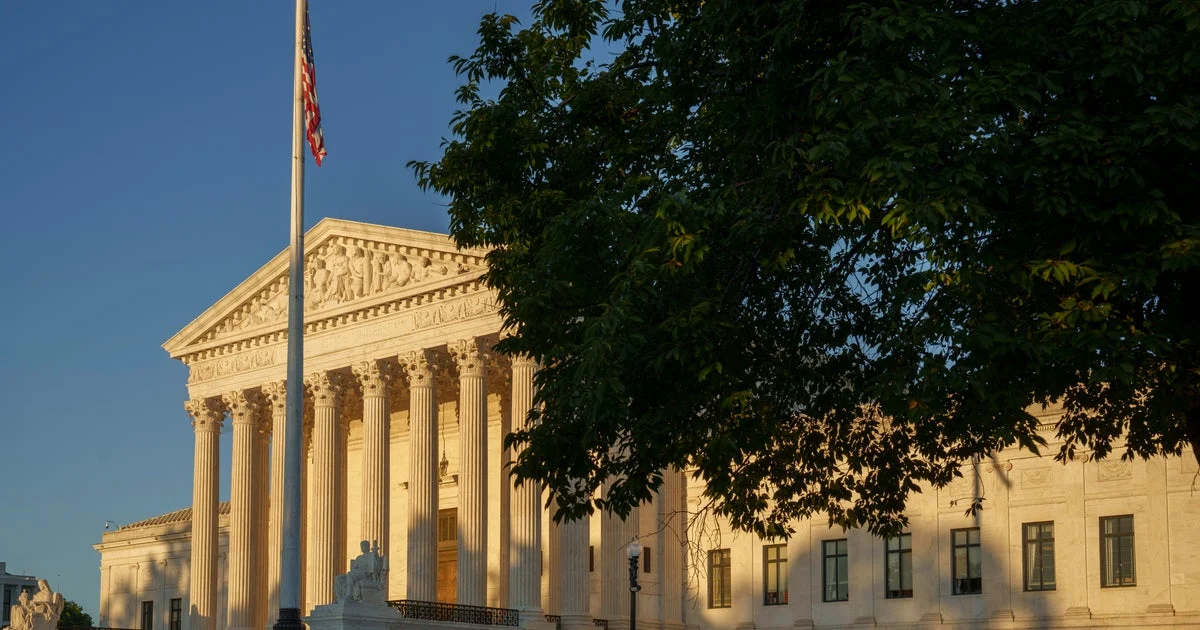
The U.S. Supreme Court on September 25, 2026, again blocked Missouri from implementing a newly redrawn congressional map designed to increase Republican representation in the House of Representatives. The court’s ruling upheld the use of the existing 2022 district lines for the upcoming November general election amid concerns about election administration and legal uncertainty.
What Happened
The Supreme Court issued an unsigned opinion preventing Missouri from using the 2025 congressional map, which was redrawn by the GOP-led state legislature to give Republicans an edge with seven of eight House districts favorable to them. The state’s current delegation under the 2022 map consists of six Republicans and two Democrats. The court emphasized that the election was already underway, with ballots printed and mailed based on the 2022 lines, and warned that switching maps now would cause “electoral chaos.”
The dispute reached the Supreme Court for a third time after the U.S. Court of Appeals for the 8th Circuit ordered Missouri to revert to the 2025 map. A federal district court then permanently enjoined the state from using the 2022 district boundaries for the general election. In response, Missouri officials appealed, arguing that using the older map would disenfranchise voters who participated in the primaries run under the new 2025 plan and violate federal ballot transmission deadlines for overseas and military voters.
Key Facts
The Supreme Court’s ruling allows Missouri to proceed with the 2022 congressional map for the November 3, 2026, election. Ballots under this map had already been printed and distributed, including for absentee and overseas voters. Missouri’s legislature approved the 2025 map last year amid a nationwide GOP effort to redraw districts mid-decade to strengthen the party’s House majority chances.
The 2025 map, backed by former President Donald Trump, was used in Missouri’s August primary elections. However, courts have now ruled inconsistently on which map should be used for the general election, creating turmoil in election administration. Missouri officials noted that reverting to the 2025 lines would cause “confusion,” “disenfranchisement” of primary voters, and logistical challenges in reprinting ballots mid-vote.
Democratic Rep. Emanuel Cleaver criticized the redistricting effort as an “unlawful scheme” to silence voters and claimed victory with the Supreme Court blocking the GOP-favored map. Republican Governor Mike Kehoe described the court’s decision as “disappointing” but pledged to abide by the order.
What This Means
This Supreme Court decision ensures that Missouri voters will cast their ballots under the established 2022 district lines, avoiding disruption to an election already in progress and protecting voter rights tied to the primaries conducted under the new districts. It underscores the challenges states face when mid-decade redistricting efforts collide with election timelines, particularly when legal battles delay final map approval.
For Missouri, the ruling preserves the status quo congressional representation, temporarily barring Republicans from benefiting electorally from the 2025 map’s newly drawn boundaries. For voters, the court prioritized electoral stability over shifting political advantage, reducing confusion across Missouri’s diverse constituencies, including those in military and absentee voter groups.
More broadly, the case highlights tensions between partisan redistricting efforts aimed at securing electoral gains and judicial interventions ensuring procedural fairness and compliance with election law deadlines. It also raises questions about the feasibility and fairness of mid-decade map changes with imminent elections and the ability of courts to manage competing directives amid vote counting and actual ballot returns.
Background
Missouri’s Republican-controlled legislature redrew the state’s eight congressional districts in 2025, projecting an additional seat for the GOP in the U.S. House. This move was part of a broader pattern in several Republican-led states responding to encouragement from former President Trump to redraw maps mid-decade to bolster House control ahead of the 2026 midterms.
After legal challenges over the map’s constitutionality and compliance with federal voting guidelines, courts oscillated in their rulings, causing confusion about which districts should be used for the primary and general elections. The Supreme Court’s prior interventions had similarly blocked Missouri’s use of the 2025 plan earlier in the year.
What Comes Next
Missouri will proceed with the 2022 congressional districts for the November 2026 election, adhering to the Supreme Court’s instructions. The legal dispute over Missouri’s redistricting is likely concluded for the current election cycle, though no further court-driven map changes are expected before the general election.
Sources
This article is based on reporting and publicly available information from the following sources:
Read more Politics stories on Goka World News.