
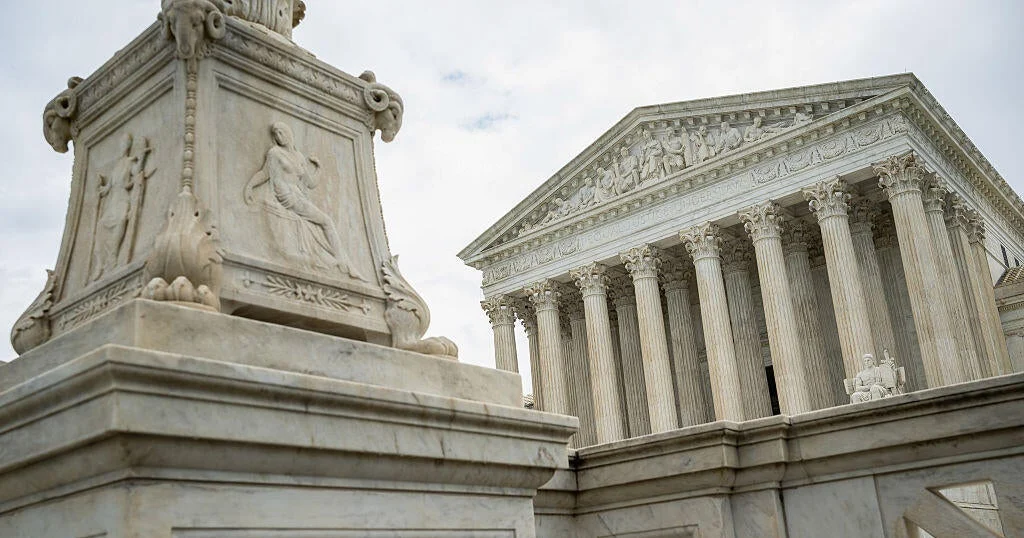
The U.S. Supreme Court on Thursday blocked a lower court order that would have halted the mailing of the abortion pill mifepristone, preserving nationwide access to the medication while a lawsuit against the Food and Drug Administration (FDA) moves forward. The unsigned decision keeps in place the FDA’s policy allowing abortion providers to prescribe mifepristone through telehealth and ship it to patients.
This ruling responds to a challenge filed by the state of Louisiana, which had urged the Court to reinstate an FDA rule requiring in-person dispensing of the drug. The high court’s decision ensures that patients, including those in states where abortion remains legal, can continue to obtain mifepristone by mail. Justices Samuel Alito and Clarence Thomas dissented.
Legal dispute over mifepristone access
The controversy centers on the FDA’s relaxed regulations introduced in 2021 and 2023, which removed the requirement that patients must obtain mifepristone in person. The Biden administration allowed this change initially during the COVID-19 pandemic, citing safety. This policy shift facilitated telehealth prescribing and mail distribution of the drug, aiming to expand access.
Louisiana, which bans abortion with limited exceptions, filed suit last year arguing that the FDA’s policy enables out-of-state abortion providers to circumvent the state’s abortion ban, resulting in more than 1,000 medication abortions in the state annually. Louisiana also labeled mifepristone and misoprostol as controlled substances and criminalized possession without prescription.
The state claimed that eliminating the in-person requirement caused “thousands” of illegal abortions each year and imposed financial burdens on state Medicaid programs. They also reported spending over $17,000 investigating out-of-state providers shipping mifepristone into Louisiana.
The case was initially paused by a federal district court to allow the FDA to review the drug’s safety, but Louisiana’s appeal led the U.S. Court of Appeals for the 5th Circuit to reinstate the in-person dispensing rule temporarily. Pharmaceutical companies Danco Laboratories and GenBioPro requested emergency relief from the Supreme Court, citing confusion and disruptions affecting patients, providers, and pharmacies.
Industry and dissenting voices
Danco Laboratories and GenBioPro warned that the appellate court ruling threatened to abruptly cut off access to essential, time-sensitive medical care for many patients, particularly in rural areas or those facing logistical barriers to in-person visits.
In dissent, Justices Alito and Thomas argued that the drug manufacturers did not demonstrate irreparable harm from the appellate court’s order. Thomas referenced the Comstock Act of 1873—a law banning the mailing of abortion-related drugs—as relevant to the case, while Alito expressed concern the continued availability of mifepristone undermines state powers to regulate abortion following the Supreme Court’s 2022 decision in Dobbs v. Jackson Women’s Health Organization.
Why it matters
The Supreme Court’s ruling maintains critical access to medication abortions across the United States at a time when more than half of the states have imposed abortion restrictions following the overturning of Roe v. Wade. According to the Guttmacher Institute, medication abortions accounted for 65% of clinician-provided abortions in 2023, reflecting the increasing reliance on pills like mifepristone.
The decision holds significant implications for the ongoing legal battles over abortion access and federal regulatory authority, while the broader lawsuit challenging FDA approval of mifepristone continues to unfold.
Sources
This article is based on reporting and publicly available information from the following source:
Read more Politics stories on Goka World News.