
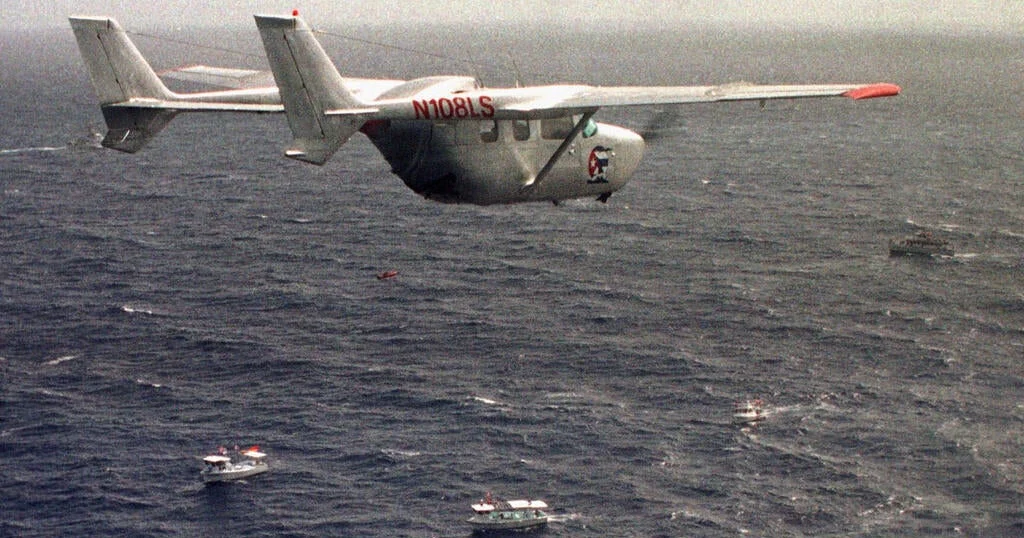
Nearly 30 years after Cuban fighter jets shot down two civilian aircraft operated by a Miami-based exile group, the U.S. is preparing to potentially indict Raúl Castro, who led Cuba’s military at the time. The planes, part of an organization called Brothers to the Rescue, were downed in February 1996, killing four people and escalating tensions between the United States and Cuba.
Details of the 1996 Shootdown
Brothers to the Rescue, founded in the early 1990s by Cuban exile José Basulto, flew search-and-rescue missions aiding people fleeing Cuba on makeshift vessels. On February 24, 1996, three small planes, carrying a total of eight people, took off from Opa Locka Airport near Miami and headed toward Cuban airspace. Shortly after entering Cuba’s Air Defense Identification Zone, two of the planes were shot down by a Cuban MiG-29 fighter jet, killing four American citizens and residents. The third plane, carrying Basulto and three others, returned safely to Florida.
The United Nations’ International Civil Aviation Organization (ICAO) later determined that the shootdowns occurred over international waters, outside Cuban airspace. The investigation found that Cuba did not take less drastic measures such as radio communication or escorting the planes out of the zone before opening fire. ICAO concluded that firing on civilian aircraft violated international law and that interception should have been a method of last resort.
Cuban and U.S. Reactions
Cuba defended the military action, citing repeated airspace violations by Brothers to the Rescue and alleged provocations including leaflet drops and sabotage attempts. Fidel Castro admitted issuing general orders to prevent future incursions but denied directly ordering the plane shootdowns.
The U.S. government condemned the attack, with President Bill Clinton calling the shootdown illegal under international law and imposing new sanctions on Cuba in response. Congress tightened restrictions, and flights between the U.S. and Cuba were suspended.
Legal and Political Implications
The families of the victims successfully sued the Cuban government in U.S. courts, winning more than $180 million in damages. Some individuals connected with the incident have faced legal action, including a conviction for murder conspiracy linked to spying.
Now, Florida lawmakers and members of the Cuban American community are urging federal authorities to charge Raúl Castro, who was head of Cuba’s armed forces during the 1996 incident. Such an indictment would mark a significant escalation in the U.S. political and legal response to Cuba and its leadership, especially amid ongoing tensions heightened by U.S. sanctions under the Trump administration.
Why it matters
Charging Raúl Castro would represent the first criminal indictment of a senior Cuban leader over the 1996 shootdown, potentially further straining U.S.-Cuba relations. It underscores the enduring impact of Cold War-era conflicts on contemporary diplomacy and legal accountability. The move might also influence policies regarding political and economic interactions with Cuba, especially as the current U.S. administration seeks to pressure reforms on the island government.
Background
The 1996 shootdown remains one of the most infamous incidents in the fraught history between the U.S. and Cuba. Brothers to the Rescue was active during a time of significant emigration from Cuba and ongoing opposition to the Castro regime by exiles in Florida. The fallout from the shootdown contributed to increased sanctions and a hardening of U.S. policy toward Cuba that has persisted for decades.
Sources
This article is based on reporting and publicly available information from the following source:
Read more Politics stories on Goka World News.