
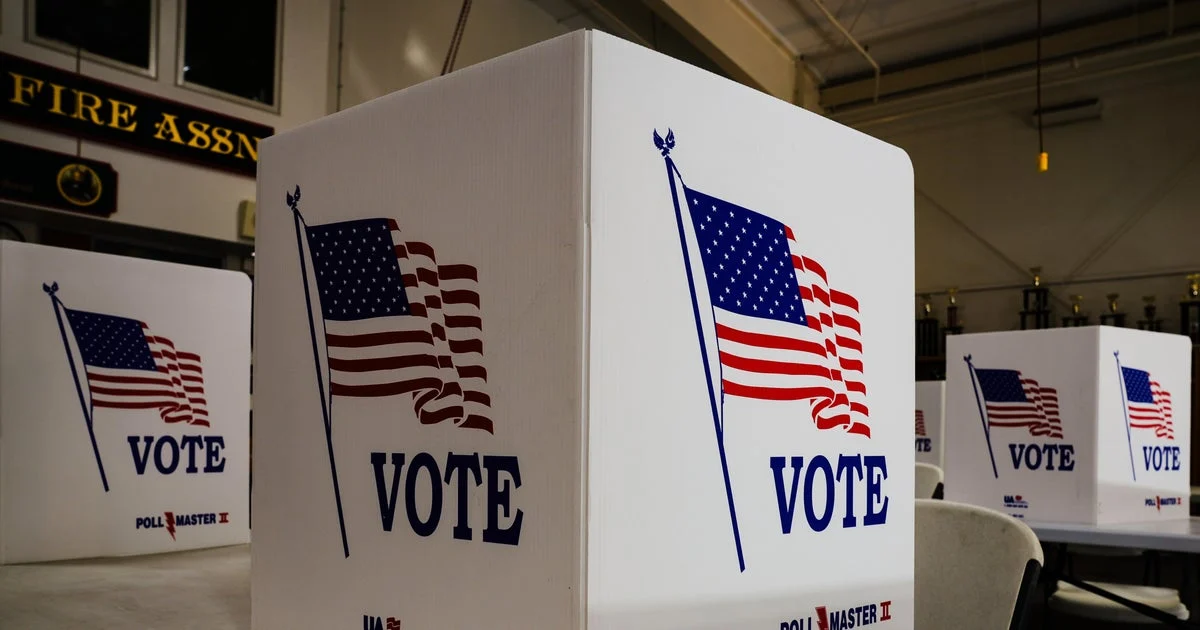
Pennsylvania held its 2026 primary election on May 19, with registered Republican and Democratic voters selecting candidates for governor, lieutenant governor, U.S. House of Representatives, and state legislative offices.
Polls opened at 7 a.m. and closed at 8 p.m., with voters already in line allowed to cast ballots. As a closed primary state, only registered members of each party could vote in their respective primaries.
Gubernatorial and Lieutenant Governor Primaries
Incumbent Democratic Governor Josh Shapiro ran unopposed in the primary, as did Republican state Treasurer Stacy Garrity. Shapiro’s campaign outraised Garrity’s by a wide margin earlier this year, setting the stage for a competitive general election.
Lieutenant Governor Austin Davis, a Democrat, also ran unopposed. On the Republican side, Garrity endorsed Jason Richey as her running mate; Richey defeated John Ventre, according to CBS News projections.
U.S. House Races
Several notable congressional primaries took place. In Philadelphia’s 3rd Congressional District, Chris Rabb is projected to win the Democratic primary in an open seat following Rep. Dwight Evans’ decision not to seek re-election.
In the Pittsburgh area, Democratic Rep. Summer Lee successfully defended her 12th District seat against challenger Will Parker and will face Republican James Hayes in the general election.
In the 17th Congressional District, Beaver County Sheriff Tony Guy won the Republican primary against Jesse James Vodvarka, setting up a race against Democratic incumbent Rep. Chris Deluzio, who was unopposed in his primary.
State Legislature Primaries
Pennsylvania voters also cast ballots for several state House and Senate districts. The state legislature is currently divided, with Democrats controlling the House and Republicans controlling the Senate.
Why it matters
These primaries determine candidates for a key midterm election in a battleground state. The gubernatorial race will draw significant attention given Shapiro’s fundraising advantage and Garrity’s profile as state treasurer. Meanwhile, open and contested congressional seats may influence the balance of power in Pennsylvania’s delegation and the U.S. House.
The continued division in the state legislature could also shape Pennsylvania’s policy landscape and redistricting ahead.
Sources
This article is based on reporting and publicly available information from the following source:
Read more Politics stories on Goka World News.