
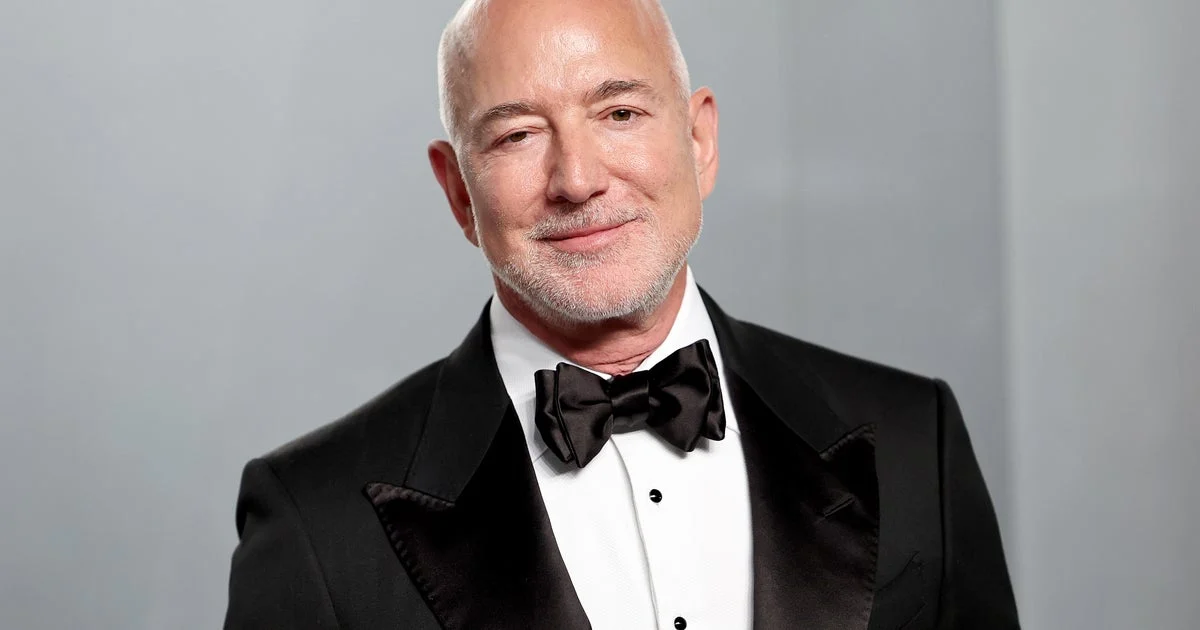
Jeff Bezos, the Amazon founder and one of the world’s wealthiest individuals, stated that the bottom half of U.S. income earners should pay no federal income tax. Speaking to CNBC, Bezos argued that eliminating the tax burden on this group could alleviate financial strain and foster opportunities for entrepreneurship.
Currently, the bottom 50% of taxpayers pay about 3% of all federal income taxes, according to data cited by Bezos. He emphasized that this share should be reduced to zero rather than merely lowered, highlighting the motivational impact of completely eliminating their tax obligations. Bezos noted the potential for individuals currently facing financial challenges to become successful entrepreneurs, likening them to the late Apple co-founder Steve Jobs.
Bezos, who stepped down as Amazon’s CEO in 2021 and is ranked as the world’s fourth-richest person with a net worth of approximately $279 billion, made these remarks amid ongoing national debates regarding tax policy and wealth distribution.
Current Tax Contributions and Legislative Proposals
The top 1% of U.S. households pay a disproportionate share of federal income taxes, around 40%, according to the Tax Foundation, a nonpartisan tax policy research group. Meanwhile, the average income tax rate for the bottom half of taxpayers, who earn less than $53,801 annually, was roughly 3.7% in 2023.
Bezos’ comments arrive as several Democratic lawmakers and activists advocate for increased taxes on ultra-wealthy Americans. For example, the Ultra-Millionaire Tax Act of 2026, proposed by Senator Elizabeth Warren, aims to impose an annual 2% tax on net worth above $50 million, with an additional 1% on billionaires. This bill also includes a significant “exit tax” targeting wealthy individuals who renounce U.S. citizenship.
Additionally, California voters may soon consider a state measure that would levy a one-time 5% tax on residents with a net worth exceeding $1 billion. Similarly, Senator Cory Booker has proposed eliminating federal income taxes on the first $75,000 of household joint income.
Why it matters
This debate over federal income tax structure reflects broader discussions about economic inequality and tax fairness in the United States. Bezos’s call to fully exempt the bottom half of earners from federal income tax highlights growing attention to reducing financial pressures on lower-income Americans while shifting more tax responsibility toward higher earners. These discussions influence ongoing legislative efforts at the federal and state levels that could reshape tax policy and impact millions of taxpayers in the coming years.
Sources
This article is based on reporting and publicly available information from the following source:
Read more Politics stories on Goka World News.