
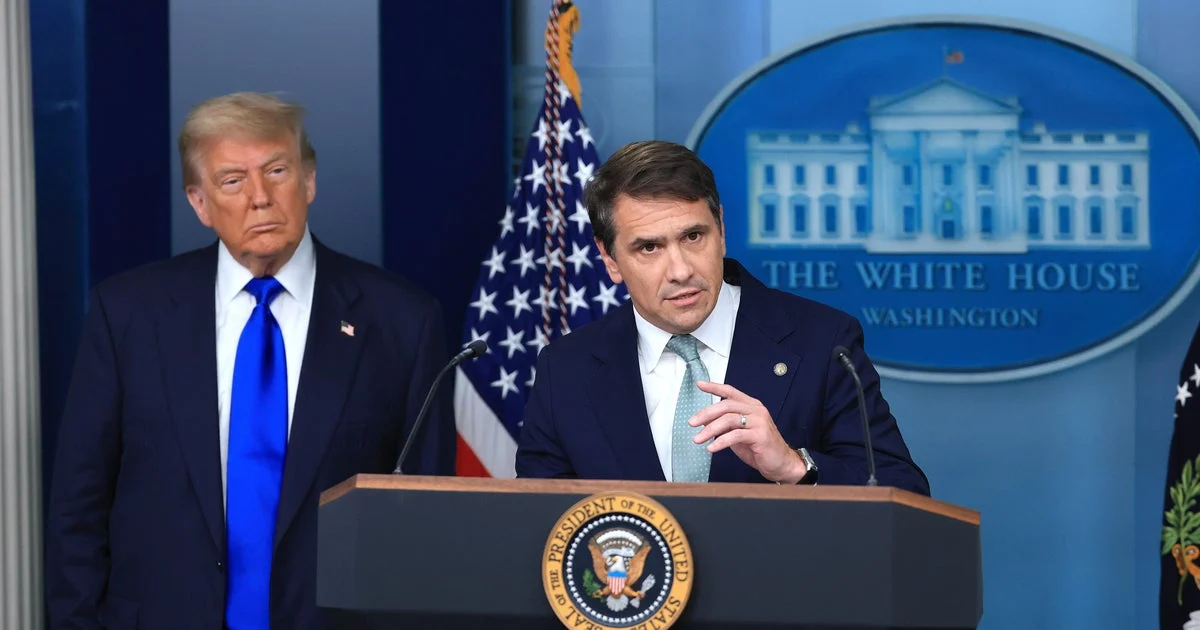
The Justice Department introduced a $1.776 billion fund intended to compensate individuals who claim the legal system was “weaponized” against them. Established through a settlement between former President Donald Trump and the Internal Revenue Service, the fund aims to provide a process for redressing such claims. However, the initiative has drawn significant criticism from legal experts, ethics groups, and lawmakers questioning its legality, implementation, and oversight.
Fund Establishment and Oversight
The fund was created as part of a settlement to end a civil lawsuit filed by Trump and his sons over the leak of their tax returns. The Justice Department refers to it as an “anti-weaponization fund,” designed to address grievances related to alleged misuse of the legal system. Nearly $1.8 billion for the fund will come from the Judgment Fund, a congressional-established mechanism to pay government settlements and court judgments. Originally capped at $100,000 per claim when created in 1956, the Judgment Fund now has no payout limits.
The fund’s governing body will consist of five members: four appointed by Acting Attorney General Todd Blanche and one selected in consultation with congressional leaders. Blanche testified that this commission will determine eligibility and award amounts, though specific criteria have not been disclosed by the Justice Department or the White House.
Legal Challenges and Congressional Concerns
The fund has faced immediate legal challenges, including a lawsuit filed by two U.S. Capitol Police officers. The officers argue potential payouts to individuals involved in the January 6 Capitol attack create heightened risk of vigilante violence against them. Yet, legal experts highlight the significant hurdle of establishing standing to sue, noting courts generally reject taxpayer claims against government spending absent direct personal injury.
Scholars also warn the fund’s creation without explicit congressional authorization raises constitutional and policy concerns. While Congress authorized the Judgment Fund to pay judgments and settlements, critics say using it to establish new compensation programs lacks proper legislative oversight. Paul Figley, a law professor specializing in the Judgment Fund, described the arrangement as legally feasible but representing poor policy and institutional overreach by the executive branch.
Both Republican and Democratic lawmakers have expressed skepticism about the fund. Senate Majority Leader John Thune called it “highly irregular” and expected further review during the appropriations process. Senator Susan Collins emphasized the need for more scrutiny before such a fund is implemented.
Comparison to Other Settlement Programs
The Justice Department cited precedent by referencing the 2011 settlement related to Native American farmers and ranchers who alleged discrimination by the Agriculture Department. That roughly $760 million settlement included extensive court supervision over funds disbursement and clear criteria established by the district court. Legal experts note this level of judicial oversight contrasts markedly with the Trump administration’s plan, which so far lacks transparency and court involvement.
Other federally managed compensation programs, such as the 9/11 Victim Compensation Fund and Vaccine Injury Compensation Program, were created through Congress with strict guidelines. Critics contend that the new anti-weaponization fund’s lack of predefined eligibility and payout rules increases risks of abuse and corruption.
Why it matters
The Trump administration’s creation of the anti-weaponization fund without explicit congressional approval challenges longstanding separation-of-powers principles by effectively allowing executive discretion over substantial government payouts. This could set a precedent enabling future administrations to allocate billions for politically-guided settlements without legislative input, raising questions about accountability, transparency, and fiscal prudence. Additionally, unresolved eligibility criteria and oversight mechanisms increase the risk that taxpayer money may be distributed inconsistently or for partisan purposes.
Background
The Judgment Fund was established by Congress in 1956 to ensure the government’s ability to promptly pay civil judgments against it without requiring annual legislative appropriations. Over time, its scope expanded, but it was never intended as a vehicle for broad compensation programs created at the executive branch’s discretion. Recent decades have seen federal settlement programs like those addressing 9/11 victims and vaccine injuries, but only when Congress explicitly authorized and structured them with judicial involvement to ensure transparency and fairness.
Sources
This article is based on reporting and publicly available information from the following source:
Read more Politics stories on Goka World News.