
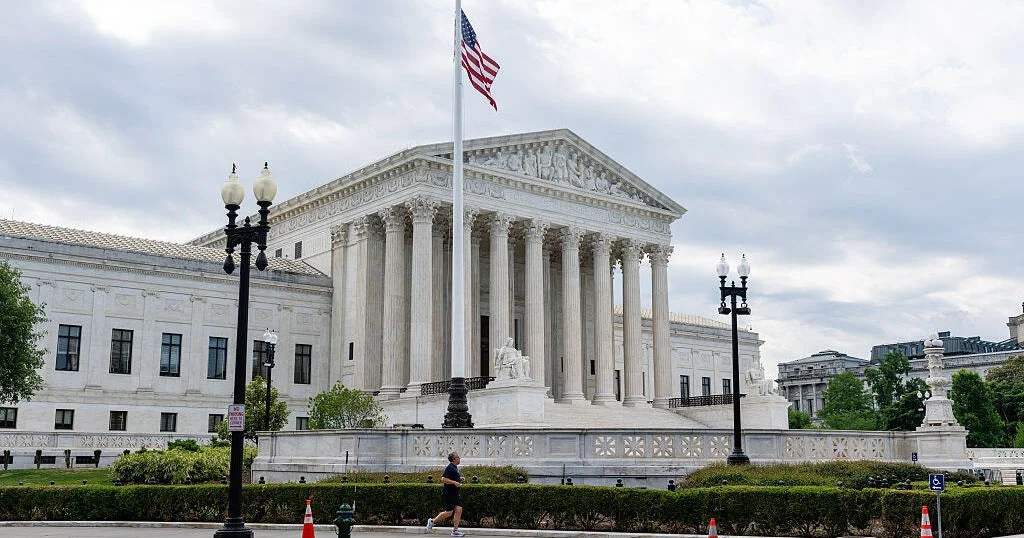
Alabama Republican officials have petitioned the U.S. Supreme Court to permit the use of a 2023 congressional map for upcoming elections after a federal district court ruled the map was racially discriminatory. The state’s GOP-backed redistricting plan, which includes only one majority-Black district out of seven, was found to intentionally dilute Black voting power.
What happened
In May 2026, Alabama requested emergency relief from the Supreme Court to override a lower court’s injunction requiring the state to use a court-drawn map that includes two majority-Black districts for the 2026 midterm elections. The district court had invalidated Alabama’s GOP-drawn 2023 map on grounds that it violated the Constitution by intentionally discriminating against Black voters, despite Alabama’s Black population comprising approximately 27% of the state. The court instead approved a map that increased Black voting strength, which was used during the 2024 elections.
Alabama Republicans argue that the 2023 map was lawful when enacted and remains so, warning that failure to use it risks forcing voters to use a court-imposed map that they describe as racially gerrymandered and misaligned with the state’s districting goals. Governor Kay Ivey has already scheduled a special primary for August 11 for districts affected by the disputed map, signaling the state’s intent to move forward with the 2023 boundaries if permitted.
The Supreme Court previously weakened a key provision of the federal Voting Rights Act in a recent ruling involving Louisiana’s congressional districts, which has encouraged several GOP-led states in the South, including Alabama, to seek new maps that may advantage Republican candidates ahead of future elections.
Why it matters
The case highlights ongoing tensions over racial gerrymandering and voting rights in the post-Voting Rights Act era. The Supreme Court’s decision on Alabama’s request could influence redistricting battles nationwide, particularly in states with significant minority populations. It also reflects broader partisan strategies aimed at consolidating electoral advantages amid shifting federal voting protections. Legal rulings regarding racial discrimination in redistricting carry significant implications for fair representation and compliance with constitutional standards.
Background
Alabama’s congressional map disputes date back to post-2020 Census redistricting efforts. In 2021, Alabama drew new districts that were subsequently challenged under Section 2 of the Voting Rights Act. A 2023 state redistricting plan created only one majority-Black district, despite the state’s sizeable Black population, drawing criticism and legal challenges. The district court intervened with a remedial map for the 2024 elections, which increased Black electoral influence by legislating two majority-Black districts. The Supreme Court’s recent decision weakening parts of the Voting Rights Act has led Alabama and other Southern states to seek judicial approval to revert to maps favoring the GOP, intensifying legal scrutiny and political contention over minority voting rights.
Sources
This article is based on reporting and publicly available information from the following source:
Read more Politics stories on Goka World News.