
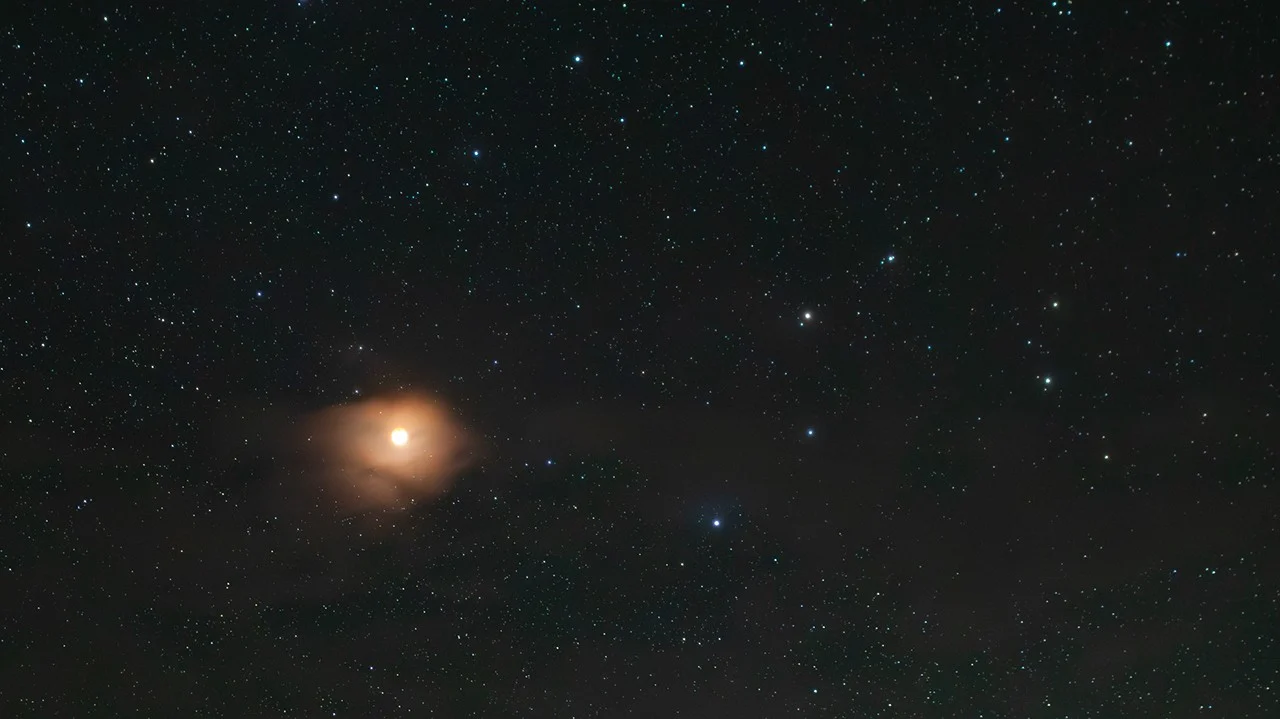
June 2026 offers several notable skywatching opportunities, including a close conjunction of Venus and Jupiter, a lunar occultation of Venus, the appearance of Mercury, and the June solstice marking the start of astronomical summer.
What happened
On June 9, Venus and Jupiter, two of the brightest planets visible from Earth, will appear very close together shortly after sunset, creating a planetary conjunction. From June 11 through June 15, Mercury will join Venus and Jupiter low in the western twilight sky, forming a brief lineup of three planets. Observers will need a clear western horizon to catch Mercury, the lowest and faintest of the trio.
On June 17, a lunar occultation will occur as the Moon passes in front of Venus for viewers in parts of the United States, Canada, Brazil, and Venezuela. In this event, Venus temporarily disappears behind the Moon before reappearing. Outside the exact viewing path, people may still witness a close Moon-Venus pairing, though caution is advised for daytime observers to avoid pointing optical devices near the Sun to prevent eye injury.
The June solstice on June 21 at 1:24 a.m. Pacific Time signals the beginning of astronomical summer in the Northern Hemisphere, delivering the longest days and shortest nights of the year. However, the earliest sunrise and latest sunset often do not occur on the exact solstice date.
As darkness falls in June, skywatchers can spot the Summer Triangle, an asterism formed by the bright stars Vega, Altair, and Deneb. This region of the sky hosts several deep-sky objects including the Dumbbell Nebula (Messier 27), the Ring Nebula, the North America Nebula, and the Veil Nebula. These objects are visible with telescopes or long-exposure photography and reveal stellar phenomena such as glowing gas clouds and star formation regions.
Why it matters
These planetary alignments provide excellent opportunities for public engagement with astronomy by allowing observers to see multiple bright planets in a single evening sky. The lunar occultation of Venus offers a rare and visually striking event that demonstrates celestial mechanics. The summer solstice marks a key seasonal milestone, influencing daylight duration and cultural observances. Additionally, the Summer Triangle region offers rich targets for amateur astronomers and astrophotographers, helping cultivate interest in deep-sky observation.
Background
Planetary conjunctions occur when planets appear close together from Earth’s perspective due to their positions along the ecliptic plane, despite vast distances separating them in space. Lunar occultations happen when the Moon crosses in front of a celestial body, temporarily blocking its light. The June solstice is an annual astronomical event when the Sun reaches its northernmost position in the sky for the Northern Hemisphere. The Summer Triangle is a prominent summer asterism well known among stargazers for its bright stars and nearby nebulae. NASA’s Jet Propulsion Laboratory provides ongoing guidance and information for skywatchers through its monthly “What’s Up” program.
Sources
This article is based on reporting and publicly available information from the following source:
Read more Space & NASA stories on Goka World News.