
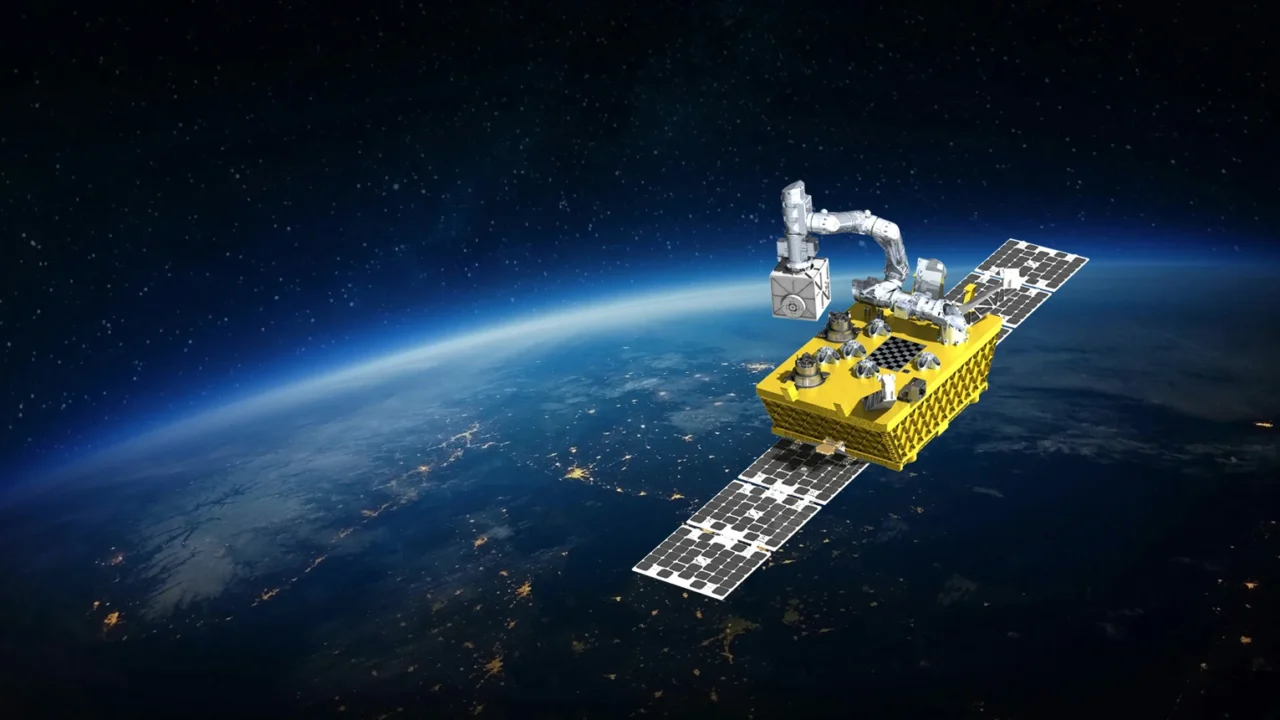
NASA is inviting a select group of U.S. researchers to participate in its Space Roboticist Challenge by proposing experiments using a seven-degree-of-freedom robotic arm launching to low Earth orbit on the Fly Foundational Robots (FFR) mission.
What happened
The Fly Foundational Robots mission will deploy a advanced robotic arm with seven degrees of freedom into low Earth orbit. NASA is providing principal investigators, post-doctoral researchers, professors, and qualified graduate students the opportunity to submit proposals for experiments utilizing this robotic arm. Participation requires eligibility verification during the initial registration phase.
The challenge is structured in phases. Phase 0 is the eligibility registration period, closing on September 23, 2026, at 12:59 p.m. ET. Eligible participants then gain access to Phase 1, submitting white papers by October 2, 2026, outlining focused experiments for the robotic arm. Up to 15 teams will advance to Phase 2, involving simulation and validation testing, including visits to NASA’s Goddard Space Flight Center in Maryland. Successful teams passing this validation phase will be granted on-orbit experiment time aboard the FFR mission.
Why it matters
This challenge allows researchers direct access to a sophisticated robotic system in space, expanding scientific and technological capabilities in orbit. It supports NASA’s goal of fostering innovation in space robotics and broadening opportunities for U.S. academic and research institutions to conduct experiments that could advance space exploration and robotic technology development.
Background
The Fly Foundational Robots mission is part of NASA’s initiative to deploy autonomous robotic arms capable of complex manipulation tasks in low Earth orbit. The robotic arm’s seven degrees of freedom enable it to perform versatile movements similar to a human arm, opening pathways for experiments in microgravity robotics control, servicing, and assembly.
By structuring the challenge with multiple phases, NASA ensures rigorous selection and testing of proposed experiments, encouraging high-quality, feasible research projects. This challenge represents a continuation of NASA’s efforts to engage the research community in collaborative space missions.
For more information or to register, interested researchers can visit spaceroboticistchallenge.com.
Sources
This article is based on reporting and publicly available information from the following source:
Read more Space & NASA stories on Goka World News.