
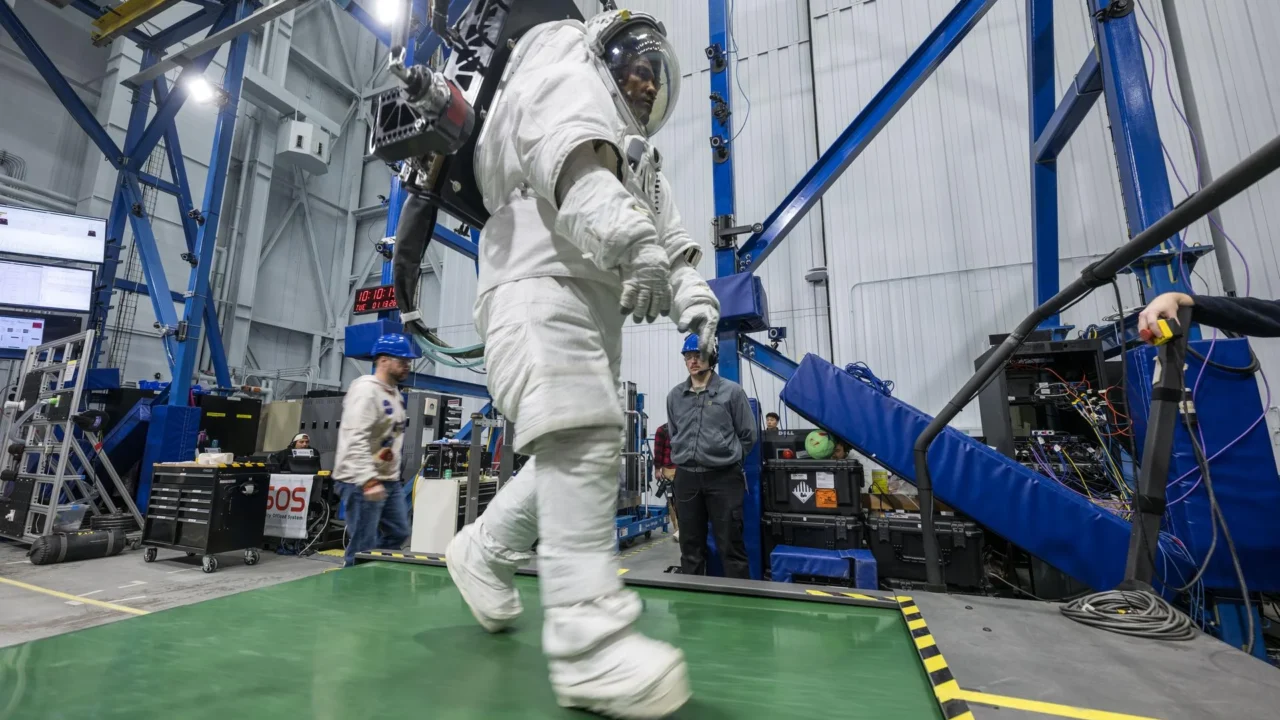
NASA scientists continue to process and analyze data collected during the Artemis II mission, which orbited the Moon before safely returning to Earth on April 10. Research focuses on astronaut health and lunar observations to enhance understanding of human adaptation to spaceflight and inform future deep space missions.
What happened
The Artemis II crew—NASA astronauts Reid Wiseman, Victor Glover, Christina Koch, and Canadian Space Agency astronaut Jeremy Hansen—contributed medical and cognitive data immediately after splashdown in the Pacific Ocean. Researchers gathered baseline health measurements including blood pressure, heart rate, eye health, and motor control to evaluate how the crew adjusted from microgravity to Earth’s gravity. Within days, crew members completed physical obstacle courses simulating lunar gravity to assess movement adaptations for planetary landings.
Additional studies are underway to investigate immune system responses, including whether dormant viruses reactivate in space, through comparisons of blood and saliva samples taken before, during, and after the mission. Cognitive tests and simulated spacecraft operations tested crew performance under spaceflight conditions. The data collection phase concluded 45 days post-mission, with ongoing health monitoring planned for the astronauts’ lifetimes.
Separately, NASA’s AVATAR project analyzed organ chips containing each astronaut’s bone marrow cells that orbited the Moon. Researchers use advanced molecular techniques to compare these chips with ground controls and blood samples, studying the effects of deep space radiation and microgravity on cellular health. This research aims to develop personalized medical tools for future missions.
During the mission’s closest lunar approach on April 6, the crew conducted detailed observations, including imaging, video, and audio recordings of surface features like impact flashes, fault textures, and color variations. NASA plans to release a comprehensive report on these initial scientific findings later this year and will publish more than 100 audio recordings and approximately 11,500 images and videos in publicly accessible archives.
Why it matters
The Artemis II postflight research is critical for understanding human health risks and performance after deep space travel, particularly transitioning to lunar gravity environments. These findings will directly inform operational protocols for astronauts on future Moon and Mars missions, where medical support will be limited. Molecular insights from organ chip studies could lead to personalized health countermeasures that improve safety and efficacy during long-duration space exploration.
Lunar surface data collected provides a valuable scientific baseline for geological and environmental studies, enhancing mission planning and execution for NASA’s Artemis program and its goal to establish a sustainable human presence on the Moon.
Background
Artemis II was NASA’s first crewed mission to orbit the Moon in over five decades, designed as a test flight to validate spacecraft systems and crew performance ahead of future lunar landings. The mission builds on Artemis I’s uncrewed success and aims to ultimately support the Artemis program’s objective of returning humans to the lunar surface and eventually sending astronauts to Mars. Scientific investigations aboard Artemis II are part of NASA’s broader effort to improve human spaceflight safety and deepen planetary science understanding.
Sources
This article is based on reporting and publicly available information from the following source:
Read more Space & NASA stories on Goka World News.