
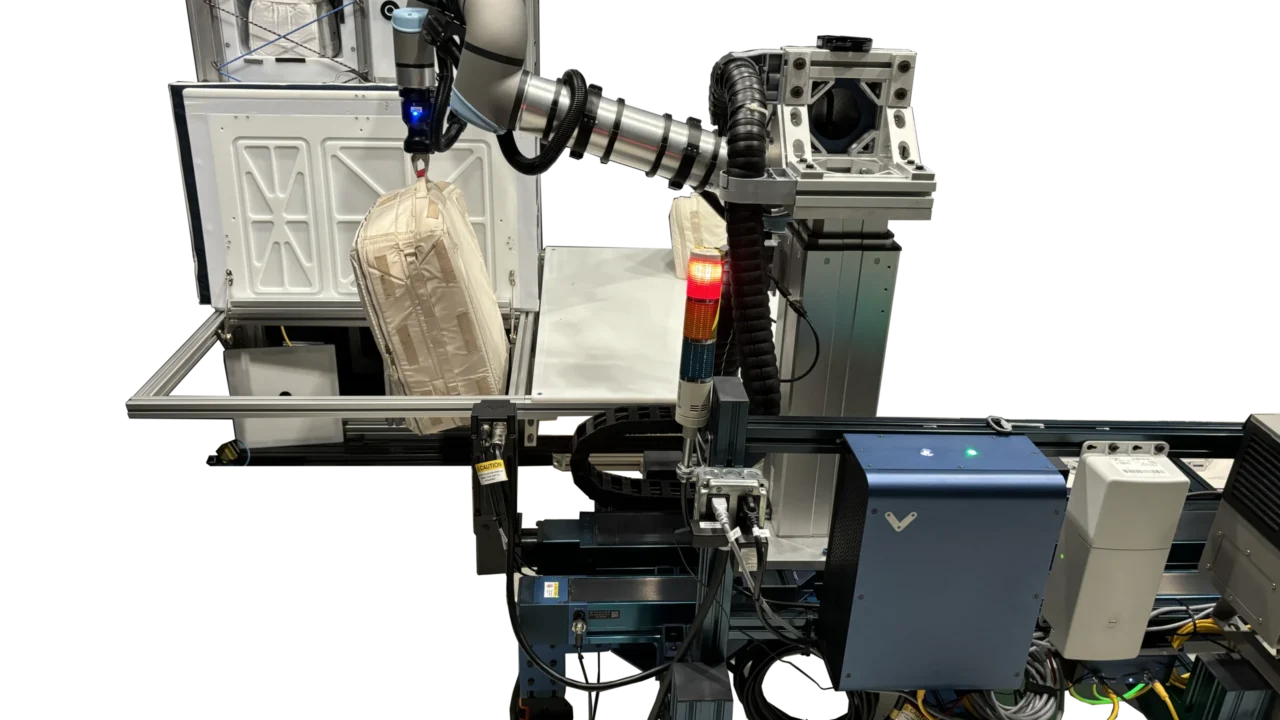
NASA is partnering with Boulder-based robotics firm PickNik Inc. to develop and deploy advanced robotic intelligence software designed to perform routine spacecraft tasks autonomously. This collaboration aims to enable astronauts on long-term Moon missions to focus more on scientific activities by delegating complex mechanical tasks to robotic systems.
What Happened
PickNik worked alongside Shaun Azimi and the Dexterous Robotics team at NASA’s Johnson Space Center in Houston to test software that allows a robotic arm to recognize and manipulate spacecraft components. The robotic system successfully identified a spacecraft hatch, turned its latch, grasped the handle, opened the door, and transferred cargo bags between the hatch and storage bins. This testing was conducted within NASA Johnson’s Integrated Mobile Evaluation Testbed for Robotics Operations, funded through NASA’s Small Business Innovation Research program.
Key Facts
- Robotic software used: MoveIt Pro, designed and refined by PickNik.
- MoveIt Pro was commercially released in 2023 after early government-supported development.
- The tests involved robotic arm motion control, object recognition, and autonomous manipulation of spacecraft components.
- PickNik is a 35-person company that credits NASA’s initial investment for developing the product.
- Commercial users of MoveIt Pro include BMW for robotic assembly lines, Lightspeed for construction robotics, and Hivebotics for automated cleaning robots.
- The project was supported by NASA’s Small Business Innovation Research funding.
Why It Matters
This collaboration advances robotic autonomy critical for lunar and deep-space missions by enabling robots to perform routine, time-consuming tasks. Such capabilities free astronauts to prioritize scientific research and exploration. Additionally, the technology has strong commercial potential, demonstrating NASA’s role in fostering robotics innovations that benefit industries on Earth, including automotive manufacturing and affordable housing construction.
Background
NASA has a long history of technology transfer to industry through its Spinoff publication, documenting over five decades of space technology benefiting daily life and commercial sectors. This partnership continues that legacy by leveraging NASA-funded research to produce commercially viable robotic software.
Analysis
Ezra Brooks, principal software engineer at PickNik, emphasized that the company’s product would not exist without NASA’s early support, highlighting the critical role of government investment in developing complex robotic algorithms. NASA’s Dexterous Robotics team facilitates such innovation by integrating advanced motion planning and machine perception in robotic systems for space applications.
Who Is Affected
The primary beneficiaries include NASA astronauts undertaking lunar missions, PickNik as a commercial robotics firm, and various commercial industries using MoveIt Pro software—such as automotive manufacturing (BMW), modular construction (Lightspeed), and robotics cleaning services (Hivebotics).
What Remains Unclear
This information was not confirmed in the reviewed sources.
What Comes Next
Future steps include further refining the robotic software for more complex spacecraft operations and broader deployment in upcoming NASA space missions. Additional commercial adoption of MoveIt Pro is expected as the technology matures.
Sources
This article is based on reporting and publicly available information from the following source:
Read more Space & NASA stories on Goka World News.