
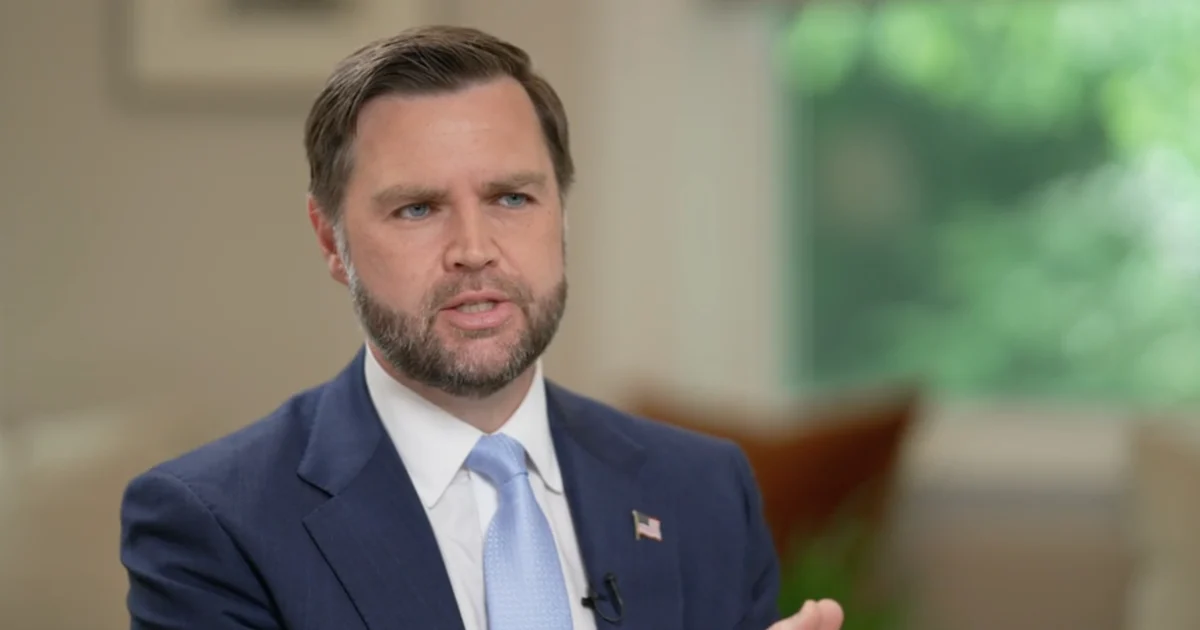
U.S. Vice President JD Vance recently addressed the complexities of the relationship between the United States and Israel, highlighting that Israeli Prime Minister Benjamin Netanyahu has “certainly gotten some things wrong” in his handling of diplomatic ties, particularly around the Iran conflict.
What Happened
In an interview with Robert Costa airing on “CBS Sunday Morning,” Vance discussed the nuanced alignment between U.S. and Israeli interests. He acknowledged that although the two countries are close partners, their strategic priorities do not always perfectly coincide. Vance emphasized that the United States must ultimately prioritize its own national interests, even when they diverge from those of Israel.
Key Facts
- Vance stated that Netanyahu “aggressively asserts the interests of his country.”
- He noted that former President Donald Trump was clear about the U.S.’s best interests, which sometimes conflicted with Netanyahu’s approach.
- Vance declined to specify Netanyahu’s mistakes, saying those matters remain private.
- Recent tensions include Israeli airstrikes on Beirut and retaliatory strikes by Iran.
Why It Matters
This exchange underscores the delicate balance in the U.S.-Israel alliance, especially amid escalating tensions with Iran. It reveals fractures in diplomatic coordination and the challenges of reconciling the interests of two close allies confronting a shared regional adversary.
Background
U.S.-Israel relations have long been characterized by strong strategic cooperation, particularly on security issues in the Middle East. However, disputes arise over policies related to Iran’s nuclear ambitions and regional military actions. Former President Trump maintained a personal rapport with Netanyahu but has publicly indicated a willingness to pursue an independent negotiation with Iran.
Analysis
Vance’s remarks reflect the complexities leaders face when aligning policies between sovereign nations with overlapping but not identical agendas. His comments signal that while cooperation remains robust, the U.S. is prepared to diverge when national interests demand, especially in high-stakes areas like Iran.
Who Is Affected
The diplomatic relationship between the U.S. and Israel has implications for regional stability in the Middle East, influencing Iran’s strategic calculations and the broader geopolitical dynamics involving allied and rival nations.
Reactions / Official Statements
Vance described Netanyahu as a “good partner” despite disagreements. Former President Trump has publicly remarked on the necessity for Netanyahu to understand Washington’s direct approach in Iran negotiations. Israeli and Iranian military exchanges have heightened tensions recently.
What Remains Unclear
Specific examples of Netanyahu’s missteps, and the precise nature and consequences of diverging U.S. and Israeli interests, were not disclosed. Further details on future U.S. diplomatic strategies toward Israel and Iran remain unspecified.
What Comes Next
Vance indicated continued cooperation between the U.S. and Israel, with Washington maintaining a leadership role in shaping policy responses to Iran. Upcoming discussions and potential diplomatic shifts were not detailed in the interview.
Sources
This article is based on reporting and publicly available information from the following source:
Read more Politics stories on Goka World News.