
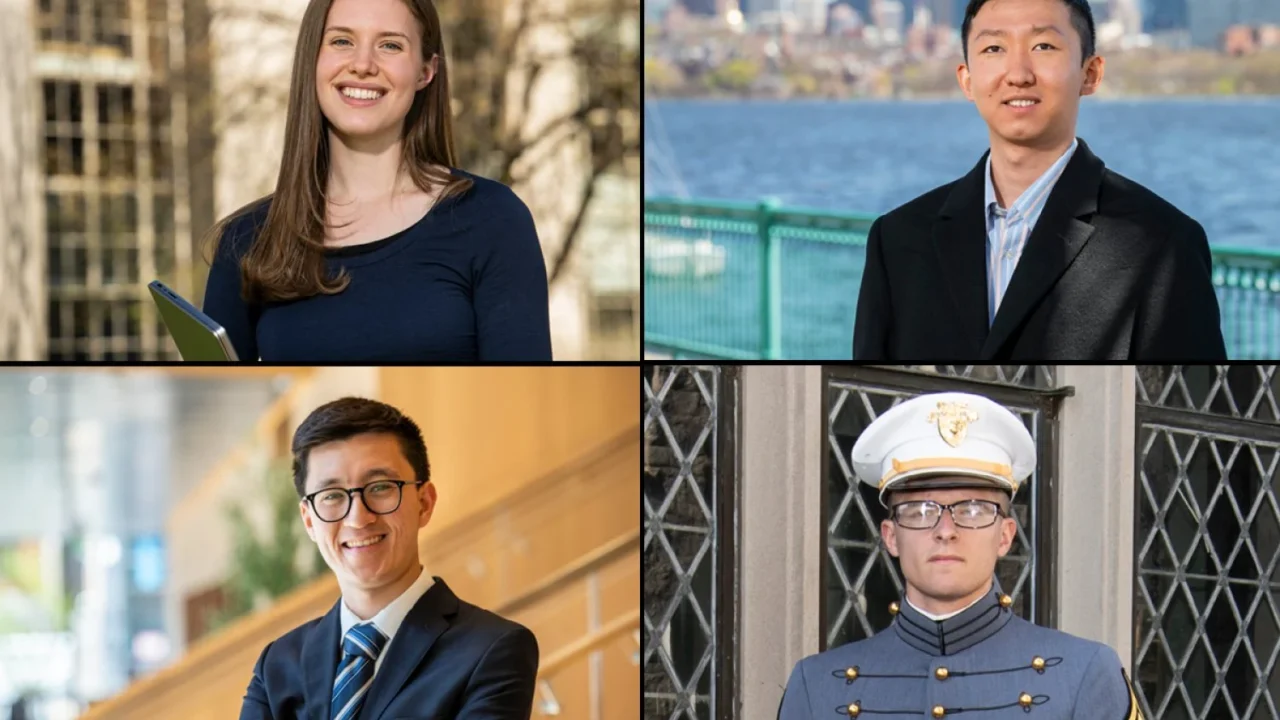
The Hertz Foundation awarded its prestigious 2026 fellowships to four MIT affiliates, including three current students and one incoming graduate student. Each recipient receives five years of financial support to advance their graduate research in science and technology fields.
What Happened
The Hertz Foundation announced the selection of Annika Marschner, Alvin Q. Meng, Zachary S. Siegel, and Matthew Wanta as recipients of its 2026 fellowships. Each Fellow receives a stipend and full tuition equivalent for five years, providing significant autonomy to undertake innovative graduate research. The awards were publicly detailed by the foundation in 2024, highlighting the recipients’ academic backgrounds and research plans.
Key Facts
- The Hertz Foundation, established in 1963, supports graduate students in applied science and engineering with five years of funding.
- 2026 Fellows include three current MIT students and one incoming doctoral student.
- Annika Marschner is pursuing her PhD in mechanical engineering, focusing on bio-inspired systems and surgical robotics.
- Alvin Q. Meng is a doctoral student in inorganic chemistry studying fundamental chemical interactions, especially iron-sulfur clusters.
- Zachary S. Siegel is a PhD student working on robotics, cognitive science, and AI at MIT’s Computer Science and Artificial Intelligence Laboratory (CSAIL).
- Matthew Wanta will begin doctoral studies in operations research, with a background in autonomous systems and computer vision from West Point.
- Fellows gain access to lifelong mentoring, networking, and collaborative opportunities within a community of over 1,300 previous recipients.
Why It Matters
The Hertz Fellowship’s extensive funding and network enable recipients to pursue ambitious research unconstrained by financial burdens. This fosters innovation in critical technology and engineering areas, potentially contributing to advancements in medical devices, AI, robotics, and defense systems. The collaborative community and mentoring provided help accelerate scientific breakthroughs that can influence industry and technology companies.
Background
Since 1963, the Hertz Foundation has supported exceptional science and engineering graduate students with five-year fellowships, offering funding and professional development. Hertz Fellows have historically contributed to key technological accomplishments including medical therapies, defense networks, and space exploration projects such as the James Webb Space Telescope. The foundation selects candidates demonstrating creativity, grit, and vision in their research pursuits.
Analysis
Philip Welkhoff, Hertz Fellow and director of the Gates Foundation malaria program, co-led the 2026 selection process, emphasizing the recipients’ fearlessness and innovative potential. Welkhoff highlighted the cohort’s strong creativity and resilience as key factors selected to push the frontiers of science. The fellowship’s autonomy and support are seen as critical enablers for pioneering graduate research.
Who Is Affected
- The four named MIT affiliates who received the fellowships.
- The MIT research community and labs where these students conduct their work.
- Technology sectors in robotics, AI, chemistry, bioengineering, and defense anticipating technological advances.
- The broader network of Hertz Fellows across scientific and engineering disciplines.
What Remains Unclear
- Specific project milestones and outcomes for each recipient’s research are pending as the graduate work progresses.
- Details on the allocation of the fellowship funds beyond tuition and stipend were not disclosed.
- Potential collaborations between the recipients or with industry partners remain unspecified.
What Comes Next
- The fellowship recipients will continue or begin their graduate studies at MIT starting in fall 2024.
- The Hertz Foundation will support the winners throughout their five-year graduate programs with resources and networking opportunities.
Sources
This article is based on reporting and publicly available information from the following source:
Read more Science & Technology stories on Goka World News.