
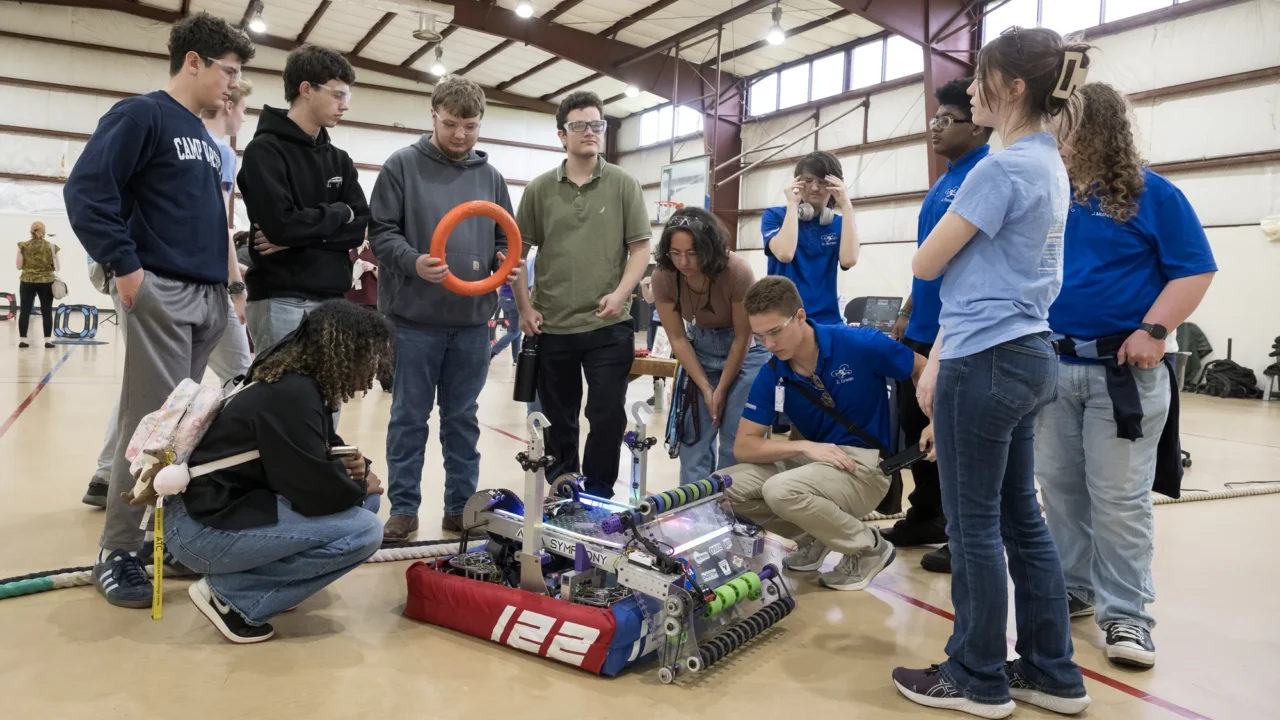
NASA’s Langley Research Center in Hampton, Virginia, hosted Career Technical Education Day, welcoming 100 high school and community college students from Virginia and North Carolina to explore technical careers vital to NASA’s research and missions. The event featured tours, demonstrations, and direct interaction with NASA technicians to highlight pathways into technical roles within the agency.
What Happened
The Office of STEM Engagement at NASA Langley organized Career Technical Education Day to connect students involved in local career and technical education programs with NASA’s skilled technical workforce. The event took place at the Langley Research Center and included facility tours such as the Landing and Impact Research Facility and wind tunnels, interactive demonstrations, and panel discussions. The day concluded with a career panel moderated by NASA astronaut Joe Acaba, featuring current technician apprentices sharing insights on their roles and career development.
Key Facts
- 100 students from Virginia and North Carolina participated.
- The event was hosted at NASA Langley Research Center in Hampton, Virginia.
- Facility tours included the Landing and Impact Research Facility and a Langley wind tunnel.
- NASA technicians and aerospace industry partners led hands-on demonstrations and interactive activities.
- Steve Gayle, acting associate director at Langley, gave opening remarks tracing his own technician career path.
- NASA astronaut Joe Acaba moderated the closing career panel with technician apprentices.
- The program highlighted technical career fields such as fabrication, electronics, and systems testing crucial to NASA missions.
Why It Matters
The event underscores NASA’s commitment to building a highly skilled technical workforce essential for advancing space exploration and research. By providing students with exposure to real-world applications and career pathways, NASA supports development of future engineers and technicians who are critical to sustaining innovation and mission success at the agency.
Background
Technicians have long been integral to NASA’s operations, contributing specialized skills in engineering, fabrication, electronics, and more. NASA Langley’s Engineering Technician Apprentice Program has served as a successful entry point for many technicians advancing within the agency. Career education events like this align with NASA’s broader efforts to engage students in STEM and technical fields, helping to prepare a diverse workforce.
Analysis
Bonnie Murray, lead for STEM Engagement at Langley, emphasized that technical careers at NASA are often overlooked by students who focus on astronaut or engineering roles. Steve Gayle encouraged students to embrace challenges and remain curious, highlighting the importance of hands-on skills in operating wind tunnels and conducting systems testing. Technician Wyatt Healy noted the value of mastering foundational skills as a key to advancing in these fields.
Who Is Affected
The event primarily impacts students enrolled in career and technical programs in Virginia and North Carolina, NASA’s Langley workforce, and the broader aerospace industry seeking to attract skilled technicians to maintain mission readiness and innovation.
What Remains Unclear
This information was not confirmed in the reviewed sources.
What Comes Next
NASA will continue to offer educational programs and events aimed at exposing students to technical career paths and opportunities within the agency, fostering technical expertise aligned with future mission needs.
Sources
This article is based on reporting and publicly available information from the following source:
Read more Space & NASA stories on Goka World News.