
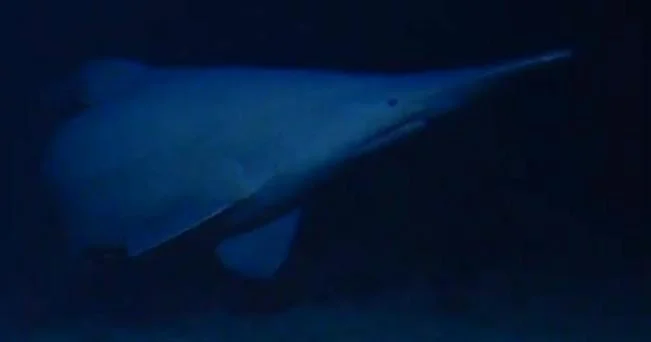
For the first time, marine researchers have filmed the elusive goblin shark alive in its natural deep-sea environment in the Tonga Trench and other remote Pacific locations, revealing new insights into the species’ depth and range, according to the Minderoo-UWA Deep-Sea Research Center.
What Happened
In 2024, scientists from the Minderoo-UWA Deep-Sea Research Center successfully recorded video footage of a goblin shark in its natural habitat in the Tonga Trench, the world’s second-deepest oceanic trench. This discovery followed the identification of a similar goblin shark sighting on videotape from a 2019 Ocean Exploration Trust expedition near Jarvis Island and Palmyra Atoll in the central Pacific. Both sightings were made using remote baited cameras deployed thousands of meters below the ocean surface.
Key Facts
- The 2024 Tonga Trench sighting documented a goblin shark at a depth nearly 700 meters deeper than previously confirmed, extending the known depth range of goblin sharks and lamniform sharks in general by 108 meters.
- The 2019 video was captured during an expedition aboard the M/V Nautilus, owned by Robert Ballard, notable for discovering the Titanic wreck.
- Goblin sharks average about 12 feet (3.7 meters) in length and possess distinctive features including a pink, soft body and an elongated snout hiding sharp teeth.
- They are the sole surviving members of the Mitsukurinidae family, a lineage dating back approximately 125 million years.
Why It Matters
These sightings provide the first confirmed visual evidence of a goblin shark alive in the wild, allowing scientists to better understand the species’ natural habitat, behavior, and distribution. The findings expand the known geographic and depth ranges of goblin sharks, a vital step in including them in marine biodiversity assessments and informing regional ecosystem management policies.
Background
Since their discovery more than a century ago, goblin sharks have been observed only when accidentally caught and brought to the surface by fishing operations. The deep-sea environment they inhabit—characterized by complete darkness and extreme pressure—has made direct study challenging. Previous scientific knowledge of their range and behavior was limited and mostly speculative.
Analysis
Aaron Judah, a researcher at the University of Hawaii at Mānoa and co-author of the published study in the Journal of Fish Biology, noted the significance of capturing live footage. He emphasized that the observations extended the known depth habitat of the species and highlighted the importance of ongoing deep-sea exploration for uncovering unknown marine biodiversity.
Who Is Affected
Deep-sea marine researchers, conservationists, and biodiversity managers benefit directly from this new knowledge. Extending the geographic and depth range of the goblin shark enables policymakers to consider this ancient species in regional conservation strategies and biodiversity registers, especially around central Pacific nations like Tonga, Jarvis Island, and Palmyra Atoll.
What Remains Unclear
This information was not confirmed in the reviewed sources.
What Comes Next
This information was not confirmed in the reviewed sources.
Sources
This article is based on reporting and publicly available information from the following source:
Read more Science Discoveries stories on Goka World News.