
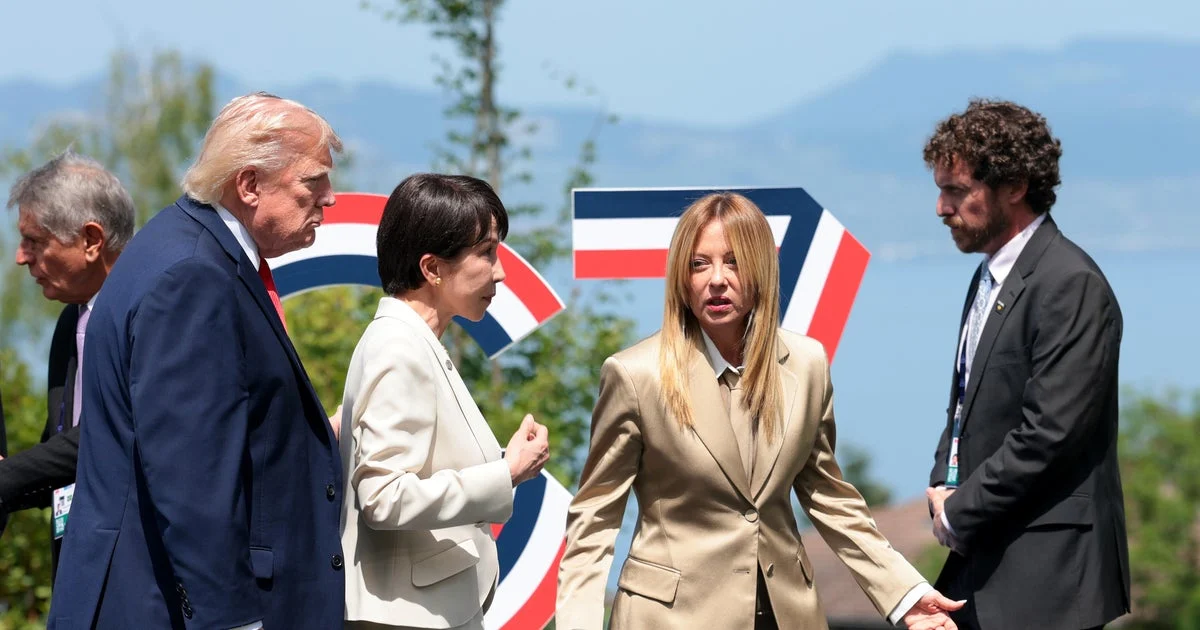
Italy’s Prime Minister Giorgia Meloni publicly reproached former US President Donald Trump on June 20, 2026, over what she described as his “constant, unprovoked attacks,” deepening diplomatic strains between the two close allies. The dispute follows Trump’s reported remarks about Meloni at the recent G7 summit in France and criticisms related to Italy’s stance on the Iran conflict, further complicating relations in a sensitive geopolitical environment.
What Happened
During the G7 summit held in Evian-les-Bains, France, earlier in June 2026, Donald Trump allegedly told an Italian television network that Prime Minister Giorgia Meloni had “wanted a picture with me so badly,” and that he only agreed because he “felt sorry” for her. Meloni responded by calling this account fabricated, emphasizing that neither she nor Italy “ever beg.” The incident swiftly escalated as Trump doubled down on his critique through his social media platform, Truth Social, accusing Meloni of repeatedly asking for a photo and criticizing Italy’s refusal to grant the US access to its military landing strips amid the Iran war.
Italy reacted strongly, canceling a planned visit to the US by Foreign Minister Antonio Tajani scheduled for June 21–22. Tajani condemned Trump’s remarks as “serious and offensive,” stating they insulted all of Italy.
Key Facts
Meloni has been a staunch ally of Trump in Europe, notably attending his second inauguration in Washington in 2025. However, tensions have risen over Italy’s refusal to allow US military use of its landing strips during the Iran war, a decision Meloni defended as aligned with existing agreements safeguarding Italian sovereignty.
Trump’s comments also included criticism of Meloni’s popularity and urged a tougher stance on Iran, suggesting Italy’s approach was a logistical inconvenience to the US. Meloni rejected the assertions, affirming her leadership’s commitment to Italy’s national interest and sovereignty.
The dispute occurred amid a broader geopolitical context, including Meloni openly opposing Trump’s criticism of Pope Leo XIV’s anti-war position and diverging views on Western responses to the Iran conflict.
What This Means
This diplomatic spat highlights cracks within alliances that have previously been considered stable, particularly between two leaders who once appeared politically aligned. Meloni’s firm refusal to bow to Trump’s public pressure signals a growing assertion of Italian sovereignty even amid critical global security issues like the Iran conflict. The cancellation of Tajani’s visit underscores how personal disputes at the leadership level can disrupt broader diplomatic relations and military cooperation within NATO frameworks.
For the international community, this conflict serves as a reminder that even close allies can experience tension fueled by nationalism and differing strategic priorities. Italy’s stance may influence how other European nations balance alliance obligations with national interests, especially concerning sensitive military logistics and Middle East policy.
Background
Giorgia Meloni, a conservative leader often viewed as a reliable European partner to Trump, has maintained a complex position amid global conflicts. While the two leaders appeared aligned during Trump’s presidency, the Iran war has tested their relationship, with Italy opting out of certain US-led logistical support contrary to other NATO allies. The tensions are further amplified by Meloni’s criticism of Trump’s attacks on Pope Leo XIV’s anti-war views, signaling deeper divergences beyond military cooperation.
What Comes Next
In response to the diplomatic fallout, Italy has postponed Foreign Minister Tajani’s US visit. No new meetings or conciliatory steps have been announced as of yet. The trajectory of this dispute will be closely watched given its implications for NATO unity and Western responses to the Iran crisis.
Sources
This article is based on reporting and publicly available information from the following source:
Read more Politics stories on Goka World News.