
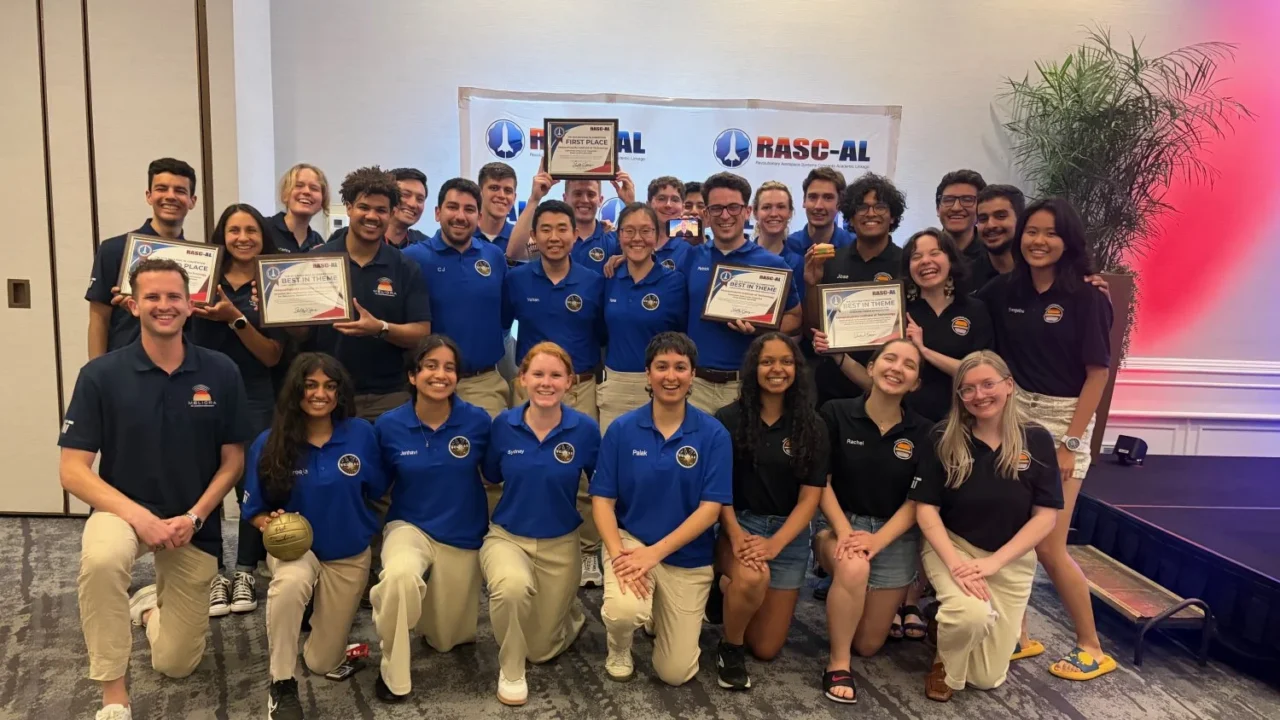
Three teams of students from MIT and Wellesley College have received five awards at NASA’s 2026 Revolutionary Aerospace Systems Concepts — Academic Linkage (RASC-AL) Forum for their innovative lunar base infrastructure designs. Their work, spanning power generation, communications, and resource utilization, was recognized among 75 entries, underscoring the vital groundwork these students laid for sustaining future human presence on the moon. NASA anticipates such infrastructure to be critical for its Artemis program and subsequent lunar exploration.
What Happened
Since fall 2025, 35 students from eight departments at MIT and Wellesley College collaborated on early-stage lunar base infrastructure, competing in NASA’s RASC-AL 2026 competition. The ECLIPSE team won overall first place and top prize in the lunar surface power category with a robust power grid design capable of delivering uninterrupted energy through the lunar night and winter. MELIORA earned second place overall and first in communications, navigation, and timing by engineering a satellite constellation tailored for lunar and Mars environments. Meanwhile, CHEESEBURGER took first place in lunar technology demonstrations by developing robotic systems to mine and process lunar regolith into oxygen, metals, and building bricks.
Key Facts
The award-winning projects were presented at NASA’s 2026 RASC-AL Forum and involved over 30 students across departments such as Aeronautics and Astronautics (AeroAstro), Nuclear Science and Engineering (NSE), Electrical Engineering and Computer Science (EECS), Mechanical Engineering, and others. The teams designed systems focused on sustained human operations at the lunar south pole, addressing power delivery, communications reliability, and in-situ resource utilization (ISRU). Their work aligns with NASA’s planned lunar missions scheduled to begin in 2027, aiming for permanent astronaut habitation by the early 2030s.
What This Means
This student-led research offers concrete, integrated system designs that NASA can incorporate into its Artemis lunar base architecture. Reliable power systems like ECLIPSE’s grid mitigate the life-threatening risk of power failure during the moon’s extended night period, enhancing crew safety and operational continuity. The MELIORA communication network provides a scalable, resilient solution for surface and orbital data transmission critical for exploration and command, potentially transforming how space missions manage navigation and communications beyond Earth. CHEESEBURGER’s regolith processing technologies illustrate practical pathways to leveraging lunar materials for breathing oxygen, structural building blocks, and manufacturing, key for reducing reliance on Earth resupply. Together, these designs pave the way for sustainable, self-sufficient lunar colonies and inform future Mars missions, signaling a pivotal shift from conceptual plans to practical engineering solutions in space exploration.
Background
NASA’s RASC-AL competition connects academia with space agency goals, challenging students to propose advanced concepts in aerospace systems. Previous MIT projects have contributed novel ideas for Mars water production and lunar architectural frameworks, reflecting a strong institutional legacy in shaping NASA’s exploration missions. This year’s focus was on foundational lunar infrastructure, emphasizing power, communications, and resource utilization — essential elements NASA identified as critical for the Artemis program’s success.
Analysis
George Lordos, research scientist and co-advisor to the teams, emphasized the rigorous multi-disciplinary collaboration that allowed the designs to integrate tightly with NASA’s operational demands. Taylor Hampson, ECLIPSE co-lead, highlighted the innovative use of buried microreactors for dependable power, reducing shielding needs and enabling close crew proximity. MELIORA’s Ekaterina Tiukhtikova and Clayton Lieberman underscored their design’s focus on offloading complexity to orbit, simplifying surface operations. CHEESEBURGER’s Cesar Meza remarked on how the modular robotic payloads systematically address the essential lunar supply chain, from ore prospecting to construction.
What Comes Next
The winning proposals offer NASA informed, integrated designs just as the agency begins deploying initial Artemis hardware on the lunar surface. Further research and prototyping based on these concepts are anticipated to validate system reliability and operational practices before larger scale deployment. The MIT teams’ work also continues through the MIT Space Resources Workshop and related academic programs, fostering deeper collaboration with NASA and industry partners in the lead-up to sustained lunar missions.
Sources
This article is based on reporting and publicly available information from the following sources:
Read more Space & NASA stories on Goka World News.