
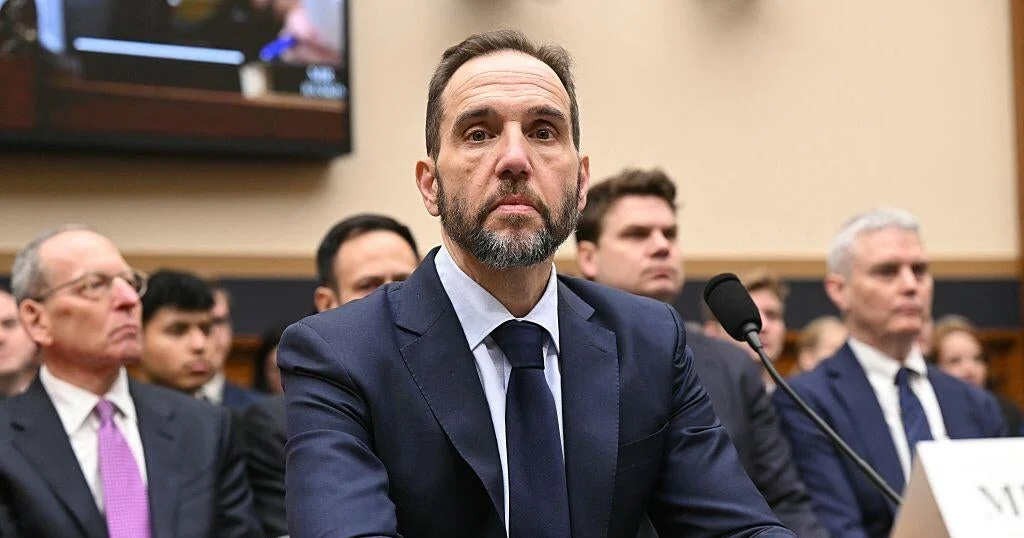
The Republican chairman of the House Judiciary Committee, Rep. Jim Jordan of Ohio, has formally requested the Justice Department to investigate and consider criminally charging Jack Smith, the former special counsel who led investigations into former President Donald Trump. Jordan’s referral, submitted on July 22, 2026, alleges that Smith made false statements and failed to disclose key subpoenas related to phone and text message records obtained during Trump’s post-2020 election probes.
What Happened
On July 22, 2026, Rep. Jim Jordan sent a criminal referral to the Justice Department, accusing Jack Smith of providing “materially false statements” in his deposition before the House Judiciary Committee. The dispute centers on Smith’s 2025 testimony that his investigative team only obtained “tolling records”—basic phone metadata such as the numbers dialed—but did not acquire the content of calls or text messages between lawmakers and Trump-era White House staff. However, a subsequent Justice Department disclosure revealed that Smith’s team did receive texts between White House officials and dozens of members of Congress via a subpoena to the National Archives and Records Administration. Jordan charged Smith with obstructing oversight by not disclosing this to Congress.
Jordan’s letter asks Acting Attorney General Todd Blanche to open a DOJ inquiry into Smith’s conduct. A Justice Department spokesperson confirmed receipt of the referral and stated the department “will investigate all evidence of criminal conduct.”
Smith’s legal team strongly rejected the allegations, arguing that his testimony was truthful and that the questions he answered pertained only to the subpoena for tolling records—not the National Archives subpoena. They also emphasized that the texts were shared with Trump’s legal team, who did not raise concerns about impropriety at the time.
Key Facts
Jack Smith was appointed special counsel by then-Attorney General Merrick Garland in late 2022 to oversee two major investigations relating to Donald Trump: his efforts to remain in office after the 2020 election and his handling of classified documents after leaving the White House. Smith brought the first-ever federal charges against a former U.S. president but saw both cases ultimately dismissed by courts in 2024 on procedural and immunity grounds.
The controversy partly stems from phone and text records acquired as evidence. The Senate Judiciary Committee reported that FBI analysis included tolling records for eight Republican senators and one House member during key dates around January 6, 2021. Additionally, a DOJ letter released by Senator Chuck Grassley detailed that texts involving 44 lawmakers, mostly Republicans, were obtained and forwarded to Smith’s team without review by a filtering team tasked with protecting privileged communications.
Democratic Rep. Jamie Raskin of Maryland, the Judiciary Committee’s top Democrat, criticized the referral as “baseless and vindictive,” calling it an attempt to weaponize the justice system against a nonpartisan official.
What This Means
This development highlights ongoing partisan clashes over the investigation of Donald Trump and oversight of the Justice Department’s special counsels. Jordan’s referral reflects a Republican push to challenge the legitimacy of Smith’s probe, accusing it of overreach and obstruction without presenting confirmed legal wrongdoing. If the DOJ decides to pursue charges, it would mark a rare step in holding a former special counsel criminally accountable for statements made during congressional oversight.
For the broader public, this intensifies the political stakes around accountability and transparency in high-profile investigations involving elected officials. The allegations also bring into focus how investigatory teams handle sensitive communications from lawmakers, with debates over constitutional protections like the Speech or Debate Clause. Meanwhile, Smith’s defense underscores long-standing DOJ protocols on phone records and evidence handling, suggesting the matter may hinge on legal technicalities of disclosure rather than substantive misconduct.
Ultimately, the outcome could influence how vigorously special counsels conduct politically sensitive investigations in the future and shape congressional oversight powers over Justice Department activities.
Background
Jack Smith’s special counsel appointments in late 2022 followed Trump’s 2024 presidential campaign announcement and involved two notable DOJ probes: election interference efforts after the 2020 vote and classified document retention concerns at Mar-a-Lago. Charges brought by Smith were unprecedented against a former president but encountered significant judicial obstacles, including a Supreme Court ruling granting Trump immunity for official acts.
Phone tolling record scrutiny for lawmakers came to light in late 2023 and caused bipartisan concern over potential surveillance of Congress members during January 6, 2021. Republican leaders, including Senator Chuck Grassley, characterized the evidence collection as politically motivated “weaponization” of law enforcement.
Reactions
Rep. Jim Jordan characterized Smith’s testimony as intentionally misleading and obstructive, calling for DOJ action. Meanwhile, Smith’s lawyers called the claims “spurious” and part of a politically motivated attack on a career prosecutor. Democratic Rep. Jamie Raskin dismissed the referral as unfounded and “absurd.” Senator Grassley condemned the communications review as unconstitutional overreach. The Justice Department remains neutral but active in investigating the referral.
What Remains Unclear
It has not been confirmed whether the Justice Department will bring formal charges against Smith or what investigatory steps will follow. The precise legal implications of using member-of-Congress text messages as evidence and the application of the Speech or Debate Clause are still debated. It also remains uncertain how the political dynamics surrounding this referral may affect ongoing or future DOJ investigations into political figures.
What Comes Next
The incoming investigation by the Justice Department, led by Acting Attorney General Todd Blanche, will determine whether Smith’s conduct warrants criminal charges. Congressional oversight of the issue may continue, with possible hearings or additional referrals depending on DOJ’s findings.
Sources
This article is based on reporting and publicly available information from the following sources:
Read more Politics stories on Goka World News.