
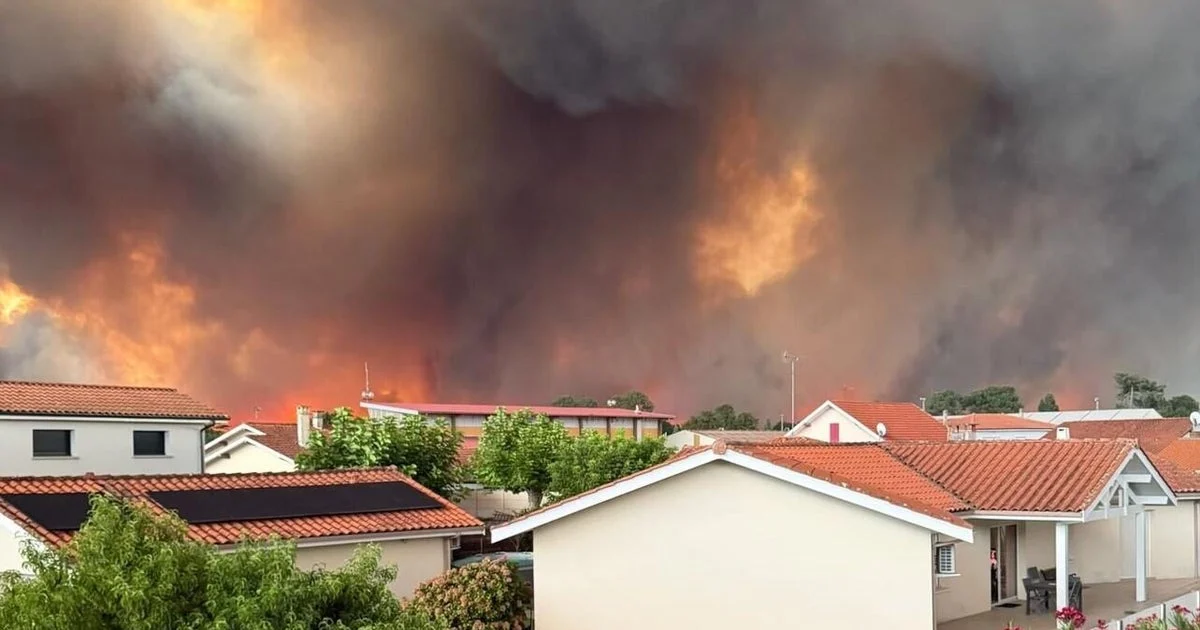
A severe wildfire in southwestern France has trapped an American mother and her two children, underscoring the rapidly worsening wildfire crisis across Western Europe. The fires are expanding in size and intensity as a new heat wave looms, threatening to exacerbate an already dire situation in France and Spain.
What Happened
Since mid-July 2026, more than 2,500 firefighters have been battling one of France’s largest wildfires along the country’s southern Atlantic coast near the town of Biscarrosse and the Bordeaux metropolitan area. The wildfire has burned an area four times the size of Paris in less than a week, generating its own wind and fire storms. The fire has advanced to within approximately nine miles of Bordeaux’s suburban wine regions and about 15 to 19 miles from the city center.
Amid a mandated evacuation of some 220,000 residents, American visitor Rebecca Papin from Franklin, Tennessee, and her two children, aged 9 and 11, were trapped in Biscarrosse after missing the evacuation orders due to sleeping with earplugs on. Local authorities blocked roads and restricted movement for residents’ safety. Despite this, Papin indicated her willingness to defy the orders if the danger became imminent.
Notably, a second wildfire ignited about 25 miles south near Biscarrosse after a van fire spurred a separate evacuation involving 30,000 people, including a nursing home and a children’s summer camp. Spain, facing similar wildfires west of Madrid and near Valencia, declared a national emergency as firefighting efforts continue there.
Key Facts
French officials report that more than 84 firefighters have been injured fighting the blazes, with over 200 homes destroyed by the flames. The number of people evacuated exceeds five times that of the last major wildfire event in the same region four years ago. The fires have already consumed an area roughly equivalent to the size of Los Angeles. The upcoming heat wave threatens temperatures up to 104 degrees Fahrenheit across France and much of Western Europe, including Italy and the U.K.
In Spain, a 78-year-old man was killed amid ongoing wildfires, prompting the government’s national emergency declaration. The fire in France’s Landes de Gascogne forest is particularly concerning as it blocks the sole escape route for trapped residents.
What This Means
The wildfires in France and Spain highlight the escalating risks of climate-driven natural disasters across Europe, directly affecting thousands of lives and critical infrastructure. For the residents and communities near Bordeaux and Biscarrosse, the threat of losing homes and access to safe evacuation routes creates a deeply precarious humanitarian situation.
Beyond personal safety, these fires threaten economically vital regions, including Bordeaux’s wine-growing areas, potentially impacting local and international markets. The presence of military forces alongside firefighters demonstrates the scale and seriousness of the crisis, reflecting a shift in emergency response strategies as wildfires grow more intense and unpredictable.
For global audiences, this event underscores the urgency in addressing climate change impacts and preparedness for extreme weather, as similarly intense heat waves and drought conditions are becoming more frequent in temperate regions previously less accustomed to such fires.
Background
The 2026 wildfire season in Western Europe has been marked by record-breaking heat and drought, with June being the hottest ever recorded in the region. Previous wildfires in southwestern France have caused evacuations and damage, but the current fires dwarf earlier incidents both in size and in affected populations. This year’s fires are also part of a broader pattern affecting several Mediterranean countries grappling with extreme weather exacerbated by climate trends.
What Comes Next
Forecasts predict that the fourth heat wave of the season will sweep across France and Western Europe by midweek, with potentially prolonged high temperatures lasting into early August. This poses a heightened risk of new fires or expansion of existing ones. Emergency services remain on high alert, and officials continue to enforce evacuations and access restrictions to safeguard lives.
Sources
This article is based on reporting and publicly available information from the following source:
Read more World News stories on Goka World News.