
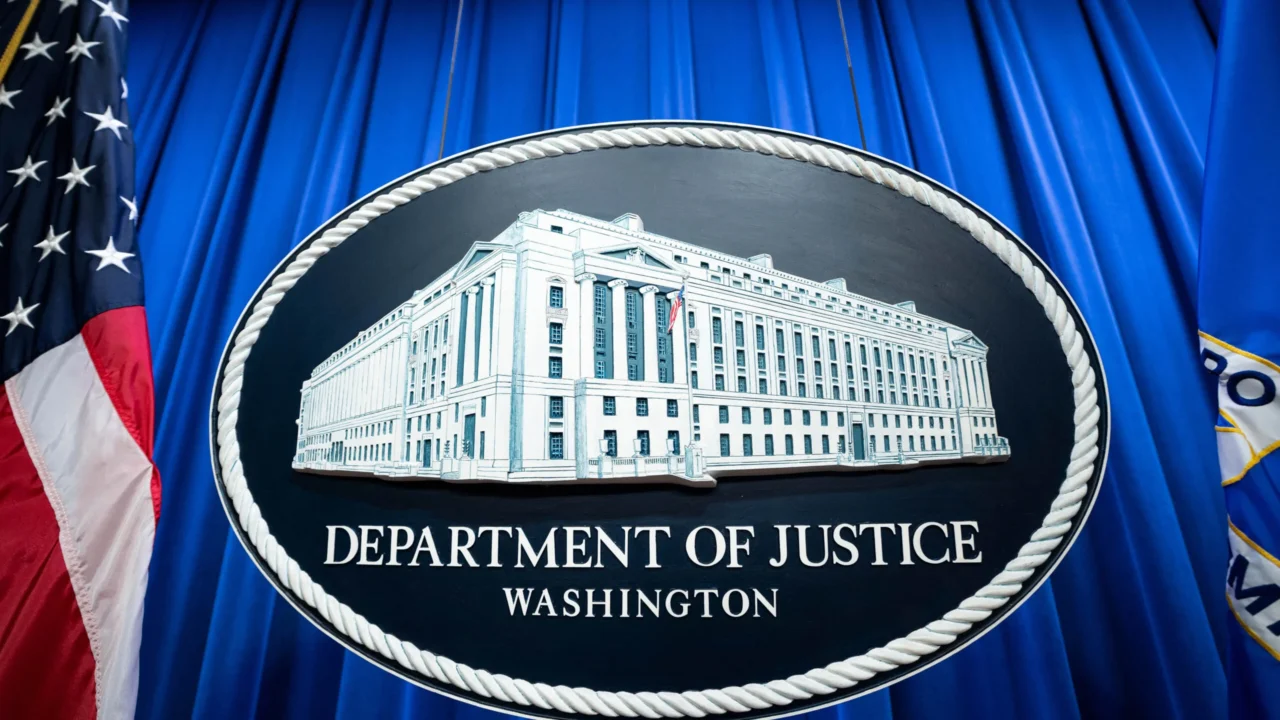
The U.S. Department of Justice’s recent legal opinion challenging long-standing interpretations of federal disability rights laws has raised alarms among advocacy groups and affected families about potential cuts to home healthcare services and renewed institutionalization risks. The opinion notably reverses a 1999 Supreme Court precedent that protected the rights of people with disabilities to receive services in their communities instead of institutions.
What Happened
In June, the Justice Department issued a memo stating that federal disability laws do not necessarily require states to provide community-based services allowing people with disabilities to remain in their homes rather than institutions. This departs from the Olmstead v. L.C. Supreme Court decision of 1999, which found that unnecessary institutionalization amounted to discrimination under the Americans with Disabilities Act (ADA). The Trump administration’s DOJ called this prior interpretation “out of step” with its own view and suggested that institutional care may be justified due to state resource constraints or safety concerns.
This DOJ opinion coincides with Republican-led states citing it in litigation aimed at loosening requirements to provide community-based services. For example, in a 2024 federal lawsuit in Texas, several states argue that an HHS rule mandating integration for people with disabilities violates states’ rights and is costly. These states have formally notified courts of the DOJ memo as a relevant development in the cases.
Advocacy groups warn that this reshaping of legal interpretations is occurring alongside broader federal actions—including cuts to Medicaid, changes to special education administration, and tightened Medicaid work requirements—that threaten supports that have enabled disabled individuals to live independently at home.
Key Facts
The 1999 Olmstead decision formed the basis for decades of enforcement requiring community integration for people with disabilities. According to data from the University of Minnesota’s Residential Information Systems Project, the share of individuals with intellectual or developmental disabilities residing in state-run institutions dropped from nearly 30% in 1967 to fewer than 1% by 2021.
The Justice Department’s opinion states that regulatory mandates requiring home and community-based services may be unlawful, marking a profound shift. Approximately 40 million U.S. adults and 5 million children with disabilities rely on such protections for community living.
States are already rolling back some Medicaid benefits, including home health aide services. For instance, Amanda DeSimone-Shabrack’s 12-year-old autistic son recently had his home care hours cut from 30 to 18 per week, affecting her ability to keep him at home.
The Department of Health and Human Services has committed to continuing to enforce disability rights laws, but advocates caution this could change in light of the DOJ’s stance.
What This Means
This legal opinion marks a potential turning point in disability rights enforcement in the United States, threatening to unravel decades of progress toward community integration for disabled individuals. If states use this interpretation, it could justify scaling back essential home- and community-based services, resulting in increased institutionalization or inadequate care outside institutions.
For people with disabilities and their families, this poses a serious risk to autonomy, quality of life, and independence. Services enabling daily living support—such as bathing assistance, counseling, and financial management—could become less accessible or disappear. The broader trend of Medicaid cuts and tightened eligibility adds to fears that federal support systems will erode substantially.
The opinion also signals a fundamental policy shift, moving away from viewing disability as a matter of civil rights toward a more medicalized and institutional approach. This could lead to greater segregation and reduced opportunities for disabled individuals to fully engage with their communities.
For policymakers, the DOJ’s stance introduces complex legal questions and foreshadows further litigation over states’ obligations under federal disability laws. These battles will significantly affect how disability rights are protected in practice for millions nationwide.
Background
The Olmstead v. L.C. ruling established that unjustified segregation of disabled individuals in institutions violates the ADA’s anti-discrimination provisions, prompting the development of federal policies favoring deinstitutionalization and community-based services.
Historically, institutional care was associated with widespread human rights abuses and violations, including forced sterilizations and segregation. The deinstitutionalization movement, supported by legal trends and the independent living movement, reduced institutional residency dramatically over recent decades.
However, deinstitutionalization has faced challenges, such as insufficient community resources and rising emergency room boarding for psychiatric patients due to limited hospital beds, creating gaps in care despite reduced institutionalization.
Analysis
Shira Wakschlag, senior executive officer of legal advocacy at The Arc of the United States, condemned the DOJ opinion as an alarming attempt to dismantle decades of civil rights progress. The American Civil Liberties Union’s Zoe Brennan-Krohn characterized the memo as showing “a deeply held disrespect for disabled people” and a disregard for their lived experience.
Conversely, the DOJ memo justifies its position by citing resource constraints and safety concerns as potential reasons for institutional treatment, reflecting a viewpoint that diverges from most federal court rulings interpreting disability rights.
Peer-reviewed research also highlights complex outcomes, with some involuntarily institutionalized psychiatric patients showing greater symptom improvement than voluntary admissions, underscoring the nuanced nature of care decisions.
Who Is Affected
About 45 million Americans with disabilities—including 5 million children—stand to face changes in access to home and community-based services. Among them are families like Amanda DeSimone-Shabrack’s, whose high-needs autistic son depends on Medicaid-funded home care to live at home.
Individuals with intellectual, developmental, and psychiatric disabilities in states already facing Medicaid cuts or filing litigation to curb federal mandates are particularly vulnerable. The shifting regulatory environment may affect the availability and quality of services nationwide.
What Comes Next
Multiple lawsuits in states such as Texas, Florida, and New Hampshire are referencing the DOJ memo, setting the stage for significant court battles over the interpretation and enforcement of the ADA’s integration mandate. The outcome of these cases will shape the future of disability rights protections.
The Department of Health and Human Services has reiterated its commitment to enforcing civil rights laws but may face pressure to align with the DOJ’s position. The potential rescinding of existing guidance and regulations on community integration remains a concern for advocates.
Sources
This article is based on reporting and publicly available information from the following sources:
Read more Politics stories on Goka World News.