
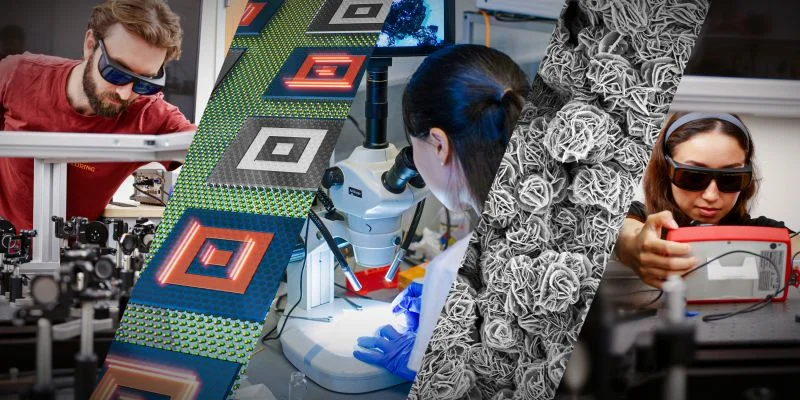
The U.S. National Science Foundation (NSF) is advancing the frontiers of materials science by awarding $108 million to six research centers across the country. Each center will receive $18 million over six years to pursue experimental and theoretical research into innovative materials, including hybrid quantum metamaterials and soft materials designed for precise drug delivery. The announcement underscores the NSF’s ongoing commitment to fostering breakthrough discoveries that could transform industries ranging from healthcare to manufacturing.
What Happened
The NSF recently selected six Materials Research Science and Engineering Centers (MRSECs) to receive a collective $108 million to support ambitious materials science projects. These centers, hosted at universities in five U.S. states, will explore a diverse array of material innovations. Research efforts include developing next-generation scintillators capable of producing detailed medical images with reduced X-ray exposure, and creating autonomous AI-driven laboratories to design soft materials for targeted drug delivery. Other centers are investigating hybrid particles formed from light and matter—quantum metamaterials—with potential applications in biotechnology and microelectronics. The funding builds on the NSF’s decades-long tradition of investing in MRSECs, which have produced thousands of scientific publications and contributed to advancements in materials found in products from dental fillings to rocket engines.
Key Facts
The $108 million funding will be distributed as $18 million per center over six years through the NSF’s Materials Research Science and Engineering Centers program. The program dates back to the 1970s and was renamed in the 1990s to reflect a focus on both discovery and engineering. The selected research hubs are situated at universities in five states, with one part of the NSF’s Established Program to Stimulate Competitive Research (EPSCoR), which aims to enhance research capacity in traditionally underfunded regions. Collaborative partners include over twenty academic institutions, technology companies, Department of Energy national labs, and the National Institute of Standards and Technology. The centers will support rigorous scientific training for more than 60 early career researchers, 150 graduate students, and 250 undergraduate students.
What This Means
This substantial investment by the NSF signals a commitment to deeply understanding and manipulating the fundamental properties of matter to drive innovation. Emerging materials such as hybrid quantum metamaterials could revolutionize quantum computing and sensing technologies, while advancements in soft materials may lead to more effective and targeted medical treatments, reducing side effects and improving patient outcomes. The development of more sensitive scintillators that minimize X-ray doses has significant implications for public health, especially in pediatric cancer diagnostics, where radiation exposure concerns are paramount. By integrating AI with materials design, these centers are also at the cutting edge of automating discovery, potentially accelerating the pace at which new materials are developed and brought to practical use. For ordinary people, these advances could translate into safer medical imaging, improved electronics, cleaner manufacturing processes, and new materials with enhanced performance and sustainability.
Background
The NSF’s MRSEC program has been a central driver of materials science innovation for over fifty years, evolving from its origins as the Materials Research Labs in the 1970s. Historically, MRSECs have been instrumental in discoveries leading to everyday applications, which include materials used in dental care, aerospace engineering, and electronics. The long-term funding stability for these centers allows for interdisciplinary research approaches combining physics, chemistry, biology, and engineering, fostering environments where basic science translates into real-world applications. The EPSCoR program’s involvement reflects NSF’s broader efforts to improve geographic equity in scientific research funding.
What Remains Unclear
Although these centers encompass a wide range of materials research, specific timelines for achieving practical applications remain undetermined. The precise mechanisms for how some of the hybrid quantum metamaterials will function at scale and their integration into commercial technologies await further investigation. Additionally, the long-term impacts and efficacy of AI-driven experimentation in materials discovery still require thorough validation across various material classes.
What Comes Next
Over the next six years, the funded research centers will conduct experiments, develop theoretical frameworks, and create prototype materials. The NSF and participating centers plan to enhance collaboration across institutions and with industry partners to translate discoveries into deployed technologies. These centers will also emphasize training new scientists through education and mentorship programs, preparing the next generation to innovate in materials science and engineering fields.
Sources
This article is based on reporting and publicly available information from the following sources:
Read more Science Discoveries stories on Goka World News.