
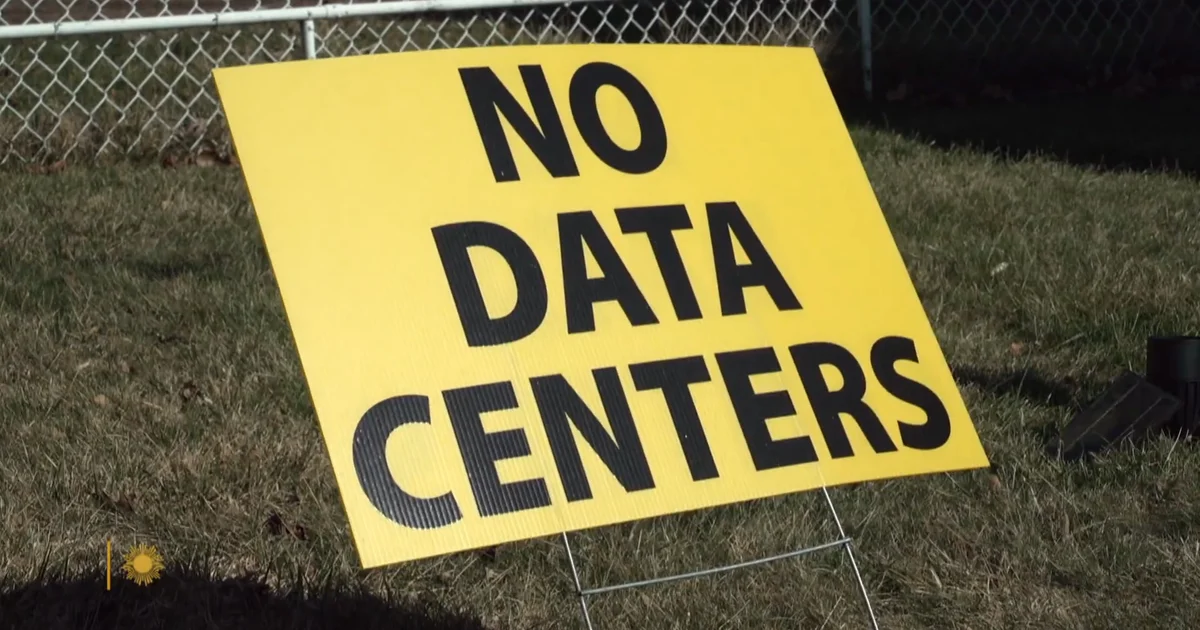
More than 4,000 artificial intelligence data centers have been established across the United States to support the rapidly growing AI industry, yet many local communities are pushing back against these developments. Concerns around environmental sustainability and financial burdens have intensified public resistance, challenging tech companies and policymakers alike.
What Happened
According to a report examined by “Sunday Morning” correspondent Robert Costa, tech companies have accelerated the construction of AI data centers nationwide to meet the rising demand for AI computing power. While the exact number of facilities continues to grow, over 4,000 are currently operational. However, this expansion has met increasing opposition from communities across various states. Residents and local officials are raising alarms about the environmental consequences—such as increased energy consumption and water usage—and the potential financial impact on local infrastructure and public services. The debate over these AI centers’ presence played out publicly as of April 2026.
Key Facts
The AI data centers in question serve as critical infrastructure for training and operating advanced machine learning models, requiring substantial energy and cooling resources. The verified number of operational centers exceeds 4,000 nationwide, reflecting a swift build-out by major technology firms investing heavily in AI research and services. Opposition centers around concerns including increased carbon footprints, strain on regional power grids, and elevated local taxes or fees to support infrastructure upgrades. The report did not specify affected companies or the exact geographic distribution of the centers.
What This Means
The resistance to AI data centers highlights a growing tension between technological advancement and local environmental and economic stewardship. Communities opposing these facilities are not rejecting AI innovation outright but are demanding greater accountability for the external costs borne by local ecosystems and taxpayers. The debate underscores the complex challenge of balancing AI’s transformative potential with sustainable infrastructure development.
For policymakers and tech giants, this pushback may signal a need to rethink strategies around site selection, energy sourcing, and community engagement. Addressing public concerns through transparent environmental impact assessments and exploring renewable energy solutions could mitigate friction. For residents, the outcome of this debate may influence how technology projects proceed in their regions, shaping future access to AI-driven innovation while safeguarding community welfare.
Background
The surge in AI data center construction mirrors the exponential growth in AI applications worldwide, from generative AI models to real-time data analytics. Tech corporations have prioritized expanding computational capacity, driving investments into infrastructure that supports AI development at scale. Historically, large data centers have faced scrutiny over sustainable energy usage, but the scale and pace of AI-specific facilities have intensified these issues, prompting new community dialogues.
What Remains Unclear
Details remain sparse regarding the specific environmental impact evaluations conducted for individual AI data centers and the extent to which those assessments have influenced local approvals or rejections. It is also unclear how many planned projects have been altered or halted due to community resistance or regulatory action. Further, official data on the energy sources powering these centers and concrete mitigation measures—if any—employed by operators have not been publicly disclosed.
What Comes Next
As the debate unfolds, some local governments are considering enforcing stricter environmental standards or imposing limits on future AI data center developments. Technology firms may be prompted to enhance their sustainability practices, exploring renewable energy integration and efficiency upgrades. Continued public scrutiny and media coverage are likely to keep pressure on both industry and regulators to address the concerns raised by affected communities.
Sources
This article is based on reporting and publicly available information from the following source:
Read more Climate & Environment stories on Goka World News.