
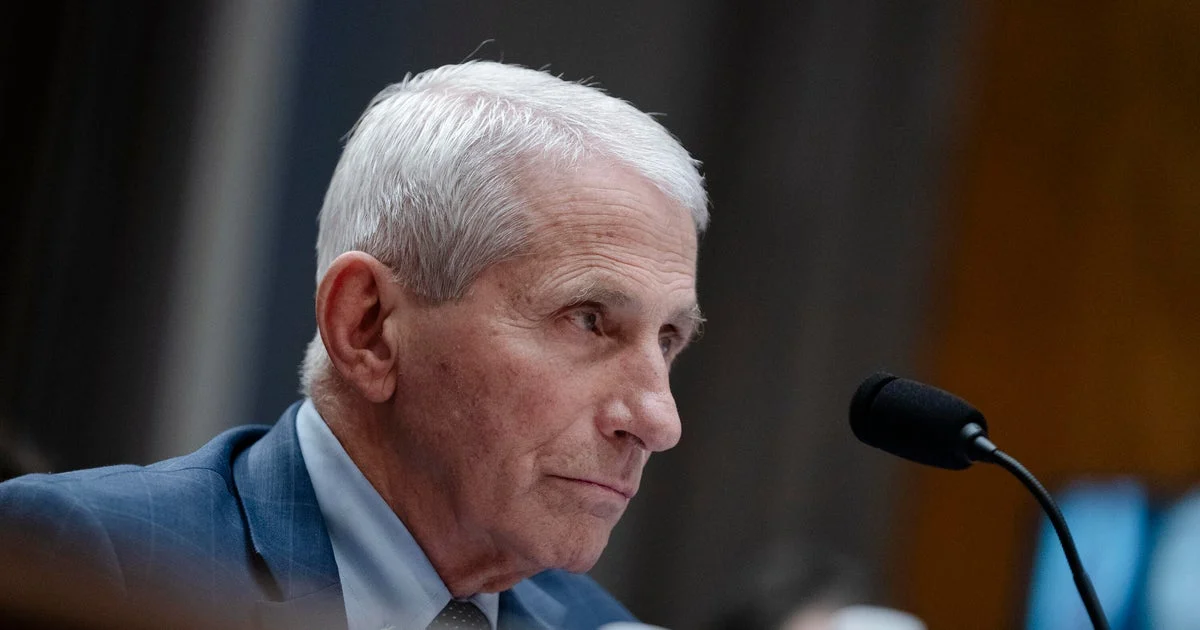
The Senate Homeland Security Committee voted on August 6, 2026, to hold Dr. Anthony Fauci in contempt of Congress following his refusal to answer questions during a committee hearing on the origins of COVID-19. The committee voted 8 to 5 along party lines, with Republicans in favor and Democrats opposed. Committee Chairman Sen. Rand Paul announced plans to bypass a full Senate vote and refer the contempt resolution directly to the Justice Department.
What Happened
During a hearing last week, Dr. Fauci, the former director of the National Institute of Allergy and Infectious Diseases, repeatedly invoked his Fifth Amendment right against self-incrimination, declining to answer any questions from the Senate Homeland Security Committee. The hearing was part of a broader Republican-led investigation into the origins of the COVID-19 pandemic. In preparation, Sen. Rand Paul, a Kentucky Republican, released over 1,000 pages of Fauci’s journal entries from his time overseeing the federal response. Fauci responded by accusing Paul of an “obvious obsession” with prosecuting him.
Despite Fauci’s invocation of the Fifth Amendment, Paul argued that the former government official could not claim this protection due to a sweeping federal pardon granted during the Biden administration, suggesting that Fauci was legally shielded from prosecution. Fauci’s attorney maintained that he had solid legal grounds for asserting the privilege, but Paul and other Republicans disagreed, contending the legal question remains unsettled.
The committee vote to hold Fauci in contempt was sharply divided along party lines, with all Democrats opposing and some voting by proxy. Democrats attempted to delay or table the vote during the committee meeting but were blocked by the GOP majority. Following the vote, Paul announced that the committee would send the contempt resolution directly to the Department of Justice, defying the usual practice of seeking a full Senate vote first.
Key Facts
The Senate Homeland Security Committee voted 8–5 to hold Dr. Fauci in contempt of Congress, with all Republicans voting in favor and all Democrats opposing. Sen. Rand Paul is the committee chairman leading the investigation. The contempt referral will be sent directly to U.S. Attorney Jeanine Pirro for the District of Columbia at the Justice Department. The full Senate’s consideration of the contempt resolution is uncertain but expected to be unlikely to pass without Democratic support, as 60 votes are generally required to advance legislation. The House and Senate in 2021 and 2022 similarly pursued contempt charges against Trump allies for failing to comply with subpoenas related to the January 6 Capitol attack, leading to convictions and prison time for Steve Bannon and Peter Navarro.
What This Means
The decision to hold Fauci in contempt highlights the intensifying political conflict around the investigation into the origins of COVID-19 and reflects deep partisan divides over accountability and oversight of government officials. Fauci’s invocation of the Fifth Amendment under a federal pardon raises novel constitutional questions about the limits of congressional subpoena power and witness rights. By fast-tracking the referral to the Justice Department without a full Senate vote, Senate Republicans signal a determination to circumvent procedural norms, although a prosecution would still depend on DOJ discretion.
This event could set a precedent for how future congressional investigations handle uncooperative witnesses who have received pardons, potentially complicating oversight efforts. For the public, the episode intensifies scrutiny of Fauci’s role in the pandemic response amid ongoing debates over transparency and political motivations. The split vote and partisan rhetoric underscore how congressional investigations into pandemic origins remain as politically charged now as they have been throughout.
Background
In previous years, congressional committees investigating contentious political issues have occasionally moved to hold witnesses in contempt for refusing to comply with subpoenas. Notably, in 2021 and 2022, a Democrat-led Congress recommended contempt charges against several allies of former President Donald Trump related to January 6 investigations, resulting in indictments and legal consequences. Fauci appeared before the Senate committee under subpoena as part of a Republican-led probe into COVID-19’s origins, with Sen. Paul a long-time critic accusing Fauci of misleading the public. Fauci cited the prior release of his journal entries as a factor in his refusal to testify.
What Comes Next
The Senate Homeland Security Committee will submit the contempt resolution to the U.S. Attorney for the District of Columbia. The Department of Justice will decide whether to pursue charges against Fauci. The full Senate may vote on the contempt resolution when it returns from the August recess, although GOP leaders have not confirmed plans for such a vote. The outcome of the DOJ referral and any subsequent legal action remains uncertain.
Sources
This article is based on reporting and publicly available information from the following sources:
Read more Politics stories on Goka World News.