
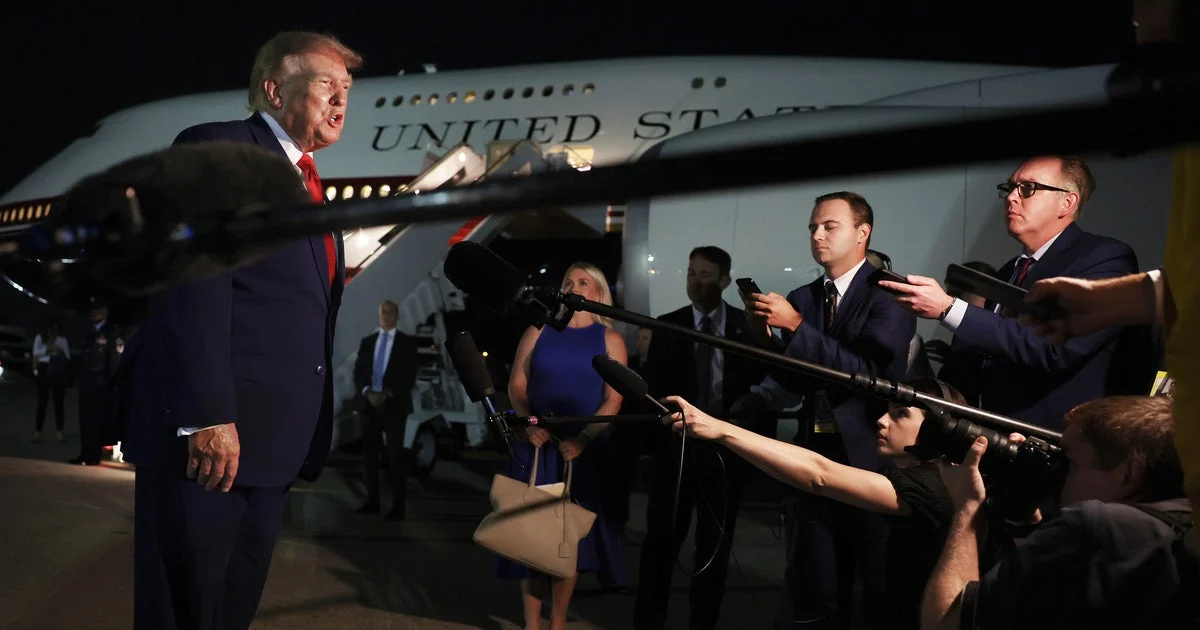
President Donald Trump announced that the United States has “total control” over the Strait of Hormuz, a vital waterway for global energy shipments, sparking renewed tensions with Iran which disputes this assertion. This development comes amid a significant reduction in maritime traffic through the strait, reflecting heightened security concerns in the region.
What Happened
On August 12, 2026, President Trump posted on his social media platform Truth Social that the U.S. controls the Strait of Hormuz and intends to maintain that control. He described the U.S. naval blockade there as a “wall of steel,” asserting that there is nothing Iran can do to challenge U.S. dominance. Iran officially rejected this claim through a statement from the Persian Gulf Strait Authority, which manages transit through the strait. The agency maintained that the strait remains blocked and will only reopen if Iran’s conditions are met. Data from the shipping analytics company Kpler corroborated the reduced maritime activity, showing only eight vessels passed through the strait on the latest count, down significantly from the approximately 130 ships that navigated the route daily before the conflict erupted on February 28, 2026.
Key Facts
The Strait of Hormuz is a narrow passage between the Persian Gulf and the Gulf of Oman, through which a substantial portion of the world’s oil supply transits. Since the outbreak of the war involving the U.S., Iran, and proxy forces on February 28, maritime traffic has sharply declined. On August 11, data indicated just eight vessels transited the strait—the lowest number in over a week—compared with a pre-war average of 130 ships daily. The Persian Gulf Strait Authority articulated Iran’s position, stating the strait is still effectively blocked. President Trump’s assertion on Truth Social emphasized U.S. naval control and the intention to continue the blockade. Additionally, the Yemen coast guard reported six fatalities caused by Iran-backed Houthi rebels in the Red Sea, underlining the wider regional instability linked to Iran’s proxy forces.
What This Means
Control over the Strait of Hormuz holds enormous strategic and economic importance, given that it is a critical chokepoint for oil exports from the Gulf states to the global market. President Trump’s declaration signals a U.S. commitment to maintaining naval dominance in the region, which could heighten tensions with Iran and disrupt global energy supplies. The decline in shipping traffic illustrates the palpable risk perceived by commercial vessels navigating the area amid ongoing hostilities. For energy markets, sustained disruptions or escalation could exacerbate price volatility and impact global fuel availability. Furthermore, the dispute underscores the fragile security environment in the Middle East, where proxy conflicts exacerbate regional instability with wider international repercussions.
Background
The Strait of Hormuz has long been a flashpoint in U.S.-Iran relations due to its strategic maritime location. The current conflict began on February 28, 2026, involving U.S. and Israeli military actions targeting Iran and its proxies. Since then, Iran initiated a blockade of the strait, including the establishment of the Persian Gulf Strait Authority to manage and control passage and collect tolls, effectively aiming to restrict maritime traffic. Iran’s ally, the Houthi rebels in Yemen, have also escalated attacks in adjacent waters, adding to wider regional volatility. This confrontation coincides with the U.S. military’s planned withdrawal from Iraq by the end of September 2026, a move that may affect regional power dynamics.
What Remains Unclear
The exact conditions Iran demands to lift the blockade and reopen the strait safely have not been publicly disclosed in detail. It also remains uncertain how the U.S. intends to enforce its claimed naval control over the waterway long-term and whether this posture will provoke direct military engagements. The scale of the blockade’s practical effectiveness remains under contest, as commercial vessels are increasingly reluctant to traverse the strait, but fewer confirmed incidents have been reported recently. Information on any ongoing negotiations or diplomatic channels addressing the Strait of Hormuz tensions was not available from the reviewed sources.
What Comes Next
The U.S. is set to complete its military withdrawal from Iraq by September 30, 2026, as agreed upon with the Iraqi government, concluding nearly two decades of presence in the country. This move may influence regional military alignments around the Strait of Hormuz. Meanwhile, the dynamics in the Persian Gulf remain volatile, with both Washington and Tehran expected to maintain heightened vigilance in the coming weeks. Monitoring maritime traffic and U.S.-Iran interactions in the strait will be critical for anticipating further developments.
Sources
This article is based on reporting and publicly available information from the following sources:
Read more Politics stories on Goka World News.