
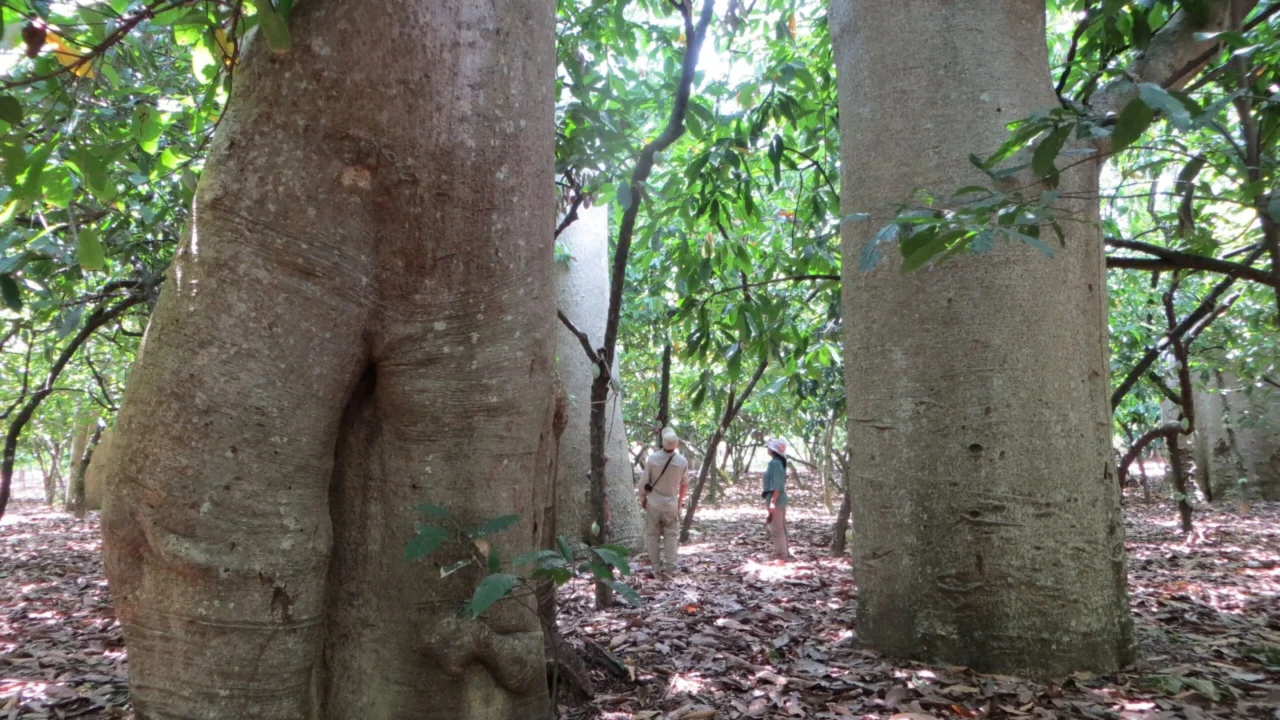
A team of researchers led by the University of Wisconsin-Madison has identified a new species of baobab tree, named Adansonia bozy, native to Madagascar. Their findings, published in the journal Taxon, stem from detailed genetic analyses that challenge prior classifications of Malagasy baobab diversity and carry important consequences for conservation strategies targeting these endangered trees.
What Happened
The study revealed that individuals previously classified within the species Adansonia za in northern Madagascar actually represent a distinct species, Adansonia bozy. Genetic data showed that northern populations thought to be A. za are more closely related to other northern Malagasy baobabs than to the rest of A. za. The research team employed targeted sequence capture, a phylogenomic technique that sequences hundreds of genes to determine evolutionary relationships. The effort involved collecting tissue samples from remote and challenging sites in Madagascar, overcoming difficulties such as the brief, nocturnal flowering period of the trees and their considerable height, sometimes over 30 meters.
Key Facts
The discovery was enabled by high-quality genetic sequencing despite the challenge posed by the trees’ polysaccharide-rich tissues, which complicated DNA extraction. The genetic data conclusively demonstrated that A. bozy forms a distinct taxonomic group more closely related to other northern species rather than to A. za. Previously there were eight recognized baobab species worldwide: one in Australia, one in continental Africa, and six in Madagascar. This study raises that count to nine in Madagascar alone. The research was conducted by Ph.D. candidate Nisa Karimi in collaboration with UW-Madison botanist David Baum, along with scientists from the Missouri Botanical Garden and Iowa State University.
What This Means
Discovering Adansonia bozy highlights the complexity of Madagascar’s biodiversity and underscores the challenges of species identification based solely on morphology. Because A. bozy was previously grouped with A. za, its unique conservation needs were unrecognized. The new classification points toward A. bozy being endangered, potentially unlocking more targeted conservation funding and efforts. Additionally, the apparent reduction in the range and population size of A. za could prompt reassessments of its conservation status. This case exemplifies how precise taxonomy, powered by advanced genetic techniques, is essential for effective biodiversity conservation, especially in ecologically rich and threatened regions like Madagascar. It signals that other baobab species may require taxonomic revision, affecting conservation priorities and ecological understanding.
Background
Baobabs are iconic trees known for their distinctive trunks and flowers, distributed primarily in Australia, continental Africa, and Madagascar. Madagascar’s baobabs have long fascinated scientists due to the island’s high endemic biodiversity. Prior to this study, the taxonomy of Malagasy baobabs included six recognized species, but the boundaries between these species remained uncertain due to similar morphological traits and limited flowering observation opportunities. The new genetic research follows efforts pioneered by researchers like David Baum, who has studied baobabs for over 40 years, aiming to resolve these taxonomic ambiguities.
What Remains Unclear
While the phylogenomic data clearly distinguish A. bozy as a species, the full extent of its distribution and population status across Madagascar remains incompletely mapped. The study also suggests that other widespread species, such as Adansonia rubrostipa, may require further taxonomic evaluation, but additional sampling and analysis are necessary. There is currently limited information on the ecological requirements and reproductive biology of A. bozy, factors critical to inform conservation management plans.
What Comes Next
The research group plans to continue genetic and ecological studies of Madagascar’s baobabs to refine species delineations and support conservation. Follow-up investigations aim to collect broader geographic samples and evaluate the conservation status of newly identified species. These efforts are important for guiding resource allocation to preserve Madagascar’s unique flora.
Sources
This article is based on reporting and publicly available information from the following sources:
Read more Science Discoveries stories on Goka World News.