
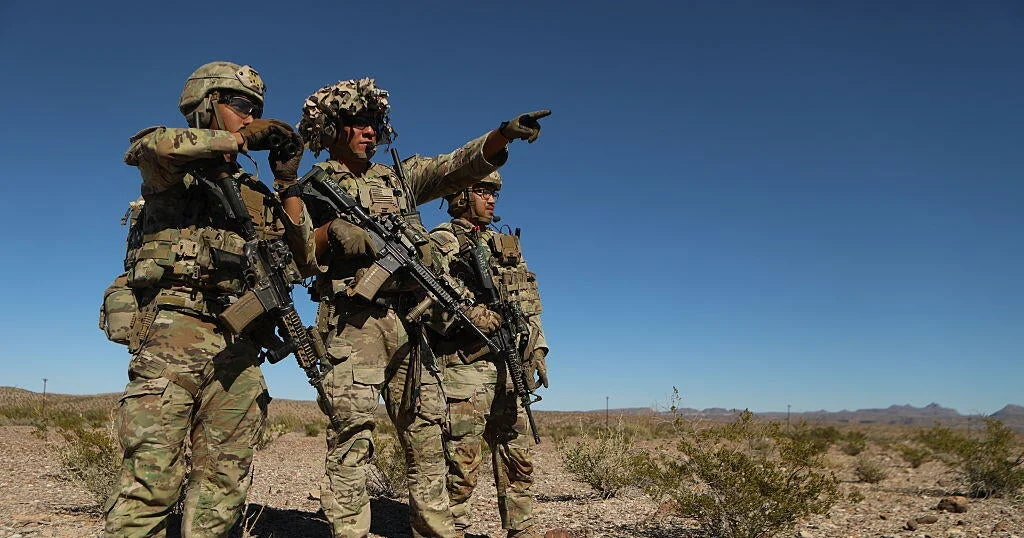
The U.S. Justice Department on August 14, 2026, released a legal opinion expanding the military’s authority to detain migrants accused of trespassing in areas under Defense Department control near the southern border. This action is part of the Trump administration’s intensified efforts to curb illegal immigration through military involvement in border enforcement.
What Happened
The Department of Justice’s Office of Legal Counsel (OLC) issued an advisory opinion clarifying that military personnel may arrest individuals who leave designated “National Defense Areas” (NDAs) before law enforcement can take custody. These NDAs are large tracts of land along the U.S.-Mexico border that the Trump administration designated in states including Arizona, California, New Mexico, and Texas. The areas are closed to civilian access to deter illegal border crossings.
While the Posse Comitatus Act generally prohibits the military from enforcing domestic laws, the Justice Department concluded that military arrests connected to trespassing on NDA territory do not violate the law, citing specific statutory authorization and the military’s protective role. The legal guidance was articulated by Deputy Assistant Attorney General William Hyde in the OLC opinion.
Since setting up six NDAs, the Defense Department has posted bilingual signs warning unauthorized persons to stay out. The military’s U.S. Northern Command stated that service members may apprehend trespassers in NDAs and transfer them to civilian law enforcement. The Pentagon’s Joint Task Force at the border, currently composed of roughly 8,000 troops from a total of over 20,000 deployed since early 2025, has made 161 detentions in these areas so far.
The Justice Department began prosecuting individuals apprehended in NDAs in April 2025, primarily charging them with misdemeanors for trespassing on military property under military security regulations. Additional immigration-related charges may also apply in some cases.
Key Facts
The Trump administration has established six National Defense Areas across the southern border, mainly in Arizona, California, New Mexico, and Texas. Since April 2025, the Justice Department has charged hundreds with trespassing on military land. The military border task force includes approximately 8,000 current service members and has detained 161 in NDAs. Border Patrol apprehensions have fallen sharply during this period—from nearly 2 million in FY 2023, to 1.5 million in FY 2024, dropping below 240,000 in FY 2025, and down further to 81,000 with two months remaining in FY 2026.
What This Means
This expanded military authority represents a significant shift in border enforcement, allowing troops to act more directly in detentions tied to immigration trespassing, traditionally roles reserved for civilian law enforcement. By legally enabling arrests just outside NDA boundaries, the administration is broadening operational flexibility for the military’s role at the border.
For migrants and border communities, this means a greater military presence with legal backing to detain individuals in previous legal gray areas. The use of military power in civilian migration enforcement raises ongoing concerns regarding the Posse Comitatus Act’s limits and could set a precedent affecting future immigration policy and enforcement strategies.
Politically, the move underscores the administration’s focus on stringent border security by combining military resources with legal interpretations to maximize deterrence. This also reinforces the broader policy approach that has included sharply restricting the asylum system, contributing to the dramatic recent decline in illegal border crossings according to official figures.
Background
The Posse Comitatus Act generally prohibits active-duty military forces from executing domestic law enforcement functions unless specifically authorized by Congress or the Constitution. The Trump administration’s establishment of National Defense Areas along the border was designed to leverage military resources to enhance border security without violating this act. Prior to the OLC opinion, military participants could detain migrants only within established NDA boundaries, limiting enforcement flexibility.
With President Trump’s second term beginning in 2025, the Pentagon made border security its top priority, deploying more than 20,000 troops over time to support this mission. The Justice Department’s decisions to prosecute NDA trespassing are part of a broader crackdown that also involves reducing legal asylum pathways at the border.
What Remains Unclear
The OLC’s opinion is advisory and does not establish formal legal precedent, leaving open questions about the long-term legal viability of these expanded military powers. It is not yet confirmed whether the military will designate additional National Defense Areas beyond the current six or how federal courts may rule on challenges to this approach.
What Comes Next
The Defense Department may announce further NDA designations in coming months. Meanwhile, the Justice Department will likely continue prosecuting trespassing cases linked to military land. Congressional or judicial review of the expanded military detention powers remains a possibility but no scheduled actions were reported at this time.
Sources
This article is based on reporting and publicly available information from the following sources:
Read more Politics stories on Goka World News.