
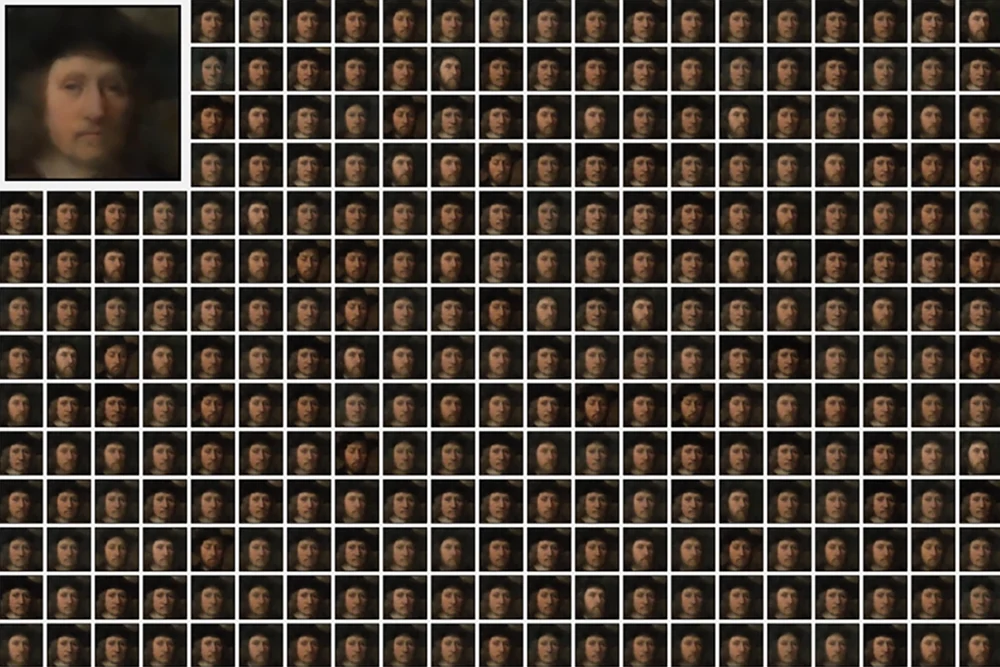
Researchers at the Massachusetts Institute of Technology’s Computer Science and Artificial Intelligence Laboratory (CSAIL) have identified a key limitation in AI art generation: images produced by large-scale generative models frequently cannot be linked to any particular training image. This phenomenon, termed “attribution decay,” challenges existing assumptions around authorship and copyright in AI-generated content.
What Happened
The research team, led by Zheng Dai and MIT professor David Gifford, developed a novel experimental approach to rigorously test how individual training images influence generative AI outputs. Their work, published in Nature Communications, introduces a “diffusion ensemble” architecture that divides training data across smaller model components. This allows researchers to effectively remove specific images from the training process without retraining the entire model, enabling exact evaluation of each image’s influence on the output.
Applying this method across datasets ranging from a few hundred to more than 160,000 images, including well-known collections like CIFAR-10 and CelebA, the researchers found that the larger the training dataset, the less any single image affected the resulting AI-generated pictures. In practice, removing any one image or even all images by a particular artist often produced no noticeable change in generated results, demonstrating the effects of attribution decay.
Key Facts
The study focused on diffusion models, currently dominant in fields ranging from artistic image generation to protein structure prediction. Researchers trained 24 diffusion model ensembles on varying public datasets, testing image influence through complete data ablation rather than previous approximate methods. Efficiencies were sustained even as the approach scaled with data size, with ensembles performing on par with conventional models when generating images.
Authors Zheng Dai (SM ’21, PhD ’24) and David Gifford emphasized that existing techniques could only estimate influence indirectly, whereas their approach provided exact confirmation that removing specific data left outputs unchanged. This counters the legal and industry presumption that AI output is inherently derivative of the original training images.
What This Means
This discovery has significant implications for copyright law and how AI-generated content is legally assessed. If outputs do not stem from individual training images, labeling them as derivative works tied to specific copyrighted materials becomes questionable. This challenges the basis for artists seeking attribution or compensation from AI-generated art and may complicate ongoing litigation and regulatory discussions over AI copyright infringement.
From an industry perspective, the research suggests AI companies could design models that inherently avoid creating outputs derivative of any one source, potentially shielding themselves from copyright claims. It also highlights a paradox for privacy and data use: training on large datasets dilutes the traceable influence of any single image, complicating provenance but arguably offering a form of data protection for original creators.
For users and creators, the findings imply that AI art tools are generating fundamentally new content rather than remixing or copying existing works directly. This underscores a shift in how creative ownership and responsibility might be assigned in generative AI contexts, affecting artists, platforms, and policymakers alike.
Background
Previous attempts to determine the origin of AI-generated images relied on approximate mathematical influence scores, which could not definitively confirm that removing a training example had no impact on the model’s output. The brute-force approach of retraining models without single data points was computationally unfeasible due to model sizes and dataset volume.
The diffusion ensemble approach circumvents this by training many smaller models on segmented data, allowing on-the-fly removal of particular training images for exact influence testing. This method was also validated through extensive testing and brute-force retraining at small scales, reinforcing the phenomenon of attribution decay as a robust effect.
What Remains Unclear
While this study meticulously documents attribution decay in diffusion-based image generation, it remains unknown whether similar effects apply to other AI systems, particularly the large language models central to recent copyright disputes. Further research is necessary to determine if textual generative models also exhibit this form of data untraceability.
What Comes Next
The MIT team’s findings open pathways for both technological refinement and legal reconsideration. The industry may pursue architectures integrating attribution decay principles to preempt derivative claims. Meanwhile, courts and policymakers will likely need new frameworks for assessing AI-generated content amid these challenges. Follow-up research may expand to other AI modalities and explore implications for AI design, data governance, and copyright law enforcement.
Sources
This article is based on reporting and publicly available information from the following sources:
Read more Artificial Intelligence stories on Goka World News.